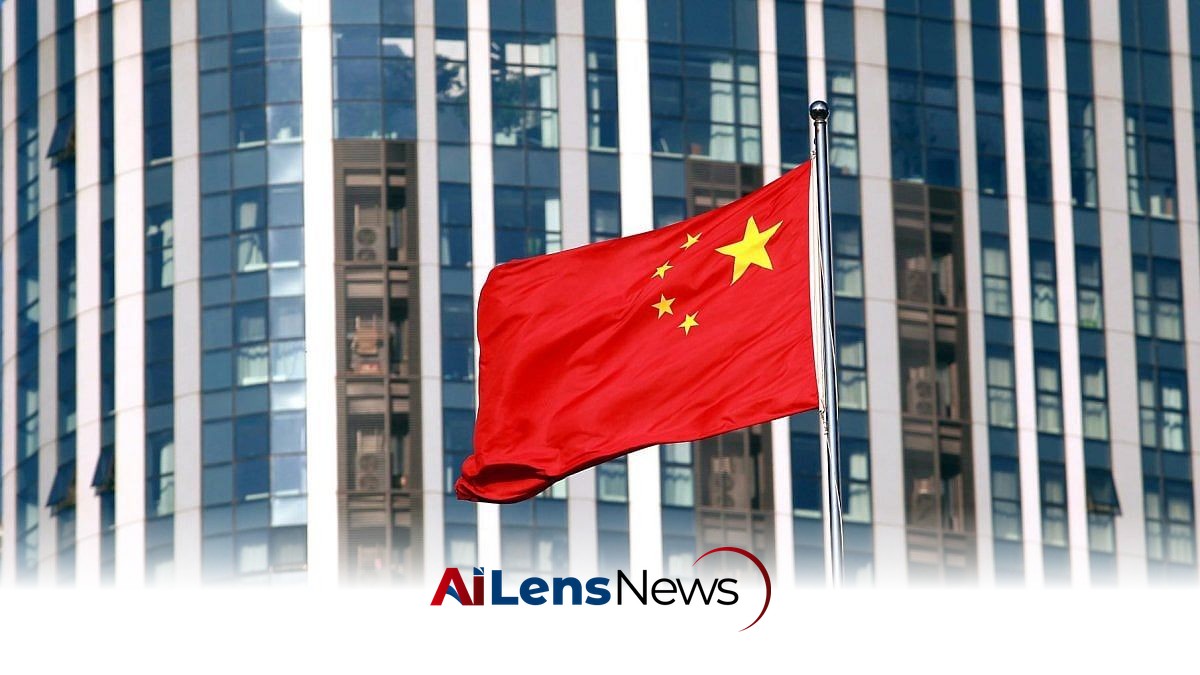


A recent report reveals China's perception of Iran as a secondary partner, particularly evident during the West Asia conflict, contrasting its stronger ties with Pakistan.
New Delhi, India Jul 13, 2026 ALN: London: China considers Iran as a second-tier partner while Pakistan continues to occupy a first-tier position. That asymmetry was showcased during the recent conflict in West Asia, as China did not send a single warship, missile battery, or soldier after the Israeli and American strikes killed Iran’s then-Supreme Leader Ayatollah Ali Khamenei and other senior military officials, a report has claimed.
“China’s Iran strategy is not an alliance. It is a hedge, calibrated to the barrel and the missile. Beijing will buy Iran’s oil at a discount, share intelligence and satellite access, dangle fighter jets, and lean on Moscow to keep Tehran diplomatically afloat — but it will not fire a shot on Tehran’s behalf, and it will not let its friendship with Iran cost it its far deeper relationship with Washington,” Jasim Al-Azzawi mentioned in an opinion piece in UK-based Middle East Monitor.
This strategic positioning of China is indicative of a broader trend in its foreign policy, particularly in West Asia, where it seeks to balance its economic interests with geopolitical realities. The relationship with Iran, while significant, is not seen as a cornerstone of China’s regional strategy. Instead, it reflects a pragmatic approach aimed at maximizing benefits while minimizing risks. This nuanced stance is crucial given the complex dynamics of West Asia, where allegiances can shift rapidly and the consequences of miscalculation can be severe.
When China and Iran signed the 25-year Comprehensive Strategic Partnership, Chinese state media termed it as a civilizational bond. The agreement covers several areas like infrastructure, banking, energy, and “military-technical” cooperation. However, it does not include a mutual defense clause and stops short of the ironclad commitments China has made to Pakistan or that Russia has promised North Korea. This lack of a mutual defense commitment underscores the limitations of the partnership and suggests that while China values its relationship with Iran, it is not prepared to jeopardize its broader strategic interests for Tehran.
During the recent tensions in West Asia, Chinese Foreign Minister Wang Yi condemned the killing and termed the conflict “a war that should never have happened and benefits no party.” His statement is a studiously neutral formulation that scholars at the Chicago Council on Global Affairs said was “not an outright condemnation of the United States or Israel, or indeed of Iran,” but instead a “more generalized statement of regret.” This carefully crafted response reflects China’s desire to maintain a position of neutrality while also protecting its economic interests in the region.
“Beijing’s caution was not cost-free neutrality; it was profitable neutrality. China spent the better part of the past two years quietly assembling one of the largest strategic petroleum reserves in its history, an estimated 1.2 billion barrels, equal to some 109 days of import cover, built substantially on sanctioned Iranian, Russian, and Venezuelan crude bought at discounts of $5 to $15 a barrel below Brent. None of this means China is indifferent to Iran’s fate. On the contrary, Iran sits at the geographic and ideological hinge of two projects Beijing cannot abandon,” Jasim Al-Azzawi mentioned in an opinion piece in Middle East Monitor.
This strategic petroleum reserve is particularly significant as it reflects China’s long-term planning in energy security. The reliance on discounted oil from Iran, Russia, and Venezuela indicates a calculated risk on the part of China to engage with countries that are often at odds with the West. This engagement not only helps China secure energy supplies at favorable prices but also strengthens its geopolitical influence in these regions. By building these reserves, China is positioning itself to weather potential disruptions in global oil markets, a critical concern given the volatility often associated with Middle Eastern geopolitics.
“If Iran were to fall into a Western orbit, that corridor terminates abruptly at the Pakistani-Iranian frontier. The oil-rich Gulf states, the ultimate prize of the Middle Eastern leg of the initiative, would become unreachable by land. For a project Xi Jinping has staked his legacy on, that is not an acceptable outcome,” the author added. This statement highlights the importance of Iran in China’s Belt and Road Initiative (BRI), a massive infrastructure and economic development project aimed at enhancing connectivity and trade across Asia, Europe, and beyond. Iran’s geographic position is vital for the success of this initiative, as it serves as a crucial link between Central Asia and the Middle East.
The implications of this strategic positioning are manifold. For one, it suggests that while China is willing to engage with Iran economically, it is also acutely aware of the potential consequences of such engagement. The delicate balance of power in West Asia requires China to tread carefully, especially given the United States' longstanding alliances in the region. China’s reluctance to take a more aggressive stance in support of Iran during recent conflicts underscores its prioritization of stability and its broader strategic interests.
Moreover, this approach may also reflect a recognition of the changing dynamics within the region. As the geopolitical landscape evolves, with shifting alliances and emerging powers, China’s strategy appears to be one of adaptability. By maintaining a flexible relationship with Iran while simultaneously strengthening ties with Pakistan, China is positioning itself as a key player in West Asia, capable of navigating the complexities of regional politics.
In conclusion, China’s strategic positioning in West Asia, particularly its relationship with Iran, highlights the complexities of international relations in a region characterized by volatility and shifting alliances. While Iran is an important partner for China, it is clear that Beijing views this relationship through a pragmatic lens, balancing its economic interests with the realities of geopolitical power dynamics. As China continues to assert its influence in West Asia, the implications of its actions will be felt not only in the region but also globally, as the interplay of power continues to shape the future of international relations.
To learn more about the latest developments in Elections, stay updated with our exclusive reports and analyses on AiLensNews.

