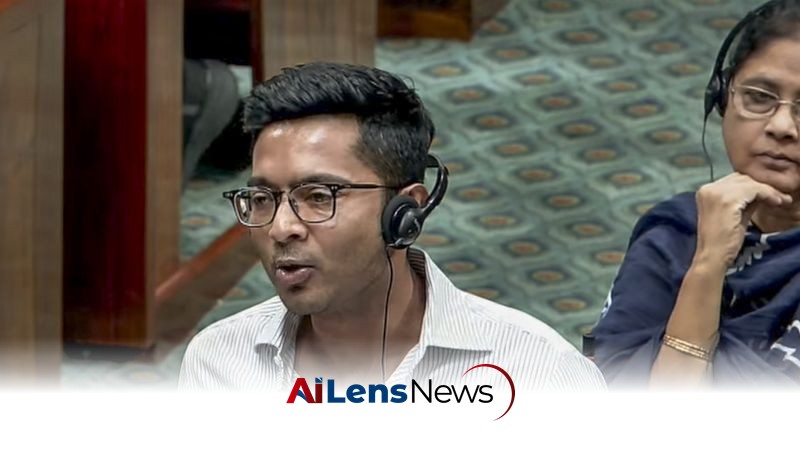


In a heated Lok Sabha session, TMC MP Abhishek Banerjee criticized the government's handling of the NEET paper leak while supporting the Public Examinations Bill.
Chandigarh, India Jul 28, 2026 ALN: In a recent session of the Lok Sabha, Trinamool Congress (TMC) Member of Parliament Abhishek Banerjee voiced strong criticisms against the central government regarding its management of the NEET paper leak controversy. This incident has raised significant concerns about the integrity of public examinations in India, particularly the National Eligibility cum Entrance Test (NEET), which is a crucial gateway for students aspiring to enter medical colleges across the country. The NEET examination serves as a single entrance test for undergraduate medical courses in India, making its integrity paramount, as it directly impacts the future of thousands of aspiring medical professionals.
The NEET examination has been a focal point of discussions surrounding educational reforms and integrity in the examination process. It has faced numerous controversies over the years, including allegations of paper leaks, malpractices, and administrative inefficiencies. These issues have not only undermined the credibility of the NEET but have also raised broader questions about the governance of educational assessments in India. The examination's significance cannot be overstated, as it is the primary means through which students gain admission to medical colleges, which are often seen as the stepping stones to prestigious careers in healthcare.
Banerjee's remarks came amid growing concerns over the integrity of public examinations, particularly the NEET. He argued that the government must take responsibility for the issues surrounding the examination process, which has faced scrutiny due to allegations of unfair practices. The NEET paper leak controversy is not an isolated incident; it is part of a broader pattern of challenges that have emerged in the Indian education system, where the credibility of examinations has been repeatedly called into question. The implications of these challenges are profound, affecting not only the students who take these exams but also the overall trust in the educational system.
“A bill cannot serve as a certificate of innocence,” Banerjee stated, highlighting the inadequacies in the government's approach to addressing the NEET paper leak. His insistence that students deserve more than just promises reflects a growing sentiment among students and parents who are demanding accountability from the government and educational authorities. This demand for accountability is particularly crucial in a country where education is often viewed as the key to upward mobility and where the stakes for students are incredibly high.
The TMC's support for the Public Examinations (Prevention of Unfair Means) Amendment Bill, 2026, reflects its commitment to reforming the examination process. This bill aims to strengthen the legal framework against the use of unfair means in public examinations. However, the party's leadership is adamant that the government must also address the underlying issues that have led to public distrust in the examination system. This includes not only legislative measures but also systemic reforms that ensure effective monitoring and management of examinations. The need for a comprehensive approach is essential, as piecemeal solutions may not be sufficient to restore confidence in the system.
The implications of the NEET paper leak controversy extend beyond immediate concerns about the examination itself. They raise questions about the overall governance of educational institutions and the effectiveness of regulatory bodies. The central government's role in ensuring the integrity of public examinations is critical, as it influences public confidence in the educational system. A failure to address these issues could have long-term repercussions on the aspirations of students and the credibility of the education system as a whole. The educational landscape in India is already fraught with challenges, and incidents like the NEET paper leak only exacerbate existing problems.
Banerjee's comments resonate with many students and parents who have expressed frustration over the handling of the NEET controversy. The TMC has positioned itself as a voice for accountability, urging the government to prioritize the interests of students over political agendas. This stance is particularly relevant in the context of the upcoming elections, where educational issues are likely to play a significant role in shaping voter sentiment. As political parties vie for support, the handling of educational issues, including the NEET controversy, may become a pivotal point of contention.
The NEET controversy has also sparked a broader debate about the fairness of entrance examinations in India. Critics argue that the current system disproportionately affects students from disadvantaged backgrounds who may lack access to resources that can help them prepare effectively for such competitive exams. This has led to calls for a more equitable approach to education that considers the diverse socio-economic realities of students across the country. The existing disparities in access to quality education and preparatory resources have intensified discussions about the need for systemic changes that can level the playing field for all students.
As the debate continues, it remains to be seen how the government will respond to the criticisms and what measures will be implemented to restore faith in the examination process. The TMC's vocal opposition to the government's handling of the NEET controversy highlights the growing demand for transparency and accountability in public examinations. It also serves as a reminder of the critical importance of ensuring that educational assessments are conducted fairly and without bias. The stakes are high, as the outcomes of these examinations can significantly affect students' futures and career prospects.
In conclusion, the NEET paper leak controversy has opened up a vital conversation about the integrity of public examinations in India. As stakeholders in the education sector, including students, parents, and political parties, continue to voice their concerns, the onus is on the government to take decisive action. This involves not only addressing the immediate issues surrounding the NEET but also implementing long-term reforms that enhance the credibility of the examination system. The future of countless students hangs in the balance, and it is imperative that their interests are placed at the forefront of any discussions regarding educational policy and reform. The path forward must prioritize transparency, fairness, and accountability to rebuild trust in the examination process and ensure that all students have a fair chance at success.
To learn more about the latest developments in Elections, stay updated with our exclusive reports and analyses on AiLensNews.

