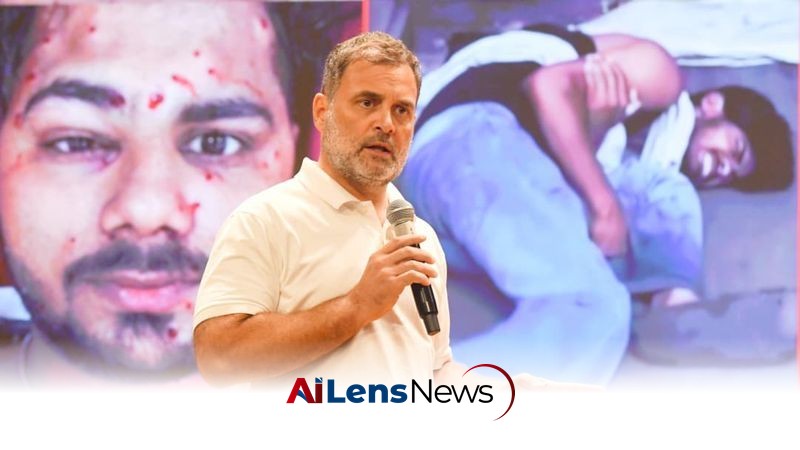


Rahul Gandhi claims the Modi administration is preventing him from addressing concerns regarding police actions against NEET protestors, specifically targeting Amit Shah.
Chandigarh, India Jul 30, 2026 ALN: In a recent outburst, Rahul Gandhi, the Leader of the Opposition, accused the Narendra Modi-led government of stifling his voice in the Lok Sabha. He alleged that the government is actively preventing him from raising critical questions regarding the police's actions against students protesting the NEET paper leak. This incident highlights the ongoing tensions within Indian politics, particularly concerning the role of opposition parties and the government’s response to dissent.
During a press conference, Gandhi expressed his frustration, stating, "The government is trying to shield Union Home Minister Amit Shah from scrutiny by gagging my voice in Parliament." He emphasized the importance of allowing opposition leaders to speak freely on issues that affect the youth and the integrity of the education system. This statement is significant as it underscores the broader issue of accountability in governance, particularly in a democratic setup where the opposition plays a crucial role in questioning the ruling party’s policies and actions.
The protests erupted following allegations of irregularities in the NEET examination process, which many students and parents claim have compromised the fairness of the examination. The National Eligibility cum Entrance Test (NEET) is a highly competitive examination that determines admission to medical colleges across India. Given its importance, any allegations of malpractice can lead to widespread unrest among students and their families.
The police's response to these protests has drawn significant criticism, with reports of excessive force being used against demonstrators. Eyewitness accounts and media reports have suggested that law enforcement agencies employed heavy-handed tactics to disperse crowds, leading to injuries among students and raising questions about the right to peaceful assembly. This situation has sparked a larger debate about the balance between maintaining public order and respecting citizens' rights to protest.
Gandhi's accusations come amidst a broader narrative of increasing tensions between the opposition and the ruling party. He highlighted instances where he felt his attempts to raise these issues were systematically blocked. "This is not just about me; it is about the right of every citizen to question their government," he stated. His remarks resonate with a growing sentiment among many opposition leaders and activists who believe that the current government has adopted a more authoritarian approach to dissent, undermining democratic principles.
Moreover, Gandhi's comments reflect a broader concern regarding the shrinking space for opposition voices in Indian politics. Critics of the government have pointed to various incidents where dissent has been met with hostility, whether through legislative measures, police action, or media censorship. This trend raises important questions about the health of democracy in India and the role of institutions in safeguarding civil liberties.
As of now, the government has not publicly responded to Gandhi's claims. However, supporters of the ruling party have often dismissed opposition criticisms as politically motivated attempts to undermine the government. This dismissal is not uncommon in political discourse, where accusations of politicization are frequently used to deflect scrutiny. The ruling party's silence on specific allegations, however, may also be interpreted as an attempt to avoid engaging in a contentious debate that could further escalate tensions.
The public's reaction to Gandhi's statements has been mixed. While some support his call for accountability, others believe that the opposition should focus on constructive solutions rather than merely criticizing the government. This division in public opinion highlights the complexities of political engagement in India, where citizens often have varied perspectives on governance and the role of opposition parties.
Social media platforms have become a battleground for these discussions, with users expressing their support or dissent regarding Gandhi's accusations and the government's handling of the protests. The discourse surrounding these events illustrates the power of digital communication in shaping public opinion and mobilizing support for various political causes.
As the political landscape continues to evolve, the focus remains on how the government will address the ongoing protests and the allegations surrounding the NEET examination process. The outcome of this situation could have significant implications for the future of both the ruling party and the opposition. A failure to address the concerns raised by students and the opposition could lead to further unrest and disillusionment among the electorate, particularly the youth, who are increasingly vocal about their expectations from the government.
Furthermore, the ongoing protests and the government's response may set a precedent for how dissent is managed in India. If the government chooses to adopt a conciliatory approach, it may foster a more constructive dialogue with opposition parties and civil society. Conversely, if it continues to suppress dissent, it could exacerbate the divide between the government and the opposition, leading to a more polarized political environment.
In conclusion, the situation reflects the growing divide between the ruling party and the opposition, with both sides entrenched in their positions. The coming days will likely see further developments as the protests continue and the government responds to the mounting pressure. The ability of the opposition to effectively raise issues of public concern, and the government's willingness to engage with those issues, will be crucial in determining the trajectory of Indian politics in the near future. As citizens watch closely, the implications of these events will resonate beyond the immediate context, shaping the future of democratic engagement in India.
To learn more about the latest developments in Political Controversies, stay updated with our exclusive reports and analyses on AiLensNews.

