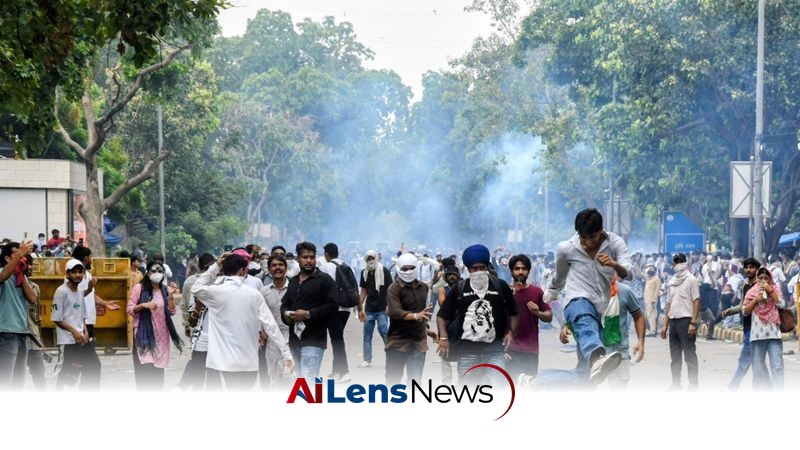


Thousands gathered at Jantar Mantar for the CJP's march to Parliament, alleging police excesses after a crackdown on their protests.
Chandigarh, India Jul 20, 2026 ALN: In a significant show of dissent, thousands of supporters of the Cockroach Janta Party (CJP) gathered at Jantar Mantar on Sunday, gearing up for their planned march to Parliament set for Monday. This mobilization comes in the wake of heightened tensions with authorities, as Delhi Police have imposed restrictions on marches and public assemblies outside designated protest zones. The CJP's gathering at Jantar Mantar, a historic site for protests in India, underscores the party's commitment to voicing grievances against perceived government overreach and the erosion of democratic rights.
The CJP, known for its vocal stance against governmental policies, has accused the police of excessive force during recent crackdowns on their gatherings. Eyewitness accounts from the scene describe a chaotic atmosphere, with police reportedly using tear gas and batons to disperse crowds, leading to injuries among protesters. Such incidents have raised serious concerns regarding police conduct and the treatment of peaceful demonstrators, prompting discussions about the balance between maintaining public order and respecting the right to protest.
The Sansad Chalo march is part of a broader movement aimed at drawing attention to various socio-political issues that the CJP claims are being ignored by the government. Participants are demanding accountability and transparency in governance, as well as the protection of civil rights. The CJP has positioned itself as a champion of marginalized voices, advocating for policies that they believe will foster inclusivity and fairness. This march is seen not only as a protest against specific government actions but also as a call to action for citizens to engage with the democratic process and hold their leaders accountable.
The backdrop of this protest is an increasingly polarized political landscape in India, where dissenting voices have faced significant challenges. The CJP's mobilization reflects a growing discontent among various segments of society who feel marginalized by current policies and governance approaches. Issues such as economic inequality, social justice, and environmental concerns have galvanized support for the CJP, making their march a focal point for broader societal grievances.
Historically, Jantar Mantar has been a site of significant protests in India, providing a space for citizens to voice their concerns directly to the government. This tradition of dissent is rooted in India's democratic framework, which guarantees the right to peaceful assembly. However, as the political climate has shifted in recent years, many activists argue that these rights are increasingly under threat. The CJP's decision to hold their march at this iconic location is a deliberate choice, signaling their intent to reclaim this space for civil discourse and protest.
As tensions escalated, the Delhi Police issued a statement justifying their actions as necessary for maintaining public order. However, the CJP has vehemently contested this narrative, asserting that the police's response was disproportionate and aimed at stifling dissent. The use of force against protesters has drawn criticism from human rights advocates who argue that such tactics undermine the fundamental right to peaceful assembly, which is enshrined in the Constitution of India.
“We are here to exercise our democratic right to protest, and we will not be silenced by intimidation tactics,” a CJP spokesperson stated during the gathering. The organization has vowed to continue its sit-in near Kerala House until their demands are met. This determination reflects a broader sentiment among activists and civil society groups who are increasingly willing to confront state power in defense of their rights. The ongoing situation raises pertinent questions about the role of law enforcement in democratic societies and the extent to which they should go to maintain order.
The allegations of police brutality are not isolated incidents; they are part of a larger pattern observed in recent years, where law enforcement agencies have been accused of excessive force against protesters. This trend has sparked widespread debate about the accountability of police forces and the need for reforms to ensure that the rights of citizens are protected during demonstrations. The CJP's experience is emblematic of the struggles faced by many groups advocating for social change in an environment where dissent is often met with hostility.
As the situation develops, the CJP has called for solidarity from other civil society groups and political organizations. They are urging citizens to join their cause and stand against what they describe as authoritarian measures by the state. The call for unity among various factions of society highlights a critical moment in Indian politics, where disparate groups may find common ground in their opposition to perceived government overreach.
With the march to Parliament looming, the CJP is preparing for potential confrontations with law enforcement, emphasizing that their commitment to peaceful protest remains steadfast despite the challenges they face. The organizers are strategizing on how to maintain a peaceful atmosphere while also making their voices heard in the corridors of power. This delicate balance is crucial, as any escalation could lead to further violence and a crackdown on dissent.
The CJP's leadership has indicated that they are exploring various strategies to amplify their message, including engaging with media outlets, leveraging social media platforms, and seeking support from influential figures in civil society. This multifaceted approach aims to broaden their reach and mobilize a larger segment of the population to join their cause. The effectiveness of these strategies will play a significant role in determining the impact of the march and the subsequent response from the government.
The events at Jantar Mantar highlight the ongoing struggle for civil liberties in India. As the CJP continues its sit-in, the eyes of the nation are on both the protesters and the authorities, with many wondering how this confrontation will unfold in the coming days. The outcomes of such protests can have lasting implications for the political landscape, influencing public opinion and potentially shaping government policy.
Moreover, the CJP's actions may inspire other movements within the country, leading to a resurgence of activism focused on various issues, including human rights, environmental protection, and economic justice. As more citizens engage with these movements, the potential for significant political change increases, challenging the current status quo. The CJP's efforts to mobilize support may also encourage other marginalized groups to assert their rights and demand accountability from those in power.
The implications of these protests extend beyond immediate political outcomes; they also touch upon fundamental questions about the nature of democracy in India. As citizens increasingly assert their rights to protest and challenge government actions, the state may be compelled to reconsider its approach to dissent. This could lead to either a more responsive governance model or a further entrenchment of repressive measures aimed at curbing opposition.
In conclusion, the current protests led by the CJP are emblematic of a broader struggle within Indian society for the preservation of democratic rights and civil liberties. As the political climate continues to evolve, the CJP's actions at Jantar Mantar may serve as a catalyst for renewed dialogue about governance, accountability, and the role of civil society in shaping the future of the nation. The coming days will be crucial in determining not only the fate of the march but also the trajectory of dissent in India as a whole. The outcome of this protest could resonate across the political spectrum, influencing not just the CJP's immediate goals, but also the broader landscape of civil rights and activism in the country.
To learn more about the latest developments in Elections, stay updated with our exclusive reports and analyses on AiLensNews.

