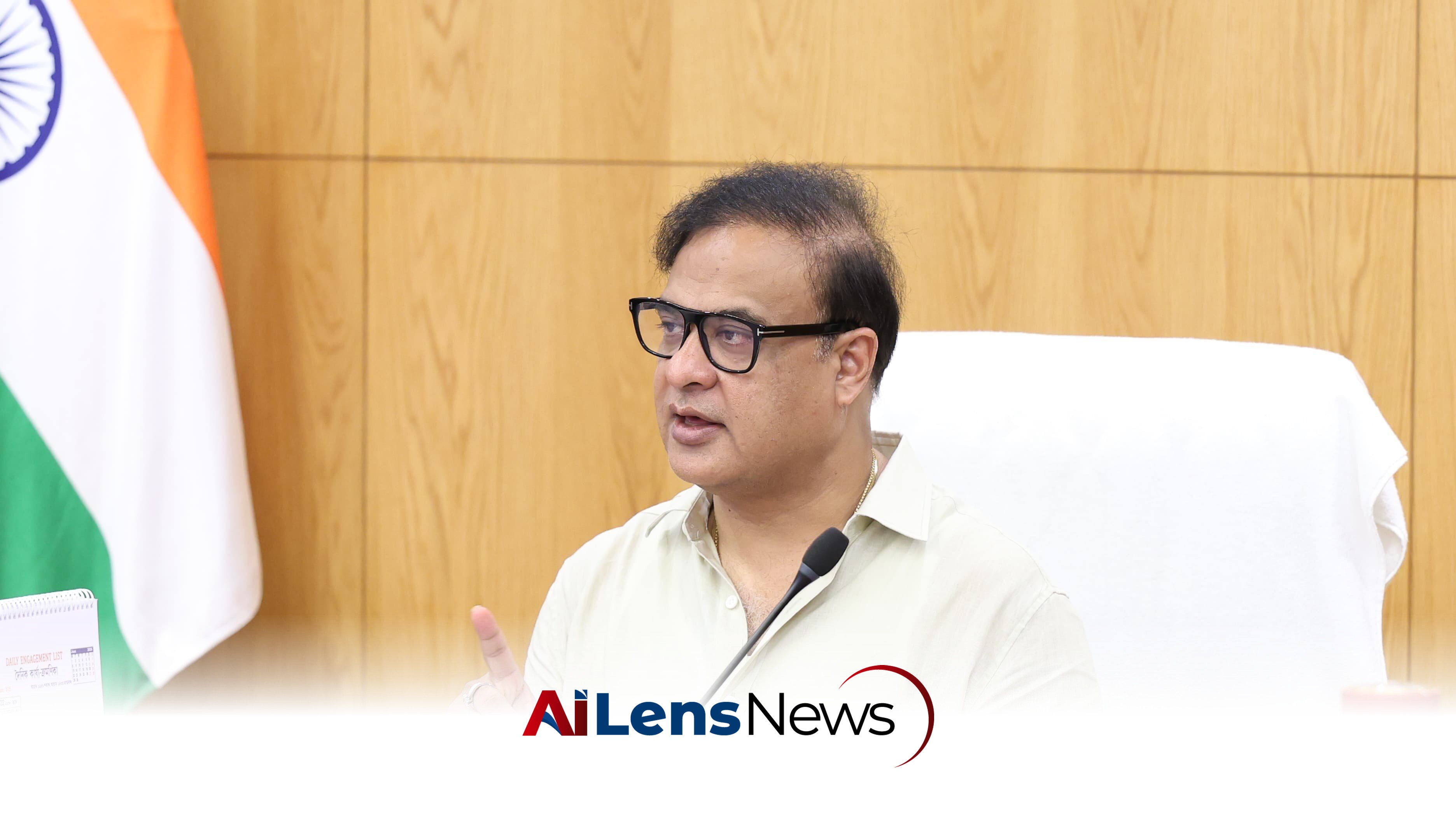


Assam's Chief Minister Himanta Biswa Sarma highlights the significant impact of direct cash benefit transfers in reducing poverty, aiming for a single-digit rate.
Dispur, India Jul 15, 2026 ALN: Assam Chief Minister Himanta Biswa Sarma announced on Wednesday that direct cash benefit transfer (DBT) schemes have been pivotal in lowering the poverty rate in the state, which now stands at 14.47%. He emphasized the government's commitment to further reduce this rate to a single digit.
During a discussion on the state budget in the Assembly, Sarma revealed that Assam's multidimensional poverty rate has decreased from 32.67% in 2015 to its current level. The multidimensional poverty index is a broad measure that considers various factors beyond income, including access to education, health services, and living standards. Sarma stated, "Direct cash benefit transfer has played the most major role in poverty alleviation in our state, and we intend to bring down the rate to a single digit. To attack poverty directly, direct cash benefit transfer is the way. Poverty alleviation through development, agriculture, MSMEs, etc., will take years."
The Chief Minister acknowledged the central government's support in implementing various ambitious projects, which has enabled his administration to undertake transformative initiatives. The role of the central government in providing financial assistance and policy support has been crucial in implementing DBT schemes effectively. Sarma criticized previous Congress governments for their failure to effectively reduce poverty, attributing this to a lack of bank accounts and Aadhaar registrations among the populace. The Aadhaar system, a biometric identification initiative, has been instrumental in ensuring that benefits reach the intended beneficiaries. Sarma recalled that former Prime Minister Rajiv Gandhi had noted that only a fraction of welfare benefits reached the intended beneficiaries, highlighting the importance of direct transfers in ensuring that aid reaches those who need it most.
He highlighted that welfare schemes such as Orunodoi, Nijut Moina, and free food grain distribution have significantly contributed to poverty reduction in Assam. The Orunodoi scheme, for instance, provides financial assistance to low-income households to meet their essential needs, while the Nijut Moina program focuses on providing employment opportunities. The distribution of free food grains, especially during the COVID-19 pandemic, has also played a critical role in supporting vulnerable populations. Sarma described the budget as a reflection of the combined commitment of both the Centre and the state towards development, indicating a collaborative approach to governance.
Ambitious projects like the Kaziranga elevated corridor and the underground tunnel through the Brahmaputra are being realized due to the central government's backing. The Kaziranga elevated corridor aims to improve connectivity while ensuring the safety of wildlife in the Kaziranga National Park, a UNESCO World Heritage site known for its population of the Indian one-horned rhinoceros. The underground tunnel project is expected to enhance transport efficiency and reduce congestion in the region.
Addressing opposition claims that the budget was merely a "copy-paste" of previous years, Sarma defended it as a continuation of the BJP-led government's vision for the state's progress. He urged MLAs to foster entrepreneurial ventures in their constituencies, collaborate in implementing government projects, and guide youth in succeeding in competitive exams. This call to action for local leaders reflects a broader strategy to engage communities in the development process, ensuring that government initiatives resonate with the needs of the populace.
Moreover, Sarma warned of strict action against individuals obstructing development projects, alleging that those influenced by Left ideology were opposing necessary advancements. This statement underscores the political tensions in the region, as development initiatives often face opposition from various factions that may prioritize different ideologies or approaches to governance. He stressed the importance of industrialization, agriculture, and development in various sectors to increase the budget size, suggesting that a diversified economic strategy is essential for sustainable growth.
In conclusion, the Chief Minister reiterated the need for a competitive approach within the current federal structure to secure greater assistance from the Centre, emphasizing that the path to self-sufficiency for Assam lies in collaborative efforts and innovative initiatives. This approach reflects a broader trend in Indian politics where state governments seek to assert their needs and priorities in the context of a complex federal system. By advocating for a competitive relationship with the Centre, Sarma aims to ensure that Assam receives its fair share of resources and support, which is crucial for the state's long-term development goals.
The implications of these developments are significant, as they suggest a shift in how poverty alleviation is approached in Assam. The focus on direct cash transfers could serve as a model for other states grappling with similar issues, potentially reshaping the landscape of social welfare in India. As the government continues to implement and refine these programs, the long-term impact on poverty reduction will be closely monitored by policymakers, economists, and social scientists alike.
Furthermore, the success of these initiatives may hinge on the state’s ability to maintain transparency and efficiency in the distribution of benefits. Ensuring that funds reach the intended recipients without leakage or corruption is essential for sustaining public trust and achieving the desired outcomes of poverty alleviation. As Assam navigates these challenges, the experiences and lessons learned may provide valuable insights for other regions facing similar socioeconomic conditions.
Ultimately, the commitment to reducing poverty in Assam reflects a broader national discourse on development, welfare, and the role of government in addressing social inequalities. As the state continues to implement its strategies, the outcomes will likely influence discussions on best practices in poverty alleviation across India, contributing to the ongoing efforts to create a more equitable society.
To learn more about the latest developments in Policies & Reforms, stay updated with our exclusive reports and analyses on AiLensNews.

