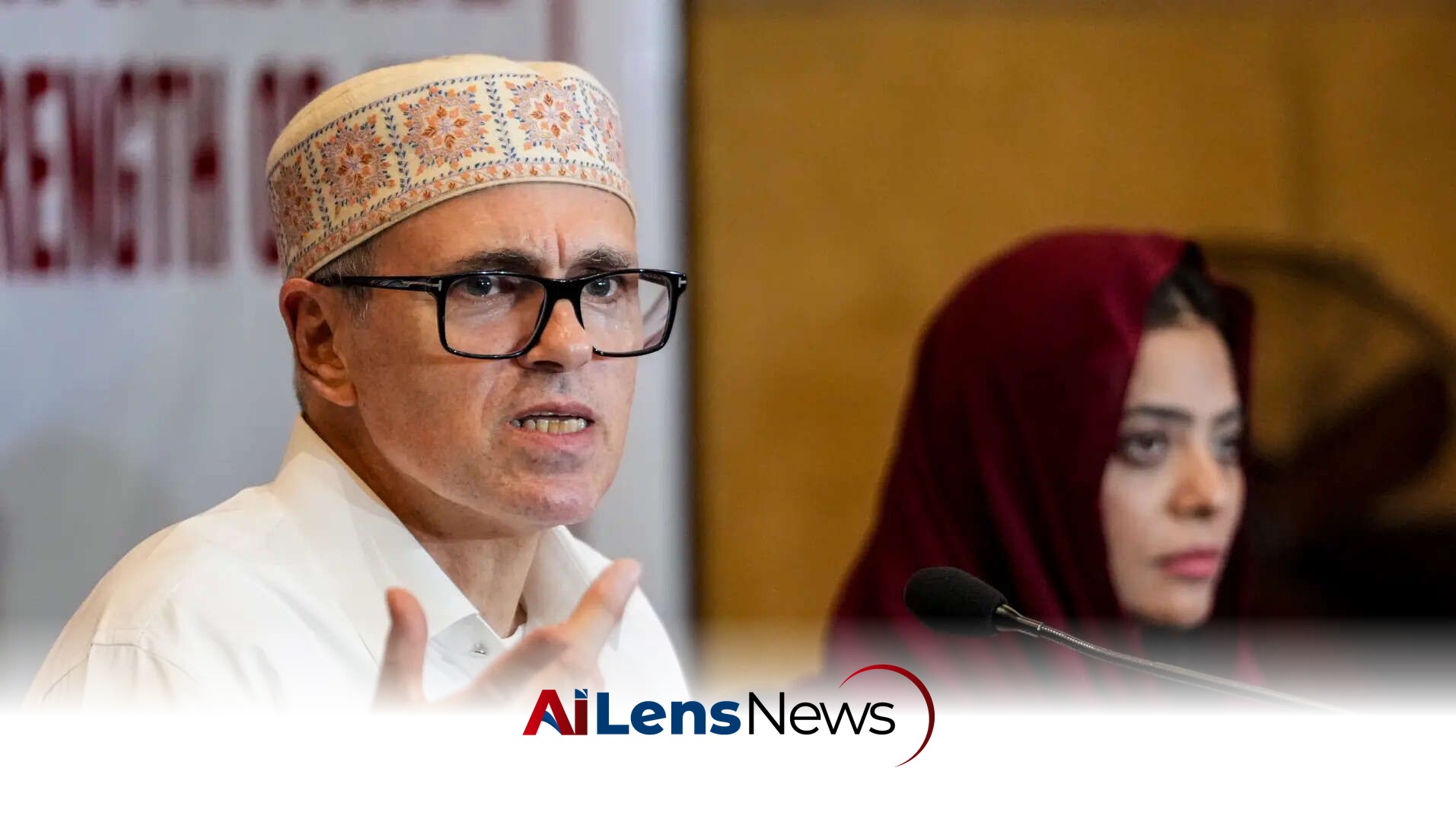


Omar Abdullah emphasizes the need for statehood as essential for restoring Article 370's significance in Jammu and Kashmir. He criticizes the PDP's stance on the issue.
New Delhi, India Jul 21, 2026 ALN: In a recent statement, Jammu and Kashmir Chief Minister Omar Abdullah asserted that statehood is a fundamental prerequisite for reinstating the special status granted by Article 370. Abdullah's remarks come in response to the People's Democratic Party (PDP) leader Mehbooba Mufti, who has been vocal about the need to restore this special status. The context of this discussion is rooted in the historical and political significance of Article 370, which granted a degree of autonomy to Jammu and Kashmir when it acceded to in 1947.
Article 370 was abrogated in August 2019 by the n government, leading to the reorganization of Jammu and Kashmir into two Union Territories: Jammu & Kashmir and Ladakh. This move was met with widespread criticism, particularly from local political parties, including the National Conference and the PDP, both of which have historically advocated for greater autonomy and special status for the region. Since the abrogation, the political landscape in Jammu and Kashmir has undergone significant changes, with local leaders now calling for the restoration of statehood as a means to regain some level of self-governance.
Abdullah questioned the relevance of Article 370 without statehood, emphasizing that power-sharing arrangements are meaningless if the state does not have its own governance framework. He stated,
"What does Article 370 mean if we do not have statehood? It is essential for any meaningful power-sharing arrangement."
This statement reflects a growing sentiment among various political factions in Jammu and Kashmir that statehood must be restored before any discussions about special status can take place. The notion of statehood is not merely a political demand; it represents a deeper desire for self-determination and local governance that has been a longstanding issue in the region. The political dynamics in Jammu and Kashmir are complex, influenced by historical grievances, national identity, and the ongoing conflict with Pakistan over territorial claims.
The PDP, on the other hand, recently declined an invitation to participate in a protest aimed at advocating for the restoration of Article 370. This decision has raised eyebrows among political observers, as the PDP has traditionally championed the cause of special status for Jammu and Kashmir. This apparent shift in strategy could indicate internal divisions within the party or a recalibration of its approach to the current political climate, which has seen increasing pressure from both the central government and local constituencies.
The political landscape in Jammu and Kashmir is further complicated by the presence of various stakeholders, including civil society organizations, youth groups, and other political parties that are also calling for statehood. The demand for statehood has become a rallying point for many, as it symbolizes a return to a more representative and accountable form of governance. For instance, the National Conference, under Abdullah's leadership, has been vocal in its commitment to restoring the rights and privileges that were stripped away following the abrogation of Article 370.
In his address, Abdullah reassured the public that the National Conference remains steadfast in its commitment to the promises made to the people of Jammu and Kashmir. He indicated that a new party strategy and program will be formulated soon, aimed at addressing the evolving political landscape. This proactive approach suggests that the National Conference is preparing to engage with the electorate more effectively, potentially revitalizing its base and consolidating support for the statehood agenda.
As the political discourse surrounding Jammu and Kashmir continues to evolve, Abdullah's comments highlight the ongoing debate over the region's governance and autonomy. The call for statehood is gaining traction among various political factions, as they seek to redefine the relationship between the state and the central government. The implications of this demand are significant, as restoring statehood could lead to a more participatory political process, allowing for greater local input in governance and decision-making.
Moreover, the issue of statehood is intertwined with the broader narrative of identity and self-governance in Jammu and Kashmir. Many residents view statehood as essential for preserving their cultural and political identity in the face of centralizing pressures from New Delhi. This sentiment is particularly strong among younger generations who are increasingly vocal about their aspirations for the future of the region.
Historically, Jammu and Kashmir has had a unique status within , which was recognized through Article 370. This article granted the region substantial autonomy, allowing it to have its own constitution and laws, except in matters of defense, communications, and foreign affairs. The abrogation of this article was a contentious issue, sparking protests and debates about the implications for local governance and the rights of the people in the region.
The reorganization into Union Territories has also led to concerns regarding the dilution of local governance and representation. Many in Jammu and Kashmir fear that the central government's direct control may exacerbate existing tensions and undermine the region's distinct identity. This has led to calls for a restoration of statehood as a means to re-establish a local government that can address the specific needs and aspirations of its people.
The National Conference, along with other local parties, has been vocal in advocating for the restoration of statehood. They argue that without it, any discussions surrounding Article 370 and its implications are futile. Abdullah's emphasis on statehood reflects a broader consensus among these parties that self-governance is critical for the political and social stability of the region.
In conclusion, Abdullah's emphasis on statehood as a prerequisite for Article 370's significance underscores the complexities of Jammu and Kashmir's political situation. The National Conference's forthcoming strategy will likely play a crucial role in shaping the future of the region's governance. As political parties navigate this challenging landscape, the demand for statehood will continue to resonate with the people of Jammu and Kashmir, serving as a critical touchstone for their aspirations and identity. The outcome of these discussions and the political maneuvers that follow will be closely watched, not only by local stakeholders but also by national and international observers concerned with the stability and governance of this strategically important region.
To learn more about the latest developments in Political Controversies, stay updated with our exclusive reports and analyses on AiLensNews.

