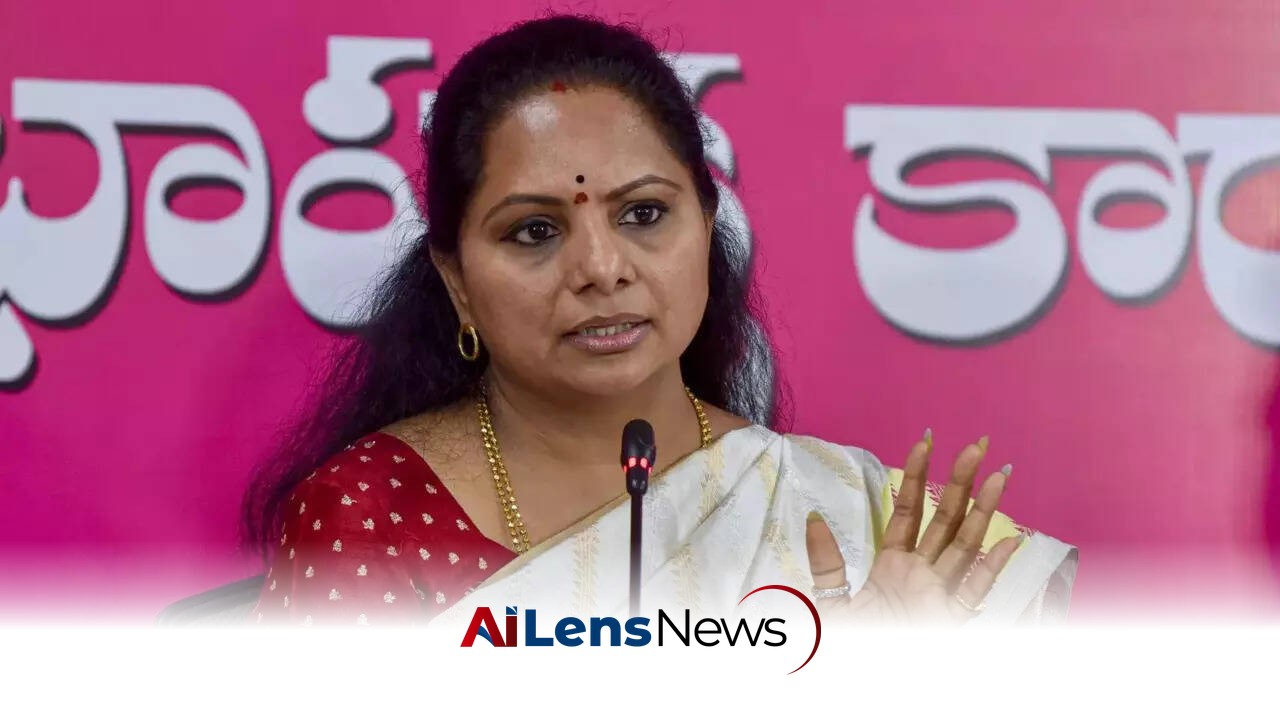


The Election Commission has issued a notice to K Kavitha regarding her new party's name, following numerous complaints about its similarity to the TRS.
New Delhi, India Jul 4, 2026 ALN: The Election Commission of (ECI) has recently issued a formal notice to K Kavitha concerning the name of her newly established political party, the Telangana Rakshana Sena. This action follows the receipt of over 1,100 complaints from various stakeholders, including her former party, the Bharat Rashtra Samithi (BRS). The crux of these complaints revolves around the perceived similarities between her party's name and that of the erstwhile Telangana Rashtra Samithi (TRS), a significant political entity that has played a crucial role in shaping the political landscape of Telangana.
K Kavitha, who is not only a prominent political figure but also the daughter of K Chandrashekar Rao, the Chief Minister of Telangana and founder of the BRS, has been an influential player in the state's politics for several years. Her decision to retain the initials 'TRS' in her party's name is grounded in her assertion that the TRS identity is deeply embedded in the political fabric of Telangana. The TRS, established in 2001, was pivotal in the movement advocating for the creation of a separate state of Telangana, which was officially formed in June 2014. Kavitha argues that the legacy of the TRS, which symbolizes two decades of struggle for statehood, is a crucial aspect of her party's identity.
The ECI's notice marks a critical juncture in the evolving political landscape of Telangana, particularly as Kavitha transitions from her previous role within the BRS to her new political endeavor. The BRS has expressed concerns that the similarity in names could mislead voters, potentially creating confusion during elections. Such concerns are not without merit, as political branding plays a significant role in electoral success, and the electorate's perception can be heavily influenced by party names and symbols. The BRS, which has dominated Telangana politics since the formation of the state, is understandably protective of its brand and identity, especially as it prepares for upcoming elections.
In response to the ECI's notice, Kavitha has indicated a willingness to consider a name change for her party. However, she remains steadfast in her belief that retaining the TRS initials is essential to her party's identity and its connection to the historical narrative of Telangana's formation. This situation underscores the intricate dynamics of political branding, particularly in a region where historical affiliations and identities are of paramount importance. The notion of political identity in Telangana is deeply intertwined with the state's history, and any attempt to navigate this landscape requires a nuanced understanding of the sentiments of the electorate.
The implications of the ECI's notice and any subsequent decisions made by Kavitha could significantly influence her party's acceptance among the electorate and its overall viability in Telangana's competitive political arena. The state's political landscape is characterized by a multitude of parties vying for influence, and the ability to resonate with voters is crucial for success. The BRS's established presence, combined with the emotional ties many voters have to the TRS legacy, presents a formidable challenge for Kavitha's new party.
Furthermore, the ECI's involvement highlights the regulatory framework governing political parties in , where the commission plays a vital role in ensuring fair practices and maintaining the integrity of the electoral process. The commission's actions reflect its commitment to addressing grievances raised by political entities and safeguarding the democratic process. The ECI's scrutiny of party names is not merely a bureaucratic exercise; it serves to uphold the principles of transparency and accountability in the political arena.
As the situation continues to unfold, it will be crucial to observe the responses from both the ECI and the BRS, as well as the broader political community in Telangana. The outcome of this dispute may set a precedent for how similar cases are handled in the future, particularly concerning the naming of political parties and the protection of established political identities. The ECI's decision could also influence how future political entities approach branding and naming conventions, potentially leading to more stringent regulations or guidelines.
In addition to the immediate political ramifications, this incident raises broader questions about the nature of political identity in Telangana. Political parties often draw upon historical narratives and regional identities to establish their legitimacy and connect with voters. The use of familiar symbols, names, and initials can evoke emotional responses and create a sense of continuity for constituents. Kavitha's insistence on using 'TRS' reflects an understanding of this dynamic and her desire to leverage the historical significance associated with the TRS name.
The issue at hand transcends the mere naming of a political party; it speaks to the larger narrative of political competition in Telangana. The BRS, under K Chandrashekar Rao's leadership, has maintained a dominant position in the political landscape since the formation of the state. Any challenge to its authority is closely scrutinized, and Kavitha's new party could represent a significant shift in this balance of power, depending on how effectively it can mobilize support and distinguish itself from the BRS.
As political campaigns ramp up in anticipation of future elections, the branding strategies employed by parties will be critical. The ability to resonate with voters through name recognition, historical context, and political messaging will likely play a decisive role in shaping electoral outcomes. Kavitha's situation serves as a reminder of the delicate interplay between history, identity, and politics in Telangana, particularly in regions where the struggle for statehood and regional pride are deeply intertwined.
In conclusion, the ECI's notice to K Kavitha regarding the name of her newly formed party is emblematic of the complexities involved in political branding and identity in Telangana. As Kavitha navigates this challenge, the reactions from the ECI, the BRS, and the electorate will be pivotal in determining the future trajectory of her political ambitions and the broader political landscape of the state. The unfolding developments will warrant close attention from political analysts and observers, as they may have lasting implications for party dynamics and voter perceptions in Telangana. The interplay of historical significance, political branding, and electoral strategy will continue to shape the political discourse in the region as stakeholders respond to this evolving situation.
To learn more about the latest developments in Elections, stay updated with our exclusive reports and analyses on AiLensNews.

