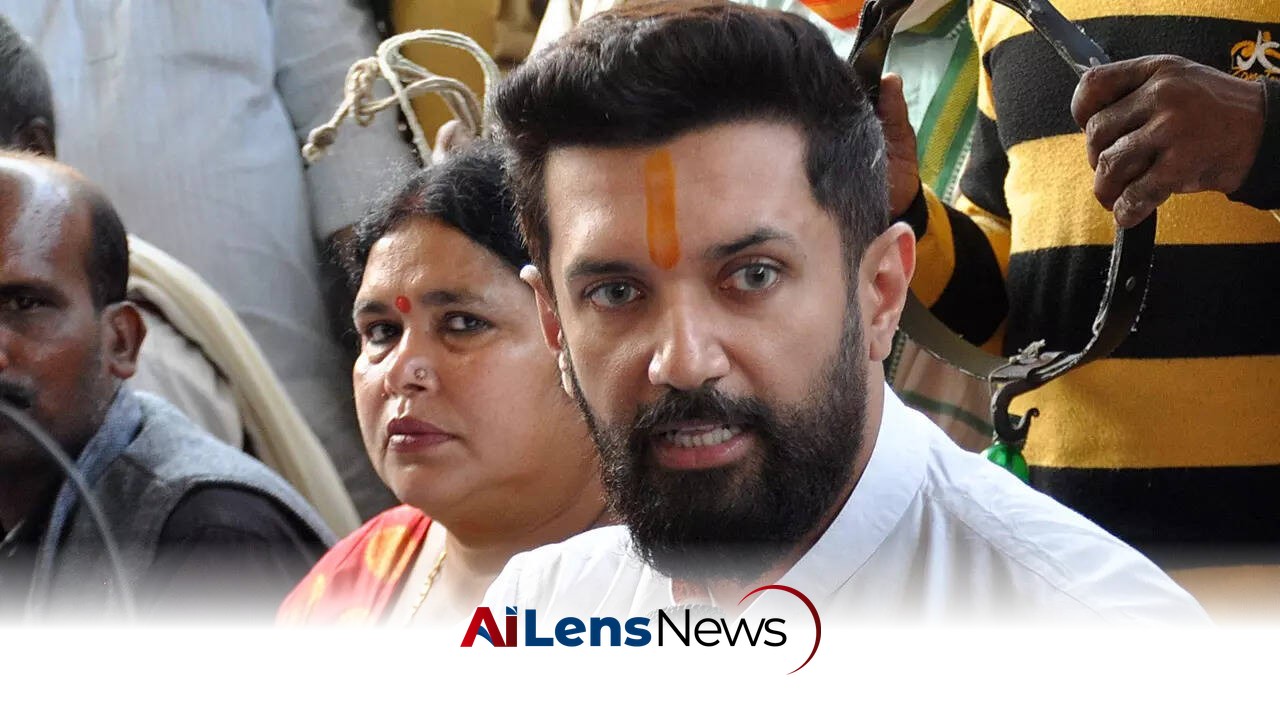


Chirag Paswan's Lok Janshakti Party (Ram Vilas) is preparing to contest the Uttar Pradesh assembly elections, focusing on alliances and expanding its presence in the state.
New Delhi, India Jul 5, 2026 ALN: Chirag Paswan's Lok Janshakti Party (Ram Vilas), a political entity that emerged from the legacy of the late Ram Vilas Paswan, is gearing up to contest the upcoming Uttar Pradesh assembly elections. This preparation marks a significant step for the party as it seeks to establish a more substantial presence in one of 's most politically significant states. Uttar Pradesh, often referred to as UP, is not only the most populous state in but also plays a crucial role in shaping national politics due to its substantial representation in the Lok Sabha, the lower house of 's Parliament. With 80 parliamentary seats, Uttar Pradesh holds a decisive position in determining the formation of the central government, making its assembly elections critical not only for local parties but also for national political dynamics.
The state unit of the Lok Janshakti Party (LJP) has been entrusted with the responsibility of determining the specifics of alliances and seat allocations ahead of the elections. This is a strategic move that reflects the party's understanding of the complex political dynamics in Uttar Pradesh, where coalition politics often dictate electoral outcomes. The LJP's ability to forge effective alliances with other parties could be critical in enhancing its electoral prospects, especially given the competitive nature of the state's political landscape. In recent elections, parties have often relied on alliances to consolidate votes, particularly among different caste groups that dominate the electorate in UP.
The LJP aims to expand its national footprint, particularly by strengthening its organizational presence in Uttar Pradesh. This strategic move is part of a broader effort to enhance the party's influence in the region. The party's leadership recognizes that Uttar Pradesh's political environment is characterized by a myriad of social, economic, and cultural factors that influence voter behavior. Thus, establishing a robust organizational structure is essential for the LJP to connect with the electorate effectively and communicate its agenda. The party's outreach efforts will likely involve grassroots engagement, focusing on local issues that resonate with voters, such as employment, education, healthcare, and social justice.
In addition to its electoral ambitions, the Lok Janshakti Party is also planning to celebrate the birth anniversary of its founder, Ram Vilas Paswan, in Lucknow this year. This event is expected to draw significant attention and serve as a platform for the party to reinforce its commitment to its foundational principles. Ram Vilas Paswan was known for his advocacy for social justice and the rights of marginalized communities, and this celebration could be an opportunity for the party to reassert its dedication to these values. By commemorating its founder's legacy, the LJP aims to connect with the electorate on an emotional level, reminding them of the party's historical commitment to uplift the underprivileged.
The upcoming assembly elections are crucial for the LJP as they seek to establish a stronger foothold in Uttar Pradesh. The decisions made by the state unit regarding alliances and seat sharing will be pivotal in determining the party's success in the elections. The political landscape in Uttar Pradesh is often characterized by a multi-party system, where various regional and national parties compete for influence. The Bharatiya Janata Party (BJP), the Samajwadi Party (SP), and the Bahujan Samaj Party (BSP) are among the key players in the state, and the LJP's strategy will need to account for their strengths and weaknesses. The BJP, for instance, has maintained a strong presence in the state, leveraging its organizational capabilities and a narrative focused on development and nationalism.
As the political landscape evolves, the LJP's strategies will be closely watched by both supporters and opponents. The party's ability to navigate alliances and effectively communicate its message will play a critical role in its electoral performance. In recent years, the LJP has sought to position itself as a champion of social justice, particularly for the Dalit and backward classes, which could resonate with voters looking for representation in a state where caste dynamics heavily influence electoral outcomes. The LJP's focus on these communities aligns with its historical roots and could help it carve out a niche in the competitive political arena of Uttar Pradesh.
Furthermore, the LJP's outreach efforts will likely involve engaging with local communities and addressing their specific concerns. This grassroots approach could be instrumental in building a loyal voter base, particularly in rural areas where the party's message of empowerment and social justice may find a receptive audience. By prioritizing local issues, the LJP can differentiate itself from larger parties that may be perceived as out of touch with the grassroots realities. The party's focus on local issues, combined with its national vision, could help it carve out a distinct identity in the crowded political arena of Uttar Pradesh.
Overall, the Lok Janshakti Party (Ram Vilas) is poised to make a concerted effort in the Uttar Pradesh assembly polls, with a focus on collaboration and organizational growth. The party's leadership is aware that the success of their campaign will hinge on their ability to resonate with the electorate and present a compelling narrative that aligns with the aspirations of the people of Uttar Pradesh. As the election date approaches, the political stakes are high, and the LJP's strategies will be critical in determining not only its future but also its role in the broader political landscape of the state and the nation.
Moreover, the LJP's participation in the Uttar Pradesh assembly elections could have broader implications for the party's national ambitions. A strong performance in UP could enhance the party's credibility and provide a platform for future electoral endeavors in other states. Conversely, a poor showing might hinder its growth prospects and affect its ability to attract alliances in the future. Thus, the upcoming elections represent not just a local contest but a significant moment for the party's trajectory in n politics.
In the context of the larger electoral landscape, the LJP's participation in Uttar Pradesh is indicative of the shifting dynamics within n politics, where regional parties are increasingly seeking to assert themselves against dominant national parties. The outcomes of the Uttar Pradesh assembly elections will not only influence the immediate political scenario but could also set the tone for future elections across the country, especially in states with similar socio-political contexts. As such, the LJP's strategies and performance will be critical in shaping its identity and influence in the evolving political narrative of .
To learn more about the latest developments in Elections, stay updated with our exclusive reports and analyses on AiLensNews.

