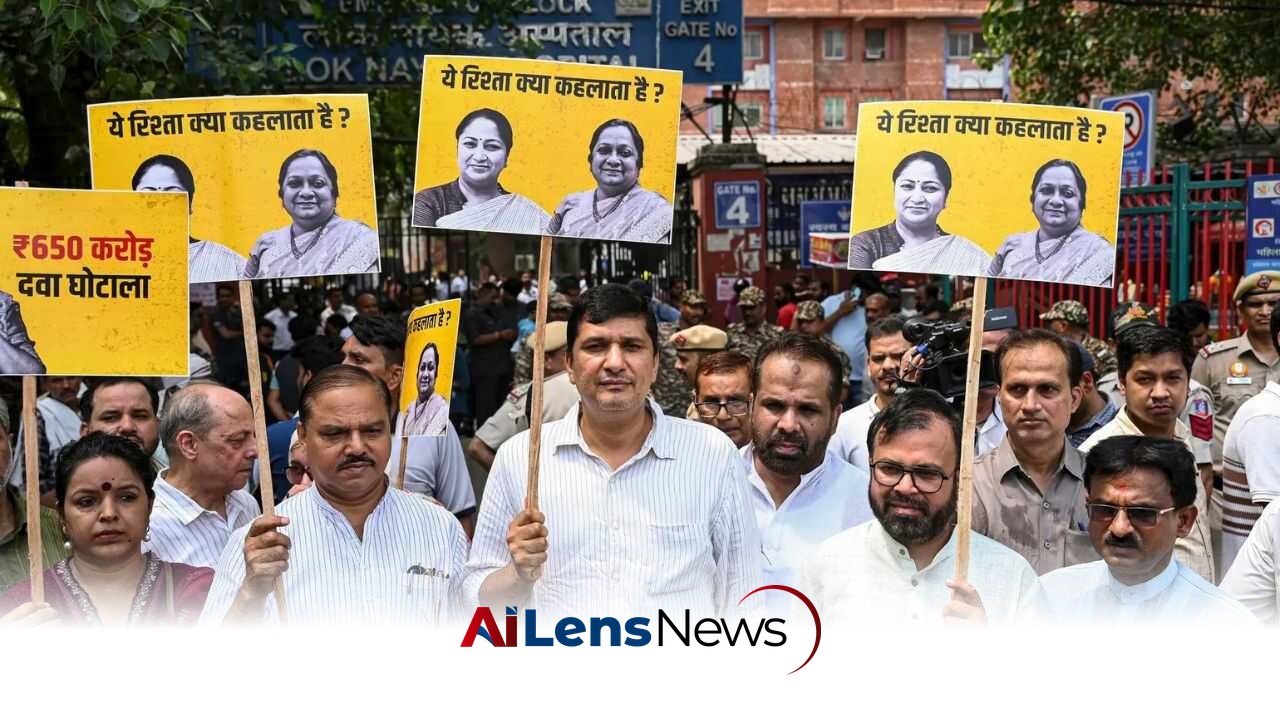


AAP protests at LNJP Hospital over a Rs 650 crore health scam, questioning CM Rekha Gupta's role in the accused's escape to Germany.
New Delhi, India Jul 6, 2026 ALN: The Aam Aadmi Party (AAP) staged a protest at LNJP Hospital, raising serious allegations regarding a Rs 650 crore health department scam. The party's leaders expressed their outrage over the apparent escape of the main accused, who is alleged to have been appointed by Chief Minister Rekha Gupta's government despite a prior vigilance inquiry. This incident has sparked significant public interest and concern, as it touches upon the broader issues of governance, accountability, and corruption that have plagued the political landscape in Delhi.
This protest is not an isolated incident but rather part of a broader narrative concerning corruption and governance in Delhi. The health sector, which is particularly sensitive due to its direct impact on public welfare, has been under scrutiny for various irregularities over the years. The Rs 650 crore health scam allegations have reignited public discourse on the integrity of government officials and the mechanisms in place to hold them accountable. The timing of these allegations is particularly critical, as they come at a moment when the public is increasingly aware of the need for transparency in government dealings, especially in sectors that directly affect their health and well-being.
During the protest, AAP leaders demanded accountability from CM Gupta, questioning why the accused was allowed to flee to Germany. The situation has raised eyebrows, particularly as AAP claims that the Anti-Corruption Branch (ACB) delayed the arrest, which they believe facilitated the escape. This assertion points to a perceived failure of law enforcement agencies to act promptly and decisively in the face of corruption allegations, raising questions about their effectiveness and independence. The ACB's role in this context is under intense scrutiny, as the public and political analysts alike ponder whether its actions—or lack thereof—reflect a systemic issue within the agency itself.
The AAP's protest is not just about this single incident; it draws parallels to other high-profile fugitives who have evaded justice in similar circumstances. Over the years, multiple cases have surfaced where individuals accused of financial misconduct or corruption have managed to escape the clutches of law enforcement, often leading to public outcry and demands for reform. The AAP's leaders are calling for immediate action and transparency from the government regarding the ongoing investigation into the health department's alleged corruption, emphasizing that such incidents undermine public trust in governmental institutions. This erosion of trust can have long-term implications for the relationship between the government and its citizens, potentially leading to increased apathy or disengagement from the political process among the electorate.
As the protest unfolded, party members held placards demanding answers and accountability, emphasizing the need for a thorough investigation into the health scam. The AAP's stance is clear: they believe that the government must take responsibility for the actions of its officials and ensure that justice is served. This call for accountability is particularly poignant in a time when public trust in political institutions is waning, and citizens are increasingly demanding transparency and ethical governance from their leaders. The AAP's strategy to leverage this discontent is a calculated move to position itself as a viable alternative to the current administration, appealing to voters who prioritize integrity in governance.
The implications of this protest extend beyond the immediate allegations of corruption. It highlights a growing concern among the electorate regarding the efficacy of anti-corruption measures in place. The AAP's vocal criticism of the government's handling of the situation serves as a reminder of the political stakes involved, particularly as the party seeks to maintain its relevance and support base amidst a challenging political landscape. In a city where political loyalties can shift rapidly, the AAP is keen to capitalize on any perceived missteps by the ruling government to solidify its position as the party of accountability.
In the backdrop of this protest, the AAP is also rallying public support, urging citizens to voice their concerns over corruption and governance issues. The party's leaders are keen on maintaining pressure on the government to act decisively against corruption, particularly in the health sector, which is crucial for public welfare. This approach is part of a broader strategy to mobilize grassroots support and position the AAP as a champion of transparency and accountability in governance. By engaging directly with citizens and encouraging them to speak out against corruption, the AAP is attempting to foster a sense of collective responsibility and activism among the populace.
Moreover, the protest reflects a growing trend in politics where opposition parties leverage public demonstrations to highlight perceived failures of the ruling government. This tactic not only serves to galvanize support but also places pressure on the government to respond to public grievances. The AAP's efforts in this regard are indicative of a broader political strategy that seeks to capitalize on public discontent and frame the narrative around accountability and good governance. In recent years, such protests have become a staple of political discourse, with parties using them as platforms to articulate their positions and rally supporters.
As the situation develops, it remains to be seen how the government will respond to these allegations and whether any actions will be taken against those involved in the alleged scam. The AAP's protest highlights the ongoing tensions in Delhi's political landscape, particularly surrounding issues of accountability and transparency in governance. The outcome of this protest and the subsequent governmental response could set a precedent for how corruption allegations are handled in the future, influencing public perception and trust in political institutions. A failure to adequately address these concerns could potentially lead to increased unrest and dissatisfaction among the electorate, further complicating the political environment.
In conclusion, the AAP's protest at LNJP Hospital is a significant event that encapsulates the ongoing struggle against corruption in Delhi's political framework. It raises critical questions about the accountability of government officials, the effectiveness of law enforcement agencies, and the role of opposition parties in advocating for transparency and justice. As public scrutiny intensifies, the need for a robust and independent mechanism to address corruption becomes increasingly apparent, highlighting the vital importance of integrity in governance for the welfare of the citizenry. The implications of this protest extend beyond the immediate context, potentially reshaping the political landscape in Delhi and influencing the future of governance in the region.
To learn more about the latest developments in Political Controversies, stay updated with our exclusive reports and analyses on AiLensNews.

