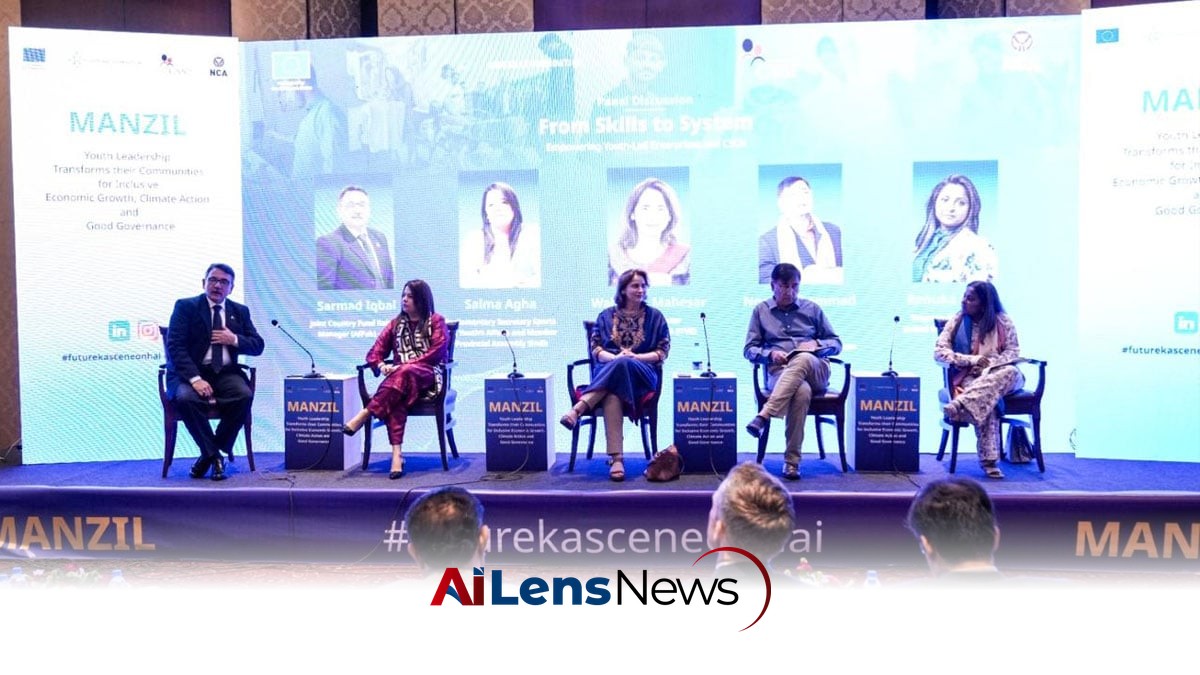


The EU launches a EUR 1.2 million initiative to empower young Pakistanis, addressing unemployment and climate challenges through skills development and leadership.
Islamabad, Pakistan Jul 11, 2026 ALN: With young people facing growing challenges ranging from unemployment and climate vulnerability to limited opportunities to participate in public decision-making, a new EUR 1.2 million initiative co-funded by the European Union (EU) aims to equip the next generation with the skills, opportunities and leadership needed to drive inclusive economic growth and sustainable development across Pakistan.
The MANZIL (Youth Leadership Transforming Communities for Inclusive Economic Growth, Climate Action and Good Governance) project will directly support approximately 4,000 vulnerable young women and men and strengthen 40 youth-led organizations across Rawalpindi, Lahore, Mirpurkhas and Sanghar. This initiative is a timely response to the pressing issues faced by the youth population in Pakistan, which is one of the largest in the world, with over 60% of its population under the age of 30.
The initiative is designed to help young people move beyond being beneficiaries of development programmes to becoming entrepreneurs, climate champions, community leaders and active partners in local governance. This shift is crucial as it recognizes the potential of youth to contribute actively to society rather than merely receiving aid. By fostering an environment where young people can thrive and take charge, the initiative aims to unlock their potential and harness it for the greater good.
Pakistan is home to one of the world’s largest youth populations, presenting both a significant opportunity and a pressing development challenge. While young people possess the energy and potential to drive economic growth and social progress, many continue to face barriers to employment, entrepreneurship, civic participation and access to resources. The high unemployment rate among youth, combined with inadequate educational opportunities and skills mismatch, exacerbates these challenges. Furthermore, many young people in Pakistan are unable to find jobs that match their qualifications, leading to frustration and disillusionment.
At the same time, climate change is placing increasing pressure on livelihoods and communities, particularly in vulnerable districts. The effects of climate change, such as increased flooding, droughts, and extreme weather events, disproportionately affect the most vulnerable populations, including young people. MANZIL responds to these interconnected challenges by investing in youth as drivers of long-term resilience and inclusive development. By equipping young people with the skills to address climate issues and promoting sustainable practices, the initiative aims to create a generation that is not only aware of climate challenges but also actively engaged in finding solutions.
Financially supported by the European Union, the initiative is being implemented by Norwegian Church Aid (NCA) in partnership with Civil Society Support Programme (CSSP) and Shirakat Foundation. The collaboration among these organizations highlights the importance of multisectoral partnerships in addressing complex social issues. By pooling resources, expertise, and networks, the MANZIL project aims to create a more significant impact than any single organization could achieve alone.
MANZIL will help young people develop market-relevant skills, establish and expand livelihoods, strengthen leadership capacities and design locally led climate solutions that address challenges within their own communities. This hands-on approach not only empowers youth but also fosters a sense of ownership and responsibility towards their communities. By encouraging young people to take initiative, the project aims to cultivate a culture of entrepreneurship and innovation.
The programme will also strengthen youth-led organisations so they can deliver sustainable development initiatives, mobilise communities and engage constructively with public institutions long after the project concludes. The sustainability of such initiatives is critical, as it ensures that the benefits of the project extend beyond its lifespan. By building the capacity of local organizations, MANZIL aims to create a robust network of youth leaders who can advocate for their communities and drive positive change.
Recognising that inclusive development requires inclusive participation, MANZIL places particular emphasis on ensuring opportunities for women and girls, persons with disabilities, transgender persons, faith minorities and young people from historically marginalised communities. This focus on inclusivity is vital in a country where gender disparities and social inequalities persist. By addressing the specific needs of marginalized groups, the initiative aims to create a more equitable society where everyone has the opportunity to contribute and thrive.
Speaking at the launch, representatives highlighted that investing in youth is essential to Pakistan’s future prosperity and resilience. Dr. Sébastien Lorion, Acting Head of Cooperation, the European Union Delegation in Pakistan said, “European Union proudly supports MANZIL. When young people have a voice, opportunities and recognition, societies become more innovative, more resilient and more just. And in Pakistan, this matters enormously. This is a country with extraordinary youth potential.” His remarks underscore the EU's commitment to empowering youth as a means of fostering sustainable development.
Mr. Stephen Kent, County Director, Norwegian Church Aid (NCA) said, “MANZIL is built on the belief that young people are not simply beneficiaries of development—they are leaders, innovators and partners in creating lasting change. By strengthening their skills, organizations and connections with public institutions, we are investing in solutions that will continue benefiting communities well beyond the life of this project.” His statement reflects a growing recognition that young people are not just passive recipients of aid but active agents of change who can shape their futures.
The initiative adopts an integrated approach that combines entrepreneurship development, leadership and management training, climate resilience, organisational strengthening and youth-led community action. This comprehensive strategy aims to address multiple facets of youth development, ensuring that participants are well-equipped to navigate the complexities of the modern world. By integrating various elements, MANZIL seeks to create a holistic framework that supports the personal and professional growth of young people.
It will also facilitate stronger collaboration between young people, civil society organisations and relevant government institutions to improve dialogue, encourage inclusive decision-making and create an enabling environment for youth leadership. Collaboration between various stakeholders is essential for creating a supportive ecosystem that nurtures youth potential. By fostering dialogue and cooperation, the initiative aims to break down barriers and promote a culture of collaboration.
Building on partnerships and community engagement structures established through previous initiatives, MANZIL seeks to strengthen local ownership and institutional capacity, ensuring that youth-led organisations continue contributing to inclusive governance, climate resilience and local economic development after the project ends. The emphasis on local ownership is crucial for ensuring that initiatives are culturally relevant and sustainable. By empowering local organizations, MANZIL aims to create a lasting impact that resonates within communities.
By investing in young people’s ideas, leadership and potential today, MANZIL aims to create stronger local institutions, more resilient communities and greater economic opportunities for the next generation—demonstrating that empowering youth is not only a social investment but a strategic investment in Pakistan’s future. The success of this initiative could serve as a model for similar efforts in other countries facing comparable challenges, highlighting the importance of youth engagement in achieving sustainable development goals. As the project unfolds, its impact will be closely monitored to ensure that it meets its objectives and delivers meaningful change for the youth of Pakistan.
To learn more about the latest developments in General News, stay updated with our exclusive reports and analyses on AiLensNews.

