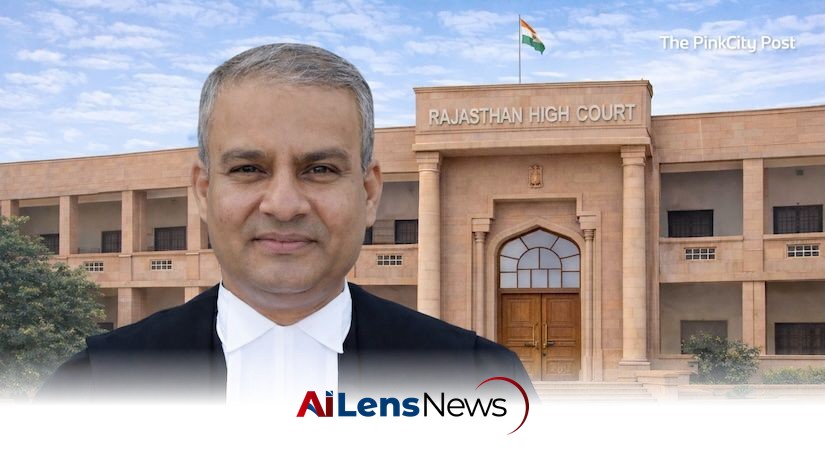


The Rajasthan High Court clarifies that Article 227 supervisory jurisdiction cannot replace a statutory appeal that a litigant chose not to pursue.
New Delhi, India Jul 10, 2026 ALN: Jodhpur: The Rajasthan High Court has made a significant ruling regarding the supervisory jurisdiction under Article 227 of the Constitution of India. In a recent decision, the court held that a party who consciously fails to avail an independent and efficacious statutory remedy of appeal against a trial court’s order cannot later invoke the supervisory jurisdiction under Article 227 to indirectly challenge an appellate order that has been issued in proceedings initiated by another party. This ruling emphasizes the importance of adhering to established legal procedures and the limitations of the supervisory jurisdiction.
Justice Farjand Ali presided over the case, dismissing the writ petition as misconceived. The ruling focused on the actions of the petitioner, Ayub Sodha, who had abstained from pursuing the statutory remedy of appeal against a trial court’s order. The court concluded that allowing the petitioner to challenge the appellate order, which was passed in proceedings instituted by another defendant, would undermine the integrity of the legal process.
The court’s observations highlighted the nature of supervisory jurisdiction under Article 227, stating:
“It is trite that the supervisory jurisdiction under Article 227 of the Constitution is neither appellate nor revisional in nature. The jurisdiction is intended to keep the subordinate Courts within the bounds of their authority and is to be exercised sparingly, only in exceptional situations where the order under challenge suffers from manifest perversity, patent illegality, jurisdictional error or results in palpable miscarriage of justice.”
This ruling arose from a writ petition filed under Articles 226 and 227 of the Indian Constitution, which contested an order dated May 2, 2023, passed by the Additional District Judge No. 1, Bikaner. This order had dismissed an appeal preferred by the State Government against a prior order from May 30, 2012, made by the Additional Civil Judge No. 2, Bikaner. The trial court’s initial order had directed the parties to maintain the status quo regarding a disputed piece of land located in Rani Bazar, Bikaner.
The background of the case involves a civil suit filed by Surendra Kumar Sethia against the State Government, where he claimed to hold a valid patta (lease) over the suit property and sought to prevent the State from constructing a road over it. During the proceedings, Ayub Sodha sought to be included as a defendant, arguing that the land was part of a public way and that the injunction sought by the plaintiff would obstruct public convenience and impede administrative functions. The trial court granted Sodha’s application for impleadment.
Initially, the trial court had declined the plaintiff’s request for a temporary injunction. However, following an appeal under Order XLIII of the Code of Civil Procedure, the appellate court allowed the appeal and remanded the case for fresh consideration. Upon remand, the trial court issued an order on May 30, 2012, directing the parties to maintain status quo. Subsequently, the State Government appealed this order, which was allowed, but the plaintiff’s writ petition before the Rajasthan High Court led to a further remand due to an undecided application under Section 5 of the Limitation Act. On May 2, 2023, the appellate court dismissed the State's appeal, a decision that neither the State nor the petitioner chose to challenge through the ordinary appellate route.
The court emphasized that despite being a party to the suit and the injunction proceedings, the petitioner had never appealed the trial court’s status quo order, which allowed it to attain finality concerning him. The ruling underscored that the mere fact that the State Government had pursued an appeal against the same order did not grant the petitioner the right to challenge the appellate decision that arose from proceedings he had not initiated. The court maintained that a litigant who consciously abstains from challenging an order before the competent appellate forum cannot, as a matter of course, seek to challenge the appellate decision rendered in proceedings initiated by another party.
Furthermore, the court pointed out that the petitioner’s challenge to the trial court’s order was independently barred due to the availability of a statutory remedy under Order XLIII of the Code, which he had failed to utilize. The court ruled that the petitioner could not bypass the statutory mechanism by invoking the supervisory jurisdiction under Article 227, which is meant to be exercised in exceptional circumstances.
In its order dated July 7, 2026, the court found no jurisdictional error, perversity, or manifest illegality in the impugned order and consequently dismissed the writ petition as devoid of merit. However, the court clarified that this dismissal would not preclude the petitioner from pursuing any other legal remedies available, including recourse under Order XXXIX Rule 4 of the Code of Civil Procedure, should the facts and circumstances warrant such action.
This decision by the Rajasthan High Court reinforces the principle that parties must engage with the legal process through the appropriate channels and remedies available to them. It serves as a reminder that the supervisory jurisdiction under Article 227 is not a substitute for the normal appellate process and should be reserved for exceptional cases where there are clear indications of injustice or legal error.
The case titled Ayub Sodha v. State of Rajasthan & Ors bears the case number S.B. Civil Writ Petition No. 8382/2023 and is cited as [2026:RJ-JP:29746]. The legal representatives for the petitioner included Mr. Manoj Bhandari, Senior Advocate, assisted by Mr. Prateek Surana, while the respondents were represented by Mr. OP Mehta, Mr. Rajeev Purohit, Mr. Harish Gurjar, Mr. Zuber Ahmed, and Mr. Tanay Jain.
This ruling has broader implications for the legal landscape in India, particularly in relation to the interpretation and application of supervisory jurisdiction under Article 227. It underscores the necessity for litigants to be proactive in pursuing their legal rights and remedies at the appropriate stages of litigation. The court's insistence on following procedural norms not only aims to uphold judicial discipline but also seeks to prevent the misuse of legal provisions intended for exceptional circumstances.
Article 227 of the Constitution of India grants High Courts the power to exercise supervisory jurisdiction over the subordinate courts and tribunals within their territorial jurisdiction. This power is intended to ensure that these courts operate within their prescribed limits and do not act beyond their authority. However, the supervisory jurisdiction is distinct from appellate and revisional powers, which are meant to review decisions made by lower courts. The court's ruling clarifies that the supervisory jurisdiction should not be invoked as a means to circumvent the established appellate process.
The ruling also serves as a cautionary tale for litigants who may be tempted to bypass the procedural requirements in hopes of achieving a more favorable outcome through the supervisory jurisdiction. By emphasizing the need to exhaust available statutory remedies before seeking recourse under Article 227, the court reinforces the principle of legal hierarchy and the structured nature of judicial proceedings.
Legal practitioners and scholars will likely analyze this ruling closely, as it sets a precedent regarding the limitations of supervisory jurisdiction and the expectations placed on litigants within the Indian judicial system. It is essential for legal professionals to communicate these principles to their clients, ensuring that they understand the importance of following the proper channels in legal disputes.
As the legal landscape continues to evolve, the Rajasthan High Court's ruling may influence future cases involving supervisory jurisdiction, potentially leading to a more disciplined approach in how litigants engage with the court system. This decision not only reinforces the integrity of the judicial process but also serves to protect the rights of all parties involved by ensuring that legal challenges are based on sound procedural grounds.
In conclusion, the Rajasthan High Court's ruling on Article 227 supervisory jurisdiction highlights the critical nature of adhering to established legal procedures and the implications of failing to do so. It serves as a vital reminder that the legal system is designed to function within a framework of rules and regulations, which, when followed, contribute to the fair and just administration of justice.
To learn more about the latest developments in General News, stay updated with our exclusive reports and analyses on AiLensNews.

