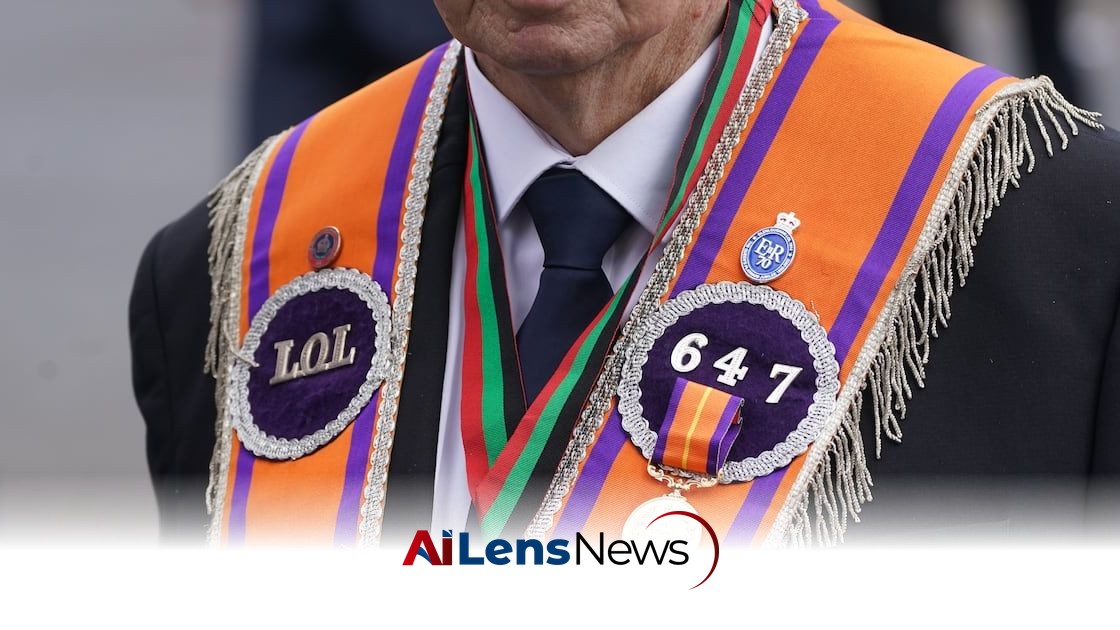


The Orange Order's parades fail to accurately reflect history, culture, and religion, raising questions about their true significance.
London, United Kingdom Jul 12, 2026 ALN: WHILE the sham fight at Scarva next Tuesday will re-create the Battle of the Boyne in a light-hearted manner, it is hard to avoid the conclusion that Monday’s marches are also something of a sham, although in a more serious form.
The 18 Orange Order parades will not quite live up to the claim that they accurately celebrate history, religion and culture. The Orange Order, a Protestant fraternal organization based primarily in Northern Ireland, has a long history intertwined with the socio-political landscape of the region. Founded in 1795, the Order was established to defend the Protestant community against perceived threats from Catholic nationalists. Over the decades, it has evolved into a symbol of Unionist identity, particularly in the context of Northern Ireland's complex sectarian divisions.
Let’s take the culture first. Although the order opposed the Irish Language Act, it proudly (if unknowingly) displays our common cultural heritage. The Irish language, with its rich history and cultural significance, has often been a point of contention in Northern Ireland, particularly among Unionist communities. The Orange Order's stance against the Irish Language Act reflects a broader reluctance to embrace aspects of Irish culture that are viewed as incompatible with their identity.
The names on banners and drums in many Orange bands tell the watching faithful where they come from. For example, Orange men and women proclaim that their lodge is located at the wood of the river bend (Cullybackey – Coill na Baice), the flat-topped hill (Keady – An Céide), or the wicker bridge (Kesh – Ceis). These names not only reflect geographical locations but also signify a connection to the land that has been historically significant to both communities in Ireland.
Others announce that their home is at the goats’ bog (Moneygore – Mónaidh Gabhar), the dog’s leap (Limavady – Léim an Mhadaidh), or the yew forest field (Ahoghill – Acadh Eochaille). Such linguistic connections highlight a shared cultural heritage that transcends the sectarian divide. If an Irish name is worth painting on a banner or drum, surely the language is worth promoting?
The Orange Order certainly believes that it is appropriate to sing in Irish. The Orange song “Lillybalero” may derive from Lile ba léir é, ba linn an lá, “Lilly was clear and we won the day.” This song, among others, reflects a complex relationship with the Irish language and culture, as it is often performed during parades, yet the Order's broader stance often contradicts this cultural appreciation.
Lilly may refer to an astrologer, who predicted a Catholic monarch in the form of James II, or it could be a reference to William III. This ambiguity illustrates the layered interpretations of history that are prevalent within the Orange Order's narrative. The Order claims it is “committed to the protection of the principles of the Protestant Reformation and the Glorious Revolution of 1688, which enshrined civil and religious liberty for all.” However, this assertion is contentious, as the historical reality of the Glorious Revolution led to the implementation of penal laws that systematically oppressed Catholics and non-Anglican Protestants.
The Reformation is certainly worth commemorating, but the 1688 Glorious Revolution was far from glorious. It led to the penal laws, which denied civil and religious liberty to Catholics and Presbyterians. The legacy of these laws is still felt today, as they contributed to the socio-economic disenfranchisement of large segments of the population in Ireland. It is odd that any Presbyterians would march on Monday. An estimated 200,000 to 250,000 of them left Ireland because of the penal laws between 1717 and 1775. They were barred from holding public office and military ranks, and their marriages were regarded as invalid. This historical context raises important questions about the inclusivity of the Orange Order's celebrations.
The accession of William III to the British throne led to the 1701 Act of Succession, which to this day excludes a Catholic and anyone married to a Catholic from being monarch. Where is the religious liberty? This exclusionary practice highlights the ongoing sectarian divisions within the United Kingdom and raises questions about the true extent of religious freedom in a country that prides itself on being a bastion of democracy.
The civil liberty of using the Irish language in court was banned under the penal laws until last year – although in fairness to the Orange Order, they continued to paint it on their banners and drums. This contradiction illustrates the complexity of identity politics in Northern Ireland, where symbols can be both a point of pride and a source of conflict.
Orange men and women are on slightly firmer ground in celebrating the 16th century Protestant Reformation, which made a significant contribution to advances in education and democracy. The Reformation's emphasis on individual interpretation of scripture and the questioning of authority laid the groundwork for many modern democratic principles. It ultimately led to the 18th century Enlightenment, which marked the cultural and intellectual progress that shaped much of modern Europe. This historical trajectory is often overlooked in the Orange Order's narrative, which tends to focus on the more triumphalist aspects of their history.
The Orange Order believes that the king is the divinely-appointed protector of the “Protestant Reformed Religion established by law.” However, Martin Luther, who began the Reformation in Germany, regarded Henry VIII (ancestor of the current king) as being motivated by personal interests, rather than religious conviction. This perspective invites a critical examination of the motivations behind the Reformation in Britain, which was characterized by a desire to consolidate power rather than a genuine commitment to religious reform.
Luther’s radical Reformation came from the people. Britain’s came from consolidating the power of the monarchy and retaining many Catholic beliefs and practices. So which Reformation is the Orange Order celebrating – the German version or the British one? This question is significant, as it touches on the broader themes of identity and historical interpretation that are central to the ongoing debates in Northern Ireland.
As well as being head of state, Henry became leader of the state’s established religion, just like the current king. Iran has a similar system. This comparison raises important questions about the separation of church and state, and whether such a model can truly allow for religious freedom and pluralism.
Finally, as the marchers listen to the speeches which proclaim their Britishness, they might reflect that the first organised British settlers arrived in America in 1607. The Flight of the Earls took place in Ireland that same year, as the Ulster Plantation took hold. This historical parallel serves to highlight the complex interactions between identity, migration, and cultural heritage.
About 170 years later, the descendants of the settlers in America realised they were no longer British and fought for independence. This evolution of identity raises important questions about the nature of belonging and the fluidity of national identity, particularly in the context of Northern Ireland's contentious history.
Meanwhile, 420 years later, the descendants of settlers here claim that they are not in the least bit Irish (well, apart from the names on the banners and drums), while a multi-cultural Britain looks across the Irish Sea at them in disbelief. This disconnect between self-identity and external perception underscores the complexities of national identity in a post-colonial context.
So let’s hope the Orange men and women enjoy their day out on Monday, but they might like to reflect on what exactly they are celebrating and why. This reflection could lead to a deeper understanding of their own history and its implications for contemporary society.
We already have enough organisations here re-writing history. One fewer would make a useful contribution to our society. The ongoing debates about historical narratives and cultural identity in Northern Ireland are crucial for fostering a more inclusive and understanding society. As the region continues to grapple with its past, it is essential that all communities engage in honest and constructive dialogue about their histories, identities, and aspirations for the future.
To learn more about the latest developments in Cultural Opinion, stay updated with our exclusive reports and analyses on AiLensNews.

