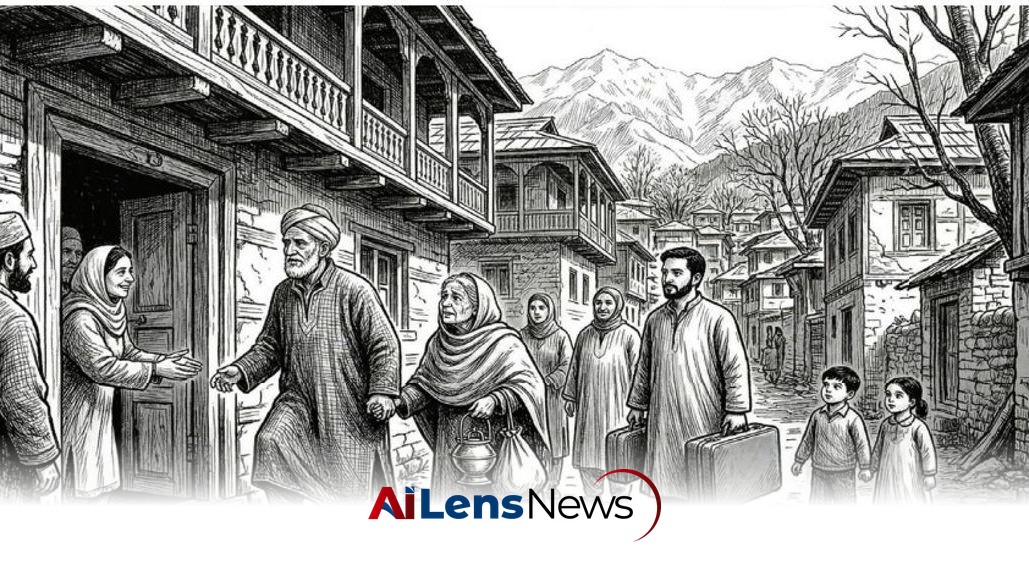


An emotional recount of Kashmir Pandits expressing their longing for their homeland, highlighting the need for community unity and government support for rehabilitation.
Leh, India Jul 31, 2026 ALN: The emotional ties of the Kashmir Pandit community to their homeland are profound and deeply rooted in a rich tapestry of shared experiences and cultural heritage. The recent video interview featuring some of the community members from Sopore poignantly captures the essence of their longing for a place they once called home. The tears shed during the interview are not merely expressions of sadness; they are a reflection of the collective grief experienced by a community that has faced significant upheaval and displacement over the decades.
The Kashmir Valley, with its breathtaking landscapes and vibrant culture, was once a harmonious melting pot where Hindus and Muslims coexisted peacefully. The memories of childhood, youth, and adulthood shared by the Kashmir Pandits are interwoven with the natural beauty of the region. The lanes, by-lanes, streets, and roads they traversed as children are now ghostly reminders of a past that feels increasingly distant. The shared laughter, the playful banter, and the innocent joys of youth spent in the company of friends from diverse backgrounds are irreplaceable treasures that the community holds dear.
Education played a critical role in the lives of these individuals, with local schools serving as nurturing environments that fostered friendships across religious lines. This educational landscape was not merely about academic learning; it was a space where cultural exchange thrived, and mutual respect was cultivated. The community's memories of celebrating festivals such as Eid, Holi, and Diwali together symbolize a rich cultural intermingling that was once a defining feature of life in the Valley. Such shared experiences helped to forge strong bonds of friendship and solidarity, transcending religious differences.
However, the question that now haunts the Kashmir Pandits is a haunting one: "Where are our homes?" The physical spaces that once held their memories are now transformed, often unrecognizable. The development of new infrastructure and modern facilities may signify progress in some respects, but for the Pandits, these changes serve as stark reminders of their absence. The concrete houses that populate the landscape lack the warmth and familiarity of the homes they once inhabited. The playgrounds and parks, though equipped with modern amenities, fail to evoke the same sense of belonging and nostalgia that characterized their childhood haunts.
This disconnection from their roots extends beyond mere physical structures; it speaks to a deeper crisis of identity, culture, and belonging. The distinction between a house and a home is significant. While houses are mere physical structures, homes are imbued with memories, emotions, and a sense of identity. The streets and lanes that were once familiar pathways are now foreign territories for the community, reinforcing their sense of estrangement. The question of identity is particularly poignant for the Kashmir Pandits, as they grapple with the duality of being part of a diaspora while yearning for the cultural and historical ties that bind them to their homeland.
The political landscape surrounding the Kashmir Pandit community has been fraught with challenges. Various regimes have historically leveraged the community's plight for political gain, often sidelining their genuine needs and aspirations. This exploitation has resulted in a lack of meaningful dialogue and action regarding the rehabilitation of the Pandit community. Despite the promises made by political leaders, the reality on the ground remains starkly different, with little progress made toward addressing the grievances of the displaced community.
The fragmentation within the Pandit community itself poses additional hurdles to their collective advocacy. Divided into factions and groups, the community struggles to present a unified front to address their demands effectively. This division has often diluted their influence and made it challenging to garner the attention and support needed from policymakers. The call for unity among the Pandit community is not merely a plea for solidarity; it is a recognition that collective action is essential for achieving their shared goals and aspirations.
In light of these challenges, it is imperative that both the central and local governments take proactive steps toward the rehabilitation of the Pandit community in Kashmir. This requires a coordinated effort that goes beyond mere rhetoric and political posturing. The government must engage with the community to understand their needs and aspirations genuinely. This engagement should include the establishment of policies and programs that facilitate the return of displaced Pandits to their homeland, ensuring that they can reclaim their identity and heritage.
The implications of such rehabilitation extend beyond the individual families affected; they resonate throughout the broader Kashmir Valley. The return of the Pandit community could contribute to a more inclusive and harmonious society, where diverse cultures and traditions can coexist once again. By fostering an environment of reconciliation and understanding, the region can work toward healing the wounds of the past and building a future that honors its rich cultural diversity.
The history of the Kashmir Pandits is marked by a tragic exodus that began in the late 1980s and early 1990s, when a surge of militancy in the region led to widespread violence and persecution. This turmoil forced many Pandits to flee their ancestral homes, leading to a mass displacement that has had lasting effects on the community. The challenges they face today are not just rooted in their physical absence from the Valley but are compounded by the emotional and psychological scars of their experiences. The community's narrative is intertwined with the broader historical context of Kashmir, which has been a flashpoint for conflict between India and Pakistan, as well as a site of internal strife.
The plight of the Kashmir Pandits has often been overshadowed by the larger political discourse surrounding Kashmir, which tends to focus on the rights and grievances of the Muslim population in the region. This has led to a perception that the Pandits' issues are secondary or even irrelevant in the broader narrative of Kashmir's struggles. However, it is crucial to recognize that the experiences of the Pandits are an integral part of Kashmir's history, and their voices deserve to be heard and acknowledged. The marginalization of their plight has implications not only for their own community but also for the social fabric of Kashmir as a whole.
The ongoing discussions about the return of the Pandits to Kashmir have often been met with skepticism. Many community members express concerns about safety, security, and the feasibility of returning to a place that has changed so dramatically since their departure. The fear of facing hostility or discrimination in a region they once called home is a significant barrier to their repatriation. Moreover, the lack of adequate infrastructure and support systems to facilitate their return raises questions about the practicality of such an endeavor. For many, the dream of returning to Kashmir remains just that—a dream fraught with uncertainty and apprehension.
Despite these challenges, the resilience of the Kashmir Pandit community is evident in their efforts to preserve their cultural identity and heritage. Many have established organizations and initiatives aimed at promoting their history, language, and traditions, ensuring that future generations remain connected to their roots. Cultural festivals, educational programs, and community gatherings serve as vital platforms for fostering a sense of belonging and solidarity among the Pandits, regardless of where they currently reside. These initiatives play a crucial role in maintaining their identity in the face of adversity and displacement.
As the Kashmir Pandits continue to reflect on their lost homes and identities, their stories serve as a reminder of the resilience of the human spirit in the face of adversity. Their longing for a return to their roots is not just a personal quest; it is a collective journey toward reclaiming a heritage that has been overshadowed by conflict and displacement. The hope for a brighter future, where they can reconnect with their past and rebuild their lives in the Valley, remains a powerful testament to their enduring connection to their homeland. It is a hope that resonates not only within the Pandit community but also among all those who believe in the possibility of reconciliation and healing in Kashmir.
To learn more about the latest developments in Cultural Opinion, stay updated with our exclusive reports and analyses on AiLensNews.

