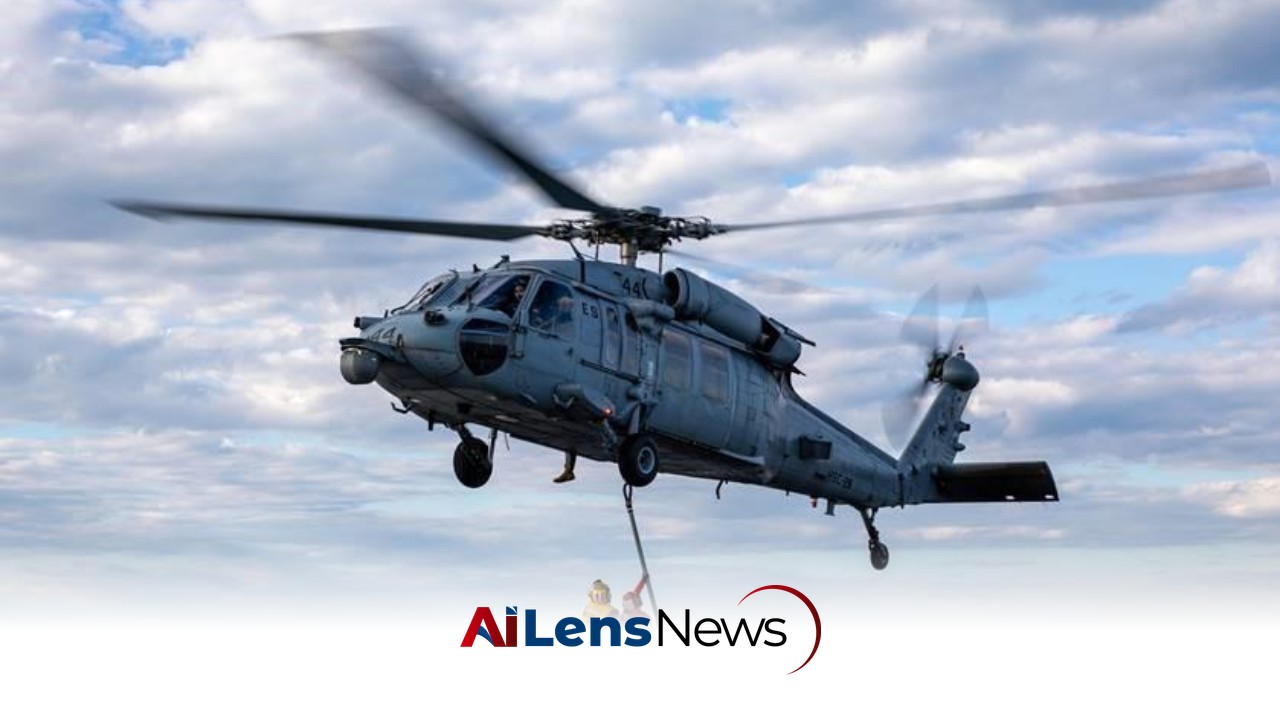


A US Navy Sea Hawk helicopter made an emergency water landing in the Arabian Sea, with one crew member missing and three rescued.
New Delhi, India Jul 2, 2026 ALN: A US Navy Sea Hawk helicopter made an emergency water landing in the Arabian Sea early Tuesday, resulting in one crew member being reported missing. The incident occurred during a routine operation, prompting immediate rescue efforts. The Sea Hawk, a multi-role helicopter used extensively by the Navy for various missions, including anti-submarine warfare, search and rescue, and logistics support, was on a training exercise when the emergency occurred.
Of the four crew members aboard, three were successfully rescued and are currently in stable condition. The US Navy has initiated search operations to locate the missing individual, employing various resources to assist in the effort. The rescue operation involves naval ships in the vicinity, as well as aircraft equipped for search and rescue missions, highlighting the Navy's capability to respond to emergencies swiftly.
The cause of the emergency landing is currently under investigation. Preliminary reports indicate that there is no evidence of hostile action, which is particularly significant given the heightened regional tensions. The Arabian Sea is a strategically important body of water, bordered by several nations, including Pakistan, Iran, and several Gulf states, each with its own military interests and activities. The presence of US military assets in the region has often been a point of contention, particularly in the context of ongoing geopolitical conflicts and military operations against terrorism.
The US Navy has not released further details regarding the specific circumstances leading to the incident. However, they are committed to ensuring the safety of their personnel and will provide updates as the situation develops. The Navy's protocols for such incidents are thorough, involving a detailed investigation to ascertain the factors that contributed to the helicopter's emergency landing. This may include examining mechanical issues, pilot error, or environmental factors, such as weather conditions at the time of the incident.
This incident highlights the risks associated with military operations in challenging environments, particularly in areas with complex geopolitical dynamics. The Navy's response underscores their ongoing commitment to operational readiness and personnel safety. Military operations, especially in regions like the Arabian Sea, are fraught with potential dangers, not only from mechanical failures but also from the unpredictable nature of the operational theater, which can include hostile encounters, adverse weather, and challenging maritime conditions.
As search efforts continue, families of the crew members are being kept informed about the situation. The Navy has expressed gratitude for the support from allied forces and local authorities in the region. This collaboration is essential, as it enhances the effectiveness of the search and rescue operations. The involvement of local authorities can also facilitate communication and logistics, ensuring that the search efforts are well-coordinated.
In addition to the immediate operational response, this incident may prompt a review of safety protocols and operational procedures for Navy helicopters operating in the region. The US Navy has a history of conducting thorough investigations following incidents involving its aircraft, aiming to improve safety measures and prevent future occurrences. Such reviews may lead to changes in training, maintenance practices, or operational guidelines, reflecting the Navy's commitment to learning from experiences and enhancing the safety of its personnel.
Further updates will be provided as more information becomes available regarding the search and investigation. The situation remains fluid, and the Navy is expected to release more details as they gather information. The families of the crew members, along with the broader military community, are anxiously awaiting news about their loved ones and the outcome of the search efforts.
The incident serves as a reminder of the inherent risks faced by military personnel in operational settings. It underscores the importance of maintaining high standards of training and readiness, as well as the necessity for robust support systems for service members and their families during crises. The emotional toll on families during such incidents can be significant, and the Navy's commitment to providing timely information and support is crucial in these situations.
As military operations continue in the region, the US Navy remains vigilant about the safety and well-being of its personnel. The challenges posed by operating in complex environments necessitate ongoing training and preparedness, ensuring that crews are equipped to handle emergencies effectively. The commitment to operational excellence is a hallmark of the Navy's ethos, reflecting its dedication to mission success while prioritizing the safety of its service members.
In conclusion, the emergency water landing of the US Navy Sea Hawk helicopter in the Arabian Sea represents a significant event with implications for military operations in the region. The ongoing search for the missing crew member, combined with the investigation into the incident, will likely shape future operational protocols and highlight the Navy's commitment to safety and readiness in the face of adversity. As the situation develops, the Navy's transparency in communicating with the public and the families of those involved will be essential in maintaining trust and support for its operations and personnel.
Military helicopters like the Sea Hawk are crucial assets for the Navy, designed to operate in various environments and perform multiple roles. Their versatility is a significant factor in the Navy's operational strategy, particularly in regions where rapid response and adaptability are paramount. The Sea Hawk's capabilities allow it to perform not only combat missions but also humanitarian assistance and disaster relief operations, showcasing the multifaceted nature of modern military aviation.
The Arabian Sea has been a focal point for international military operations, particularly in the context of counterterrorism efforts and maritime security. The region has seen increased naval activity due to concerns over piracy, smuggling, and the presence of hostile forces. The US Navy's operations in the Arabian Sea are part of broader efforts to maintain stability and ensure freedom of navigation, which are vital for global trade and security.
The strategic importance of the Arabian Sea cannot be overstated. It serves as a vital maritime corridor for energy supplies and trade routes connecting the Middle East with Asia and beyond. As such, the US Navy's presence in the region is a critical component of its global strategy to deter aggression and promote stability. The incident involving the Sea Hawk helicopter may draw attention to the risks associated with such operations, prompting discussions about the balance between military readiness and the safety of personnel.
In the aftermath of this incident, it is likely that the Navy will engage in discussions regarding the adequacy of training and support for its aircrew. The demanding nature of military aviation requires not only technical proficiency but also mental resilience, particularly in high-stress environments. The Navy's approach to crew training typically emphasizes simulation and real-world exercises to prepare personnel for potential emergencies, but incidents like this highlight the need for continuous evaluation and improvement of training programs.
Moreover, the emotional and psychological impact of such incidents on crew members and their families is significant. The Navy has resources in place to support service members and their families, including counseling services and support groups. However, the stress associated with search and rescue operations, coupled with the uncertainty surrounding the fate of missing personnel, can be profoundly challenging for those involved. The Navy's commitment to providing comprehensive support during these is crucial for maintaining morale and resilience within the ranks.
As the investigation into the incident progresses, it will be essential for the Navy to communicate findings and lessons learned to ensure that similar situations can be avoided in the future. Transparency in the investigation process will not only serve to inform the public but also reassure families of service members that the Navy is taking the necessary steps to uphold safety standards. The outcome of this investigation may also influence future policy decisions regarding the deployment and operational parameters for Navy helicopters in similar environments.
Ultimately, the emergency water landing of the Sea Hawk helicopter serves as a stark reminder of the inherent risks associated with military operations, particularly in regions characterized by geopolitical complexities and operational challenges. The Navy's ability to respond effectively to such emergencies is a testament to its training and preparedness, but it also underscores the need for ongoing vigilance and adaptation to ensure the safety and well-being of its personnel.
To learn more about the latest developments in World News & International Affairs, stay updated with our exclusive reports and analyses on AiLensNews.

