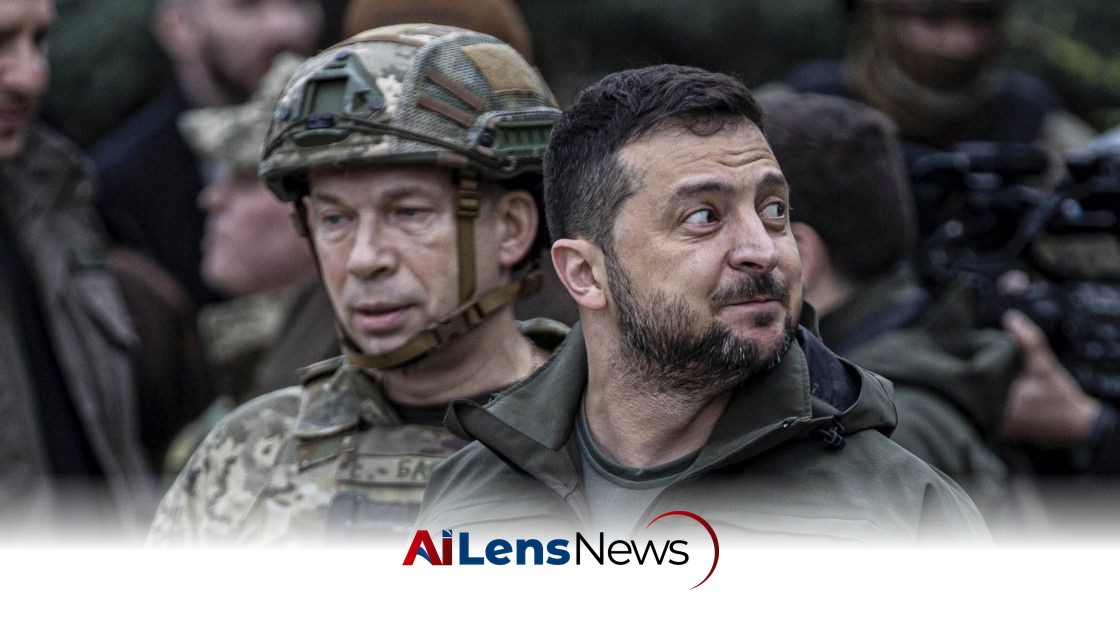


Ukrainian President Volodymyr Zelenskyy has fired Commander in Chief Oleksandr Syrskyi following public protests and internal military disputes, marking a significant leadership crisis.
Washington DC, United States Jul 22, 2026 ALN: Ukrainian President Volodymyr Zelenskyy made a significant leadership change on Tuesday by dismissing his commander in chief, Oleksandr Syrskyi, amid mounting pressure following the controversial removal of Defense Minister Mykhailo Fedorov. This decision marks one of the most intense leadership crises of Zelenskyy’s presidency, reflecting the complexities of military strategy and governance during an ongoing conflict with Russia.
The announcement of Syrskyi's dismissal came via a message on Telegram, where Zelenskyy also revealed that Mykhailo Drapatyi would take over the role. This change is indicative of the shifting dynamics within Ukraine’s military leadership, especially as the country continues to navigate the challenges posed by the war.
Fedorov's removal, which preceded Syrskyi's dismissal, ignited rare protests in the streets of Kyiv, signaling public discontent with the government’s military leadership. Fedorov, who was seen as a modernizer within the military, had openly expressed disagreements with Syrskyi regarding military strategy. This public airing of grievances highlights the internal tensions within Ukraine's military hierarchy as the country faces an ongoing invasion from Russia.
Syrskyi, who is 60 years old, is characterized as a traditional military leader with a focus on infantry and artillery tactics. In contrast, Fedorov, at 35, is viewed as a proponent of modernization, particularly in the realm of drone warfare. Under his leadership, Ukraine has achieved notable successes in utilizing drones to strike Russian positions, which has been a game-changer in the conflict. The juxtaposition of their leadership styles reflects a broader debate within the Ukrainian military about the best strategies to employ against a technologically superior adversary.
In light of the protests, Zelenskyy attempted to present a unified front in his announcement regarding Syrskyi's dismissal. He emphasized the collective goal of achieving victory over Russia, stating, "The desire in all of us is one — victory over the enemy and achieving such conditions on the front and in pressure on Russia, which would allow forcing Russia to peace." This statement underscores the urgency of the situation and the need for a cohesive military strategy as Ukraine continues to defend its sovereignty.
The protests that erupted following Fedorov's dismissal were fueled by public fears that his removal could jeopardize the recent military gains achieved by Ukraine. Demonstrators took to the streets, calling for Fedorov to be reinstated and expressing their discontent with Syrskyi's leadership. The situation escalated to the point where a senior air force commander resigned in protest, highlighting the depth of dissatisfaction within the military ranks.
For many protesters, Syrskyi has come to symbolize outdated military thinking that contrasts sharply with the aspirations of Ukraine’s younger generations. Fedorov, on the other hand, embodies a forward-looking approach that emphasizes technological innovation and strategic adaptability. This generational divide in military philosophy reflects broader societal changes within Ukraine as the country seeks to redefine its identity in the face of external aggression.
Syrskyi's controversial nickname, "The Butcher," stems from his reputation for making tough decisions that have sometimes resulted in significant casualties. Critics point to instances such as the late withdrawal from the city of Bakhmut and the retreat from Russia’s Kursk region, which left soldiers vulnerable and exposed to enemy fire. These events have contributed to a growing perception that Syrskyi's leadership style may not be suited for the evolving nature of warfare that Ukraine is currently engaged in.
In the lead-up to the announcement of Syrskyi's dismissal, Zelenskyy reportedly consulted with other top military commanders as part of an evaluation process to identify potential replacements. This suggests a deliberate approach to leadership selection, aimed at ensuring that the new commander in chief aligns with the strategic vision necessary for Ukraine's ongoing defense efforts.
Following his dismissal, Zelenskyy met separately with Fedorov, offering him a respected position in the government that would focus on unifying the technology sector. However, it remains unclear whether Fedorov accepted this offer, and whether it would be sufficient to quell the unrest among protesters demanding accountability and change within the military leadership.
Fedorov himself acknowledged the tensions with Syrskyi, stating that the commander was resistant to discussing critical issues directly and was opposed to necessary reforms within Ukraine's defense apparatus. While he credited Syrskyi for early successes in the war, Fedorov argued that the nature of warfare has evolved, particularly with advancements in drone technology. He expressed concern about the potential consequences of deviating from this trajectory, emphasizing that the public's outcry was a response to these risks.
Throughout the conflict, Ukraine has increasingly relied on low-cost drones, which have transformed the battlefield dynamics and challenged traditional models of warfare. Ukraine's ability to strike strategic targets deep within Russian territory, as well as critical locations within its own borders, has demonstrated the effectiveness of this approach. However, the ongoing war also presents challenges, as Russian forces continue to make incremental advances in eastern Ukraine, and Ukraine's supply of missile interceptors has dwindled, leaving cities vulnerable to bombardment.
The leadership changes initiated by Zelenskyy reflect a broader struggle within Ukraine to adapt to the realities of modern warfare while addressing internal divisions and public sentiment. As the conflict with Russia continues, the implications of these leadership decisions will be closely scrutinized, both domestically and internationally. The stakes are high, as Ukraine seeks not only to defend its territory but also to maintain the support of its populace and allies in the face of ongoing aggression.
To learn more about the latest developments in Politics, stay updated with our exclusive reports and analyses on AiLensNews.

