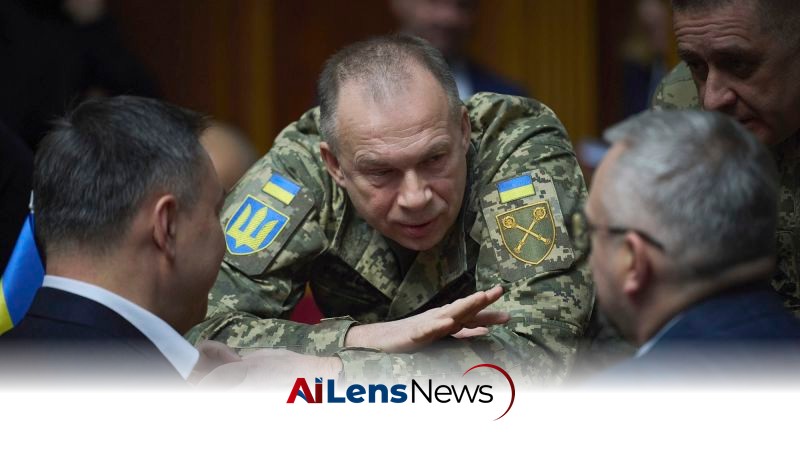


Ukrainian President Volodymyr Zelensky has removed General Oleksandr Syrskyi from his position following public protests against the ousting of Defense Minister Mykhailo Fedorov.
Washington DC, United States Jul 22, 2026 ALN: Ukrainian President Volodymyr Zelensky has made a significant decision in the ongoing conflict with Russia by dismissing General Oleksandr Syrskyi from his position as the country’s commander-in-chief. This decision comes on the heels of widespread protests against the earlier removal of Defense Minister Mykhailo Fedorov, who had garnered considerable public support for his innovative approaches to military strategy and technology.
The backdrop to this political upheaval is a complex and increasingly contentious military landscape in Ukraine, where public sentiment is deeply intertwined with the ongoing war against Russian aggression. Fedorov's dismissal last week ignited protests that not only expressed support for him but also highlighted a growing rift within the military establishment regarding the direction of Ukraine's defense strategy. This discord reflects broader societal tensions as the country grapples with the implications of a protracted conflict that has claimed thousands of lives and displaced millions.
President Zelensky's decision to offer Fedorov a “prominent position in government” signals a desire to retain his expertise, particularly in the realm of military technology, which has become increasingly vital in the face of Russian advances. However, the specifics of this new role remain unclear, and it is uncertain whether Fedorov will accept the offer. His leadership as defense minister was marked by a focus on modernizing Ukraine's military capabilities, particularly through the integration of advanced technologies such as drones. These innovations have proven effective in countering Russian forces and have been pivotal in Ukraine's recent battlefield successes.
Fedorov's six-month tenure coincided with a series of military victories that bolstered his reputation among the public and within the military. His emphasis on technological advancements, particularly the strategic deployment of drones, has been credited with stymying Russian advances and inflicting significant damage on critical infrastructure, including oil refineries deep within Russian territory. This strategic pivot towards technology represents a broader trend in modern warfare, where traditional tactics are increasingly complemented by cutting-edge innovations.
As protests against Fedorov's removal escalated, speculation surrounding General Syrskyi's future intensified. In a bid to address public concerns, Zelensky convened meetings with several of Ukraine’s top military leaders. Following these discussions, his chief of staff made statements indicating that the government was listening to the public's concerns regarding military leadership. This responsiveness reflects the heightened scrutiny that military decisions are under in a society that has been deeply affected by the conflict.
In a rare public expression, Syrskyi attempted to quell the unrest by penning an opinion piece for military media in which he expressed regret if his actions had offended Fedorov. He defended his leadership decisions, particularly the establishment of a drone unit as a separate military branch, and rejected claims that he was opposed to the use of drones in combat. His comments highlight the complexities of military leadership, where strategic decisions must balance innovation with the realities of war.
Syrskyi articulated the challenges of rapidly transitioning a large military force to new technologies, warning against the risks of such a drastic shift. His perspective emphasizes the need for a measured approach to military innovation, one that considers the potential costs to both the land and the people of Ukraine. This nuanced view raises important questions about the pace of military reform and the balance between traditional tactics and modern warfare techniques.
In the wake of Syrskyi's dismissal, Mykhailo Drapatyi has been appointed as his successor. Drapatyi is recognized for his leadership during the early stages of the conflict in 2014, particularly for his role in a viral video that showcased his bravery as he drove an armored infantry fighting vehicle through separatist barricades in Mariupol. His appointment is seen as a potential turning point, bringing a fresh perspective to Ukraine's military strategy.
Fedorov publicly congratulated Drapatyi on his new role, expressing optimism that his leadership would bring about a “new wind and a new hope” in Ukraine's ongoing struggle for freedom and justice. This sentiment reflects a broader desire among many Ukrainians for unity and effective leadership in the face of external threats. Fedorov's acknowledgment of Syrskyi's contributions also underscores the complexities of military leadership, where personal relationships and professional disagreements can significantly impact the broader war effort.
The political ramifications of these changes are profound, as they not only affect military strategy but also reflect the evolving dynamics of civilian-military relations in Ukraine. As public opinion plays an increasingly critical role in military leadership decisions, the government must navigate the delicate balance between maintaining public support and ensuring effective military operations.
Looking ahead, the implications of these leadership changes will likely reverberate throughout Ukraine's military strategy as it continues to confront the ongoing threat from Russia. The ability to adapt and innovate in response to battlefield conditions will be crucial for Ukraine as it seeks to sustain its defense efforts. The broader societal implications of these developments also cannot be understated, as they reflect the deep connections between military leadership, public sentiment, and the ongoing struggle for national sovereignty.
In summary, the dismissal of General Oleksandr Syrskyi and the tumultuous circumstances surrounding the removal of Defense Minister Mykhailo Fedorov highlight the complexities of military leadership in Ukraine. As the country continues to navigate the challenges of war, the importance of effective leadership and public trust in military institutions will remain paramount. The ongoing protests and public discourse surrounding these issues indicate a society that is deeply engaged in its defense and committed to finding the most effective means of ensuring its sovereignty against external threats.
To learn more about the latest developments in Politics, stay updated with our exclusive reports and analyses on AiLensNews.

