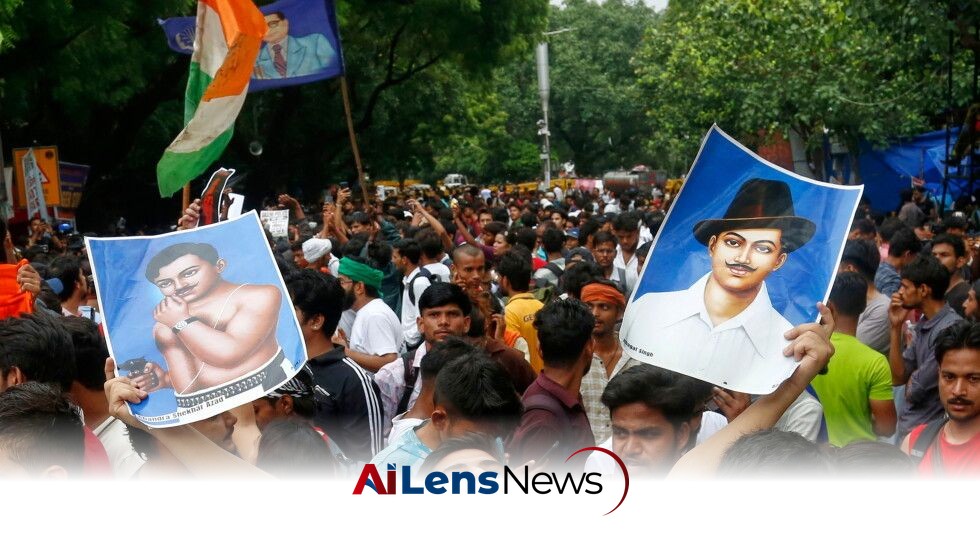


Supporters of India's Cockroach movement, advocating for educational reforms, pledge to continue protests in New Delhi despite police violence.
Washington DC, United States Jul 22, 2026 ALN: Supporters of India’s youth-led Cockroach movement demanding educational reforms and government accountability refused to leave their New Delhi protest site Tuesday, a day after their thousands-strong march toward Parliament drew police tear gas, beatings and a new wave of sympathy from across the country.
The movement, now attracting professionals and families beyond students, represents a rare public challenge to Prime Minister Narendra Modi’s government, reviving criticism over its handling of dissent and use of force to respond to protests. This escalation in public dissent comes amid a broader context of increasing discontent among various sections of Indian society, particularly the youth, who have been vocal about their grievances related to the education sector, employment opportunities, and government accountability.
The Cockroach movement, which has seen a rapid rise in visibility and support, was catalyzed by a controversial remark made by a Supreme Court judge who referred to young people as "cockroaches." This derogatory comment sparked outrage among students and young professionals, prompting them to adopt the term as a badge of honor in their fight for justice and reform. The movement has since evolved from a satirical response into a serious campaign advocating for systemic change in India's education system.
As the protests unfolded, opposition leader Rahul Gandhi and dozens of his Congress party lawmakers showed their support Tuesday with a sit-in outside Modi’s residence. This act of solidarity was met with a forceful police response, highlighting the tense atmosphere surrounding the protests. Footage showed Gandhi, who had urged "every patriotic Indian who believes that our students should get justice" to join, resisting police attempts to disperse the gathering. Government minister Jitendra Singh stated that Gandhi was informed that the location was not "suitable for a sit-in," a comment that has drawn further criticism regarding the government's stance on freedom of assembly and expression.
The protests have attracted significant media coverage, shining a spotlight on the broader issues facing India's education system. Critics have pointed out that the current examination system is fraught with challenges, including high-stakes testing that often does not reflect students' true abilities, rampant corruption, and a lack of adequate support for students from marginalized communities. The protesters are specifically calling for the resignation of Education Minister Dharmendra Pradhan, citing his alleged failures in addressing these systemic issues.
Meanwhile, hundreds of protesters remain camped at Jantar Mantar, a designated protest site, under heavy police presence, stating they would continue their demonstration until their demands are met. The determination of the protesters reflects a growing sentiment among the youth that their voices must be heard and that they will not be silenced by force. Many of the participants are young students who feel disillusioned by the educational system and the government’s lack of responsiveness to their concerns.
“We are going to continue our protest,” said Abhijeet Dipke, founder of the Cockroach Janta Party, which emerged just two months ago as a satirical protest but has quickly gained traction among those frustrated with the status quo. Dipke’s remarks underscore the commitment of the movement to persist in its demands for reform, despite the challenges posed by law enforcement and governmental pushback.
The implications of this movement extend beyond the immediate demands for educational reform. It signals a potential shift in the political landscape of India, as young people increasingly leverage social media and grassroots organizing to mobilize support and challenge established political norms. The Cockroach movement has resonated with many who feel that their needs and aspirations are being overlooked by those in power, prompting a broader conversation about the role of youth in shaping the future of Indian democracy.
As the protests continue, the government faces mounting pressure to address the underlying issues that have led to such widespread discontent. This situation poses a significant challenge for Modi's administration, which has been criticized in the past for its handling of dissent and its approach to civil liberties. The response of the government to this movement could set a precedent for how future protests are managed and how the voices of young people are treated in the political arena.
In addition to the immediate focus on educational reforms, the Cockroach movement has the potential to inspire other marginalized groups in India to voice their concerns and demand accountability from the government. The solidarity shown by various sectors of society, including professionals and families, indicates a growing recognition that the issues faced by students are part of a larger struggle for justice and equality in India.
The protests are also reflective of a broader trend in India where young people are increasingly dissatisfied with the status quo. Rising unemployment rates, especially among graduates, have left many feeling hopeless about their future. The educational system, which is often criticized for being outdated and overly competitive, has contributed to a sense of alienation among students. The Cockroach movement's emergence can be seen as a reaction to these frustrations, as students and young professionals demand not only reforms but also a reimagining of what education should look like in a rapidly changing world.
Moreover, the movement's use of social media has been pivotal in organizing and mobilizing support. Platforms like Twitter, Instagram, and Facebook have allowed participants to share their experiences, strategies, and calls to action, quickly amplifying their message beyond the confines of traditional media. This digital activism is indicative of a generation that is not only tech-savvy but also eager to engage in political discourse and advocacy.
As the situation develops, observers will be keenly watching how the government responds to the ongoing protests and whether it will take meaningful steps to address the grievances of the youth. The Cockroach movement, with its unique origins and evolving narrative, may very well serve as a catalyst for broader social change in India, challenging traditional power structures and advocating for a more inclusive and responsive governance model.
Furthermore, the movement's impact may extend beyond the immediate context of educational reform. It could potentially inspire similar movements across the country, uniting various groups who feel marginalized or unheard. This could lead to a more robust civil society where citizens feel empowered to hold their government accountable and advocate for their rights.
In conclusion, the Cockroach movement is not just a response to a singular incident or a specific demand for educational reform; it represents a larger awakening among the youth of India. As they stand firm in their protests, they are not only fighting for their own futures but are also igniting a broader conversation about the role of youth in shaping the political and social landscape of the country. The outcome of this movement could have lasting implications for how future generations engage with governance and civic responsibility in India.
To learn more about the latest developments in Crime & Law, stay updated with our exclusive reports and analyses on AiLensNews.

