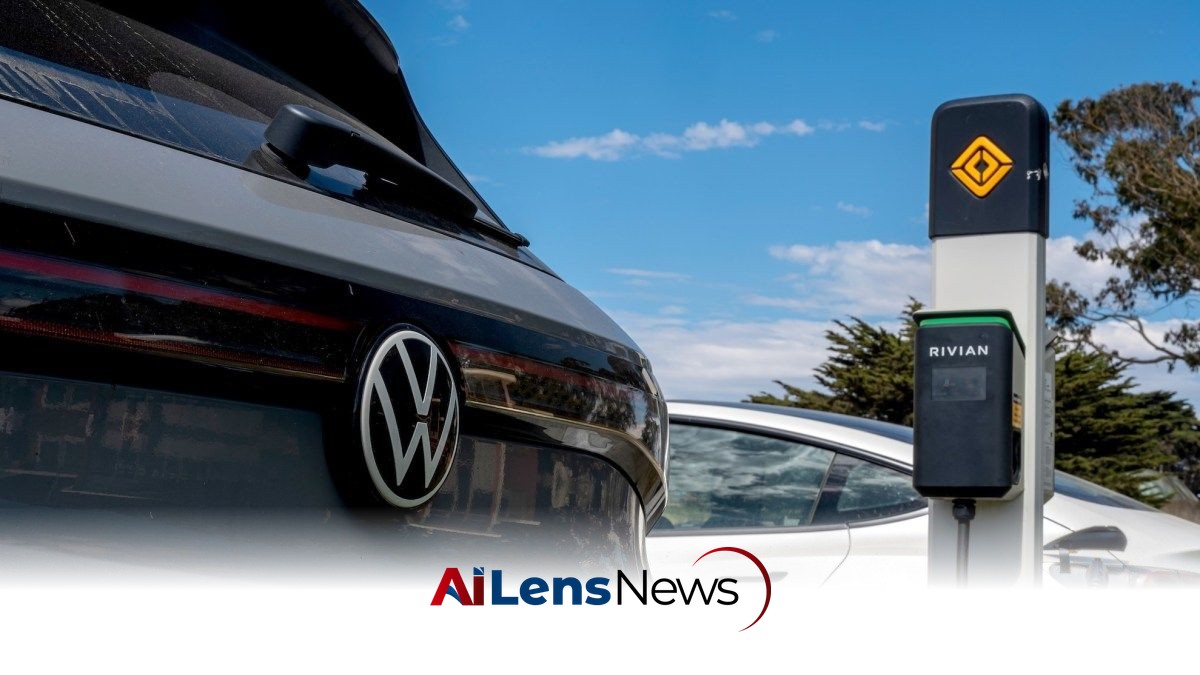


Two Volkswagen engineers face securities fraud charges for allegedly profiting from insider information regarding a joint venture with Rivian.
Washington DC, United States Jul 25, 2026 ALN: The U.S. Department of Justice has charged two Volkswagen engineers with securities fraud for an alleged insider-trading scheme connected to the German automaker’s joint venture with Rivian.
The indictment, unsealed Friday by the U.S. District Attorney for the Southern District of New York, alleges that Michael Stamp and Marcus Plank made more than $300,000 by using confidential insider information. Stamp and Plank allegedly bought Rivian stock and options after learning that the EV maker and Volkswagen planned to form a joint venture — internally codenamed “Project Climb” — but before the companies made any public announcements.
Rivian and Volkswagen announced plans for the joint venture on June 25, 2024, which would focus on developing electric vehicle architecture and software. Volkswagen initially committed to invest $5 billion in Rivian, with the capital to be released as the companies achieve certain milestones. The joint venture has since grown to $5.8 billion, and Volkswagen is now Rivian’s largest shareholder.
The context for this joint venture is significant, as it reflects the growing competition in the electric vehicle (EV) market. Rivian, which has positioned itself as a key player in the EV sector, aims to challenge established automakers and new entrants alike. The partnership with Volkswagen, a traditional automotive giant, is seen as a strategic move to leverage Rivian's innovative technology and Volkswagen's extensive manufacturing capabilities.
Rivian’s stock price rose 23% following the initial announcement in June. Stamp and Plank then allegedly sold their Rivian positions, with Stamp realizing about $250,000 in profits, Plank realizing about $50,000, and Plank’s close family member realizing about $12,000, as detailed in the indictment. This significant increase in stock price highlights the volatility and potential for profit in the EV sector, particularly for companies that are at the forefront of technology and innovation.
U.S. Attorney Jay Clayton said in a statement Friday:
Michael Stamp and Marcus Plank’s alleged exploitation of their employer’s confidential information allowed them to make more than $300,000 in illegal profits. When people misuse confidential information for their own financial gain, they undermine the principles that allow our markets to function fairly and efficiently. Insider trading is a crime that New Yorkers want pursued with vigor. Its effects ripple through the financial system, harming ordinary investors and eroding public confidence. Today’s charges underscore the commitment of this Office and our law enforcement partners to protecting the integrity of our markets and holding accountable those who choose to violate the law.
The allegations against Stamp and Plank are particularly concerning given the increasing scrutiny of insider trading in the financial markets. Insider trading not only poses a legal risk to individuals involved but also raises ethical questions about fairness and transparency in the stock market. The integrity of financial markets is crucial for maintaining investor confidence, which is essential for the overall health of the economy.
Investigators allege the two engineers understood their actions were illegal. Eight days prior to the joint venture was announced, Stamp searched “statute of limitations insider trading,” and Plank’s close family member searched, in German, “how is insider trading prosecuted?,” according to the indictment. These searches suggest that the individuals were aware of the legal implications of their actions, which may further complicate their defense in court.
The pair, who both live in San Jose, were arrested Friday and will appear in the U.S. District Court for the Northern District of California. The case has been assigned to U.S. District Judge Katherine Polk Failla. Stamp and Plank face up to 25 years in prison if convicted of federal securities fraud. The potential severity of the penalties underscores the seriousness of the charges and the U.S. government's commitment to enforcing securities laws rigorously.
Rivian declined comment. A Volkswagen spokesperson said the company is aware of the Department of Justice’s action today involving two individuals. “The action is focused on specific individuals and does not involve allegations against the company,” the Volkswagen spokesperson said in an email statement. “As this is an ongoing matter, we are unable to comment further.” This statement indicates that Volkswagen is distancing itself from the actions of the two engineers, emphasizing that the company itself is not under investigation.
The implications of this case extend beyond the individuals involved. Insider trading cases can have a chilling effect on employee behavior within corporations, particularly in industries where sensitive information is frequently exchanged. Companies may need to reassess their internal compliance programs and strengthen training on legal and ethical standards to prevent similar incidents in the future.
As the electric vehicle market continues to expand, the stakes for companies involved in this sector are higher than ever. The competition is fierce, and partnerships like the one between Rivian and Volkswagen are critical for success. However, with increased collaboration comes the responsibility to manage insider information carefully and ethically. This case serves as a reminder of the importance of transparency and adherence to legal standards in maintaining investor trust and market integrity.
In conclusion, the charges against Michael Stamp and Marcus Plank highlight the ongoing challenges of ensuring compliance with securities laws in a rapidly evolving market. As the electric vehicle industry grows, it will be crucial for companies to foster a culture of integrity and accountability to avoid legal pitfalls and maintain public confidence in their operations. The outcome of this case may set a precedent for how similar cases are handled in the future, influencing both corporate governance practices and regulatory enforcement in the financial markets.
The article was updated to include Volkswagen’s comment.
To learn more about the latest developments in Crime & Law, stay updated with our exclusive reports and analyses on AiLensNews.

