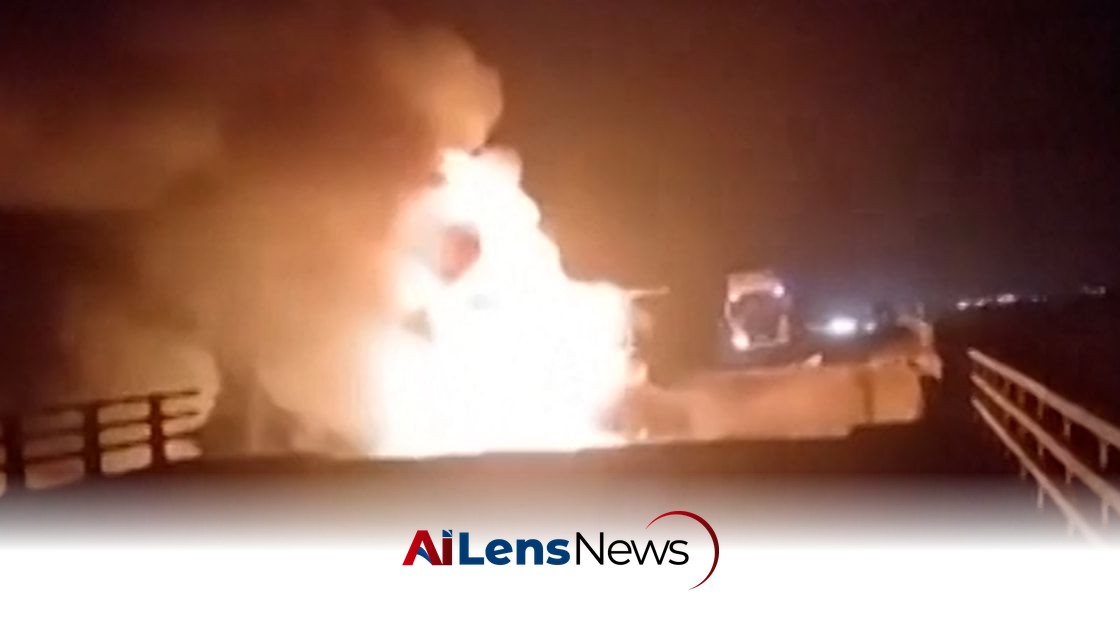


The U.S. military's sixth consecutive night of strikes in Iran has led to significant damage to key infrastructure, including bridges and military sites.
Washington DC, United States Jul 17, 2026 ALN: In a series of escalating military actions, the U.S. military has conducted its sixth consecutive night of strikes against Iran, resulting in severe damage to critical infrastructure, including bridges. The Central Command (CENTCOM) confirmed the operations in a statement shared on social media platform X. This escalation marks a significant increase in military engagement between the U.S. and Iran, a relationship that has been strained for decades, particularly since the U.S. withdrawal from the Joint Comprehensive Plan of Action (JCPOA) in 2018.
The targeted sites included coastal surveillance and air defense installations, as well as military logistics infrastructure and maritime capabilities. These strikes are part of a broader strategy aimed at undermining Iran's military capabilities in the region. The U.S. has long viewed Iran as a destabilizing force in the Middle East, citing its support for proxy groups and its nuclear ambitions as primary concerns.
The U.S. military's operations have focused on disabling Iran's ability to conduct surveillance and defend its coastal areas. By targeting logistics and maritime capabilities, the U.S. aims to disrupt Iran's military operations and deter future aggressions. The strikes are seen as a response to Iran's activities in the region, which have included missile tests and threats to shipping in the Strait of Hormuz, a critical chokepoint for global oil supply.
In recent years, tensions have escalated, particularly following incidents involving attacks on oil tankers and drone strikes attributed to Iranian forces. The U.S. has maintained a military presence in the region, including naval forces in the Persian Gulf, as a deterrent against Iranian aggression. The strikes are part of a broader U.S. strategy that includes sanctions, diplomatic pressure, and military readiness.
The damage inflicted on bridges and other infrastructure has raised concerns about the humanitarian impact on the local population. Such strikes not only affect military operations but also disrupt civilian life, complicating transportation and access to essential services. Bridges are vital for the movement of goods and people, and their destruction can lead to significant economic repercussions for the areas affected.
Humanitarian organizations have expressed alarm over the potential for increased suffering among civilians, who may already be facing hardships due to sanctions and previous conflicts. Access to medical facilities, food supplies, and other essential services can be severely hampered by infrastructure damage, leading to a worsening humanitarian crisis in the region. The destruction of critical infrastructure can also exacerbate existing vulnerabilities, particularly in areas that are already struggling with economic instability and limited resources.
The international community has often highlighted the importance of protecting civilian infrastructure during military operations. The principle of distinction, which is a key tenet of international humanitarian law, mandates that parties to a conflict must differentiate between military targets and civilian objects. The ongoing strikes, particularly those targeting dual-use infrastructure, raise significant ethical and legal questions regarding compliance with these principles.
The ongoing military actions have drawn mixed reactions from the international community. While some nations support the U.S. stance on Iran's military activities, others criticize the strikes as exacerbating tensions in an already volatile region. Countries aligned with the U.S. often view the strikes as necessary to counter Iran's influence and ensure regional stability, while others see them as escalating an already dangerous situation.
Russia and China, both of whom have close ties with Iran, have condemned the strikes and called for restraint from the U.S. They argue that military actions will not resolve the underlying issues and could lead to a broader conflict. Additionally, European nations have expressed concerns over the potential for escalation, emphasizing the need for diplomatic solutions to address the tensions. The reactions from these nations reflect a broader geopolitical divide regarding the approach to Iran, with some advocating for engagement and negotiation rather than military confrontation.
Furthermore, regional players in the Middle East, particularly those who have historically been at odds with Iran, may view the U.S. strikes as an opportunity to recalibrate their own military and political strategies. The ongoing conflict has the potential to realign alliances and alter the balance of power in the region, as countries reassess their positions in light of the U.S. military's actions.
As the situation continues to unfold, analysts are closely monitoring the potential for further escalation. The U.S. military's sustained operations indicate a commitment to countering perceived threats from Iran, but the long-term consequences of such actions remain uncertain. The possibility of retaliation from Iran, whether through direct military action or through proxy groups in the region, poses a significant risk of further conflict.
Moreover, the strikes may impact ongoing diplomatic efforts aimed at reining in Iran's nuclear program. The U.S. has been engaged in a complex diplomatic landscape, attempting to balance military readiness with the need for negotiations. Any escalation in military actions could undermine trust and make diplomatic resolutions more challenging. The delicate balance between military action and diplomacy is further complicated by domestic political considerations within the U.S., where differing views on foreign policy towards Iran can influence decision-making.
In summary, the U.S. military's recent strikes have significantly impacted Iran's military infrastructure, leading to severe damage to bridges and other critical sites. The international community watches closely as tensions rise and the potential for further conflict looms. The situation remains fluid, and the actions taken by all parties involved will be crucial in shaping the future of U.S.-Iran relations and the broader stability of the Middle East. As the situation evolves, stakeholders will need to navigate the complexities of military engagement, humanitarian considerations, and diplomatic efforts to foster a more stable and peaceful regional environment.
To learn more about the latest developments in World News & International Affairs, stay updated with our exclusive reports and analyses on AiLensNews.

