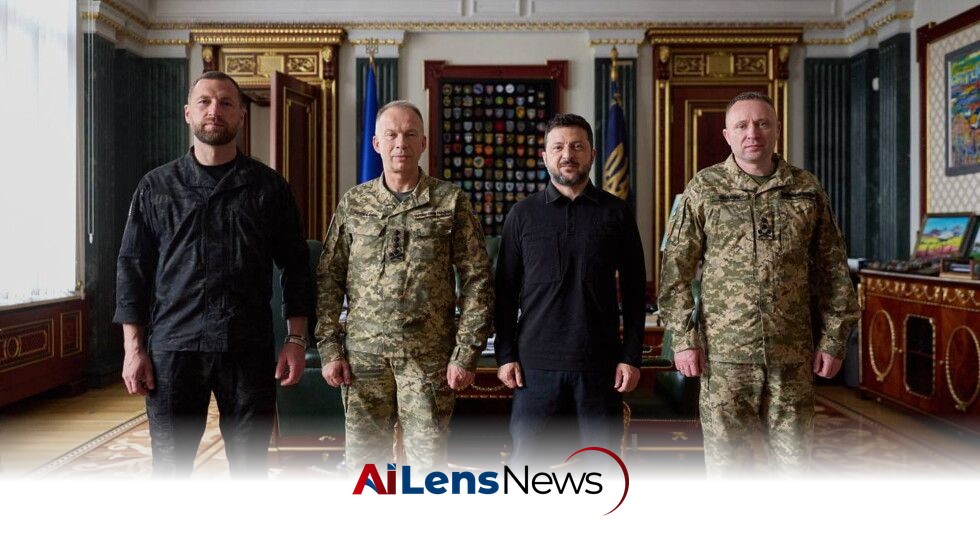


The recent dismissal of Ukraine's defense minister has initiated a significant overhaul of the country's military leadership, marking a pivotal shift in its armed forces.
Washington DC, United States Jul 23, 2026 ALN: The recent dismissal of Ukraine's defense minister has triggered a rapid transformation within the country's military structure. This change comes amid widespread protests and public outcry, reflecting the deep-seated sentiments of the Ukrainian populace regarding military leadership and governance. The decision highlights the ongoing struggle in Ukraine to balance effective military strategy with public accountability, particularly in the context of the ongoing conflict with Russia.
Ukrainian President Volodymyr Zelenskyy announced the dismissal of the defense minister, a move that was met with both support and criticism. The minister, who had been in office during a crucial period of military engagement, was seen by some as a controversial figure whose leadership was under scrutiny. His tenure coincided with significant military challenges, including the ongoing war in Eastern Ukraine and Russia's annexation of Crimea in 2014. Critics argued that the minister's strategies were inadequate in addressing the evolving nature of warfare, particularly in the face of hybrid threats that combine conventional military force with cyber warfare and disinformation campaigns.
The dismissal can also be contextualized within the broader political landscape of Ukraine. Since the 2014 Euromaidan protests, which led to the ousting of former President Viktor Yanukovych, there has been a persistent demand for reform within the military and government institutions. The public's frustration with corruption and inefficiency in military leadership has been a recurring theme, leading to calls for accountability and transparency. This latest decision by President Zelenskyy can be seen as an attempt to respond to these public demands and demonstrate a commitment to reform.
The decision sparked protests across various cities, with citizens expressing their views on military leadership and the direction of Ukraine's defense strategy. Demonstrators called for accountability and transparency in military affairs, emphasizing the need for a new approach to leadership. The protests reflect a broader societal desire for change and a more responsive government, particularly in light of the sacrifices made by the Ukrainian military and civilian population during the ongoing conflict.
Public sentiment has been heavily influenced by the experiences of the last several years, where many Ukrainians have witnessed the consequences of ineffective military strategies firsthand. The protests underscore a growing awareness of the need for a military that not only defends the nation but also operates with integrity and effectiveness. As citizens took to the streets, their demands resonated with a collective yearning for a military leadership that prioritizes national security and the welfare of its soldiers.
In response to the protests and the need for a strategic reset, President Zelenskyy appointed a new commander-in-chief of the Armed Forces, Mykhailo Drapatyi. This appointment is seen as a significant step towards rejuvenating the military leadership with fresh perspectives and strategies. Drapatyi, who has a background in military operations and strategic planning, is expected to bring a new approach to the challenges facing the Ukrainian Armed Forces.
The appointment of Drapatyi is particularly noteworthy given the complexities of the current military landscape. His experience and understanding of modern warfare could play a crucial role in adapting Ukraine's military strategies to better address the multifaceted threats posed by Russia. Additionally, his leadership style will be closely scrutinized as the public seeks assurance that the military is on a path toward reform and effectiveness.
The changes in leadership are expected to bring about a shift in military strategy, focusing on modernizing the armed forces and enhancing operational effectiveness. The new leadership aims to address the challenges faced by the military and improve its readiness in the ongoing conflict. This includes not only upgrading equipment and technology but also enhancing training programs and fostering a culture of accountability within the ranks.
Moreover, the new strategy is likely to emphasize the importance of integrating various branches of the military and improving coordination with allied forces. As Ukraine continues to receive military aid and support from Western nations, particularly in the form of training and equipment, there is an opportunity to leverage these relationships for greater operational effectiveness. The new leadership will need to navigate these partnerships carefully, ensuring that Ukraine's military capabilities are enhanced while maintaining sovereignty and decision-making autonomy.
Another critical aspect of the new military strategy may involve addressing the psychological and social dimensions of warfare. As the conflict has taken a toll on both soldiers and civilians, initiatives aimed at mental health support and community resilience will likely become increasingly important. The new leadership may prioritize these dimensions, recognizing that effective military governance extends beyond the battlefield.
The dismissal of the defense minister and the subsequent military overhaul reflect a critical moment in Ukraine's ongoing struggle for sovereignty and security. As the new leadership takes charge, the nation watches closely, hoping for a renewed commitment to effective military governance and strategic advancement. The public's reaction to these changes will be pivotal in shaping the future of Ukraine's military and its ability to respond to external threats.
In the broader context, the transformation within Ukraine's military could serve as a model for other nations grappling with similar issues of military effectiveness and public accountability. The developments in Ukraine's defense sector may also influence regional dynamics, particularly in Eastern Europe, where security concerns remain heightened due to Russian aggression. As Ukraine navigates this transitional period, its experiences will be closely monitored by both allies and adversaries alike, with implications that extend beyond its borders.
To learn more about the latest developments in Politics, stay updated with our exclusive reports and analyses on AiLensNews.

