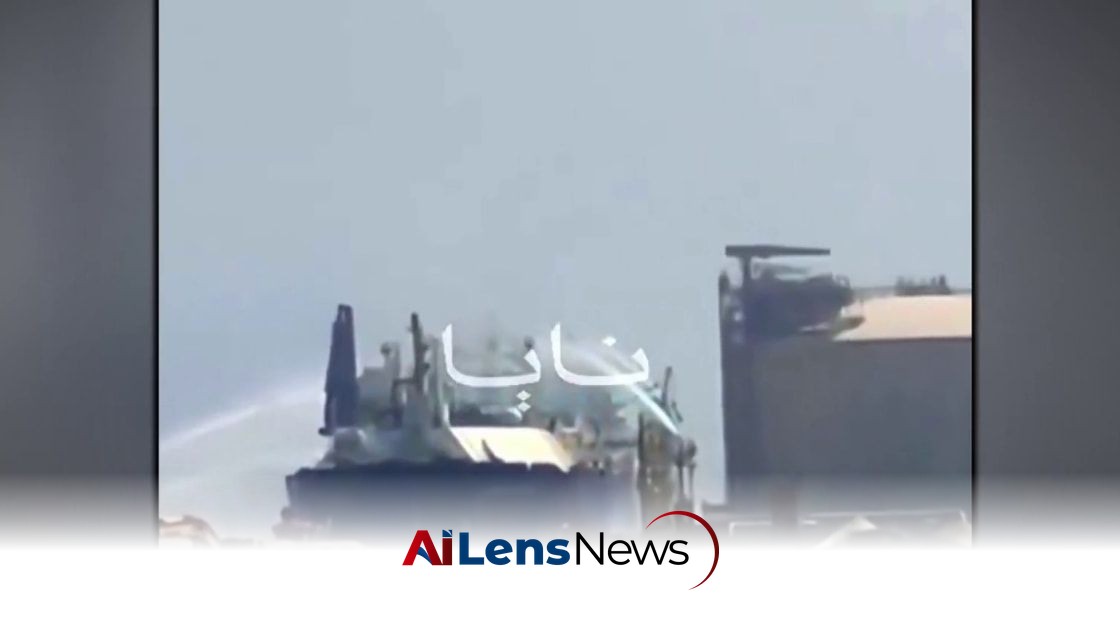


President Trump has pledged a retaliatory strike against Iran after an unsuccessful attack on U.S. forces. This statement comes amid rising tensions in the region.
Washington DC, United States Jul 30, 2026 ALN: In a bold statement, President Trump has vowed to retaliate against Iran following an unsuccessful attempt by the Iranian regime to attack U.S. troops. The incident has heightened tensions between the two nations, with Trump emphasizing the need for a strong response to any threats against American forces.
The failed attack, which targeted U.S. military personnel stationed in the region, has drawn widespread condemnation from the Trump administration. Officials have reiterated their commitment to protecting American lives and interests abroad. This incident is significant not only for its immediate implications but also for the broader context of U.S.-Iran relations, which have been fraught with tension for decades.
Trump's remarks come as part of a broader strategy to counter Iranian aggression, which has been a focal point of his foreign policy. The president has previously indicated that any attack on U.S. forces would not go unanswered, and this latest incident appears to reinforce that stance. The U.S. has had a complicated relationship with Iran, particularly since the 1979 Iranian Revolution, which led to the establishment of the Islamic Republic and the severing of diplomatic ties.
The historical backdrop is essential to understanding the current dynamics. Tensions escalated significantly after the U.S. withdrew from the Joint Comprehensive Plan of Action (JCPOA) in 2018, a landmark agreement aimed at curbing Iran's nuclear program in exchange for sanctions relief. Following the withdrawal, the U.S. reinstated a series of economic sanctions that have severely impacted Iran's economy, leading to heightened hostilities and confrontations in the region.
The U.S. has accused Iran of various malign activities, including supporting terrorist organizations, engaging in cyber warfare, and destabilizing efforts in neighboring countries such as Iraq, Syria, and Yemen. This has created a perception in Washington that Iran is not only a regional threat but also a global one, as its actions have the potential to disrupt international peace and security.
In response to the failed attack, military officials are reportedly reviewing options for a potential retaliatory strike, although specifics have not been disclosed. This consideration of military options reflects a long-standing doctrine of deterrence that has characterized U.S. military strategy in the Middle East. The situation remains fluid, with ongoing assessments of the threat posed by Iran. Observers note that any military response would need to be carefully calibrated to avoid escalation into a broader conflict.
The U.S. has previously engaged in military actions against Iranian interests, including drone strikes and airstrikes targeting Iranian-backed militia groups in Iraq and Syria. The Trump administration has consistently framed its approach to Iran as a necessary measure to ensure regional stability and protect American allies, particularly Israel and Saudi Arabia, who view Iran as a primary threat.
As the U.S. continues to navigate its relationship with Iran, the administration is under pressure to demonstrate strength and resolve in the face of provocations. Trump's commitment to a retaliatory strike underscores the administration's approach to foreign policy, which prioritizes a tough stance on nations perceived as threats. This approach has garnered mixed reactions domestically and internationally, with critics arguing that it risks further destabilizing an already volatile region.
Furthermore, the implications of a potential military response extend beyond U.S.-Iran relations. A retaliatory strike could provoke Iranian retaliation, leading to a cycle of violence that could engulf neighboring countries and impact global oil markets, given that the Strait of Hormuz is a critical chokepoint for oil transportation. Approximately one-fifth of the world's oil supply transits through this narrow waterway, making any disruption a significant concern for global economic stability.
The international community is closely monitoring the situation, with many countries advocating for diplomatic solutions to prevent escalation. Nations such as Russia and China have historically supported Iran in international forums and may oppose U.S. military actions, potentially complicating diplomatic efforts. Additionally, European allies, who were part of the JCPOA, have expressed concerns about the U.S. approach and urged for dialogue rather than military confrontation.
In conclusion, the failed Iranian attack has sparked a renewed commitment from President Trump to ensure the safety of U.S. troops and to respond decisively to any acts of aggression. The coming days may see further developments as the situation unfolds. Analysts suggest that the administration's next steps will be crucial in shaping not only U.S.-Iran relations but also the broader geopolitical landscape in the Middle East. The potential for conflict remains a significant concern, as both nations weigh their options in an increasingly tense environment.
In light of these developments, it is essential to consider the broader implications of U.S. military actions in the region. Engaging in military action could lead to unintended consequences, including the possibility of drawing the U.S. deeper into a protracted conflict. The historical context of U.S. involvement in the Middle East, particularly in Iraq and Afghanistan, serves as a reminder of the complexities and challenges associated with military interventions.
Moreover, the domestic political landscape in the U.S. could also influence the administration's decision-making process. With the presidential election approaching, any military action could be scrutinized by both supporters and opponents of the administration. Critics may argue that military responses could distract from pressing domestic issues and exacerbate tensions abroad, while supporters may view it as a necessary show of strength.
Ultimately, the situation requires careful navigation to avoid escalation while maintaining U.S. interests in the region. The balance between deterrence and diplomacy will be critical as the Trump administration considers its next steps in response to Iranian provocations. As the world watches closely, the actions taken in the coming days and weeks will likely have lasting ramifications for U.S.-Iran relations and the overall stability of the Middle East.
To learn more about the latest developments in Politics, stay updated with our exclusive reports and analyses on AiLensNews.

