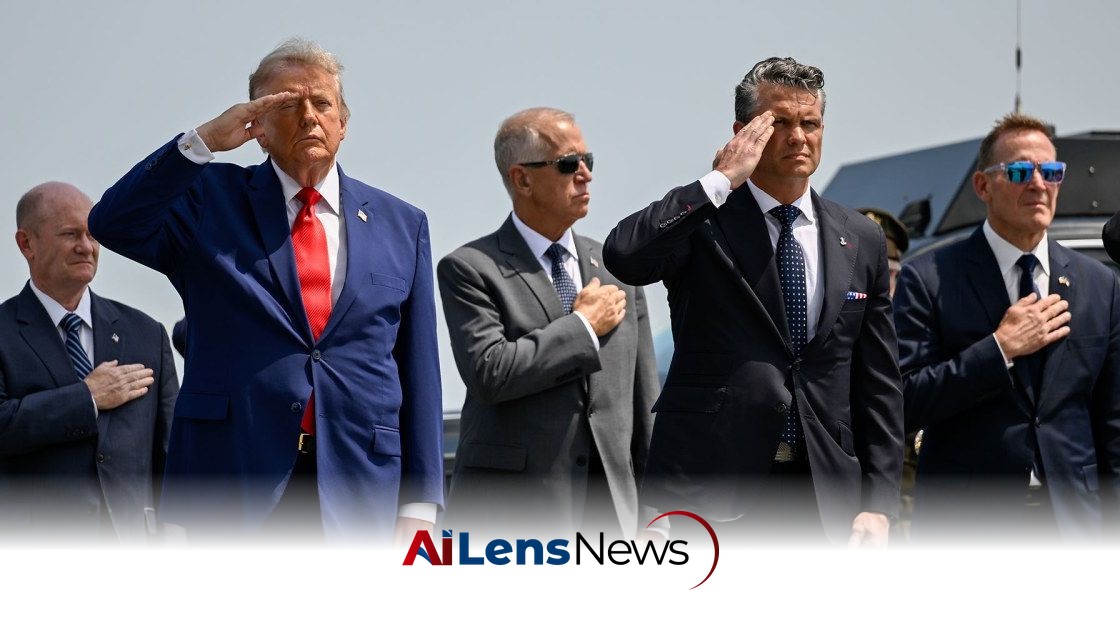


President Trump and Defense Secretary Hegseth pay tribute to four U.S. service members killed in the conflict with Iran during a solemn dignified transfer ceremony.
Washington DC, United States Jul 22, 2026 ALN: In a poignant ceremony, President Trump, alongside Defense Secretary Hegseth and other officials, attended the dignified transfer of four U.S. service members who lost their lives in the ongoing conflict with Iran. The event, marked by solemnity and respect, highlighted the sacrifices made by these brave individuals in service to their country. The dignified transfer ceremony is a significant tradition in the U.S. military, representing the nation's respect and honor for those who have made the ultimate sacrifice while serving in the armed forces.
The dignified transfer took place at a military base, where the fallen soldiers' remains were received with full honors. This ceremony is not merely a formality; it is a deeply emotional and ceremonial process that acknowledges the bravery and dedication of the service members. President Trump expressed his condolences to the families of the deceased, emphasizing the nation's gratitude for their service and sacrifice, which resonates deeply within the fabric of American society.
During the ceremony, military personnel stood in formation, saluting as the caskets were brought forward. The atmosphere was heavy with emotion, reflecting the profound loss felt by the families and the nation alike. The sight of the flag-draped caskets, accompanied by the solemn music of military honors, serves as a powerful reminder of the cost of war and the sacrifices made by those who serve. Each casket represents not just an individual life lost, but also the dreams and aspirations of the service members, their families, and their communities.
The ongoing conflict with Iran has been a contentious issue in U.S. foreign policy, with various military engagements and strategic decisions leading to heightened tensions in the region. The loss of these service members underscores the real and tangible consequences of military action. It brings to the forefront discussions about the role of the U.S. in international conflicts and the responsibilities that come with military engagement. The families of these fallen soldiers are now part of a larger narrative about the sacrifices made in the name of national security and the complexities of modern warfare.
As the ceremony concluded, President Trump reiterated his commitment to supporting the families of the fallen and ensuring that their sacrifices are never forgotten. This commitment is crucial, as families of service members often face significant challenges in the aftermath of loss, including emotional trauma, financial difficulties, and the struggle to find closure. The government's role in providing support, both emotionally and materially, is vital to helping these families navigate their grief and honor the legacies of their loved ones.
The event serves as a reminder of the ongoing challenges faced by U.S. service members and the importance of honoring their legacy. The sacrifices made by these individuals resonate not only within their families but also within the broader American community. Public awareness of such ceremonies can foster a greater appreciation for the military and its personnel, encouraging citizens to engage with and support veterans and active-duty service members.
In addition to the immediate emotional impact of the ceremony, it also raises broader questions about the policies that lead to military conflict. The U.S. has been involved in various military operations in the Middle East for decades, and the implications of these actions are complex. The loss of service members can lead to public debate about the effectiveness and morality of military interventions, and whether they achieve the intended goals of national security and peace.
Moreover, the ceremony highlights the importance of remembrance and the need for a national dialogue on how to support veterans and their families effectively. Many veterans face challenges such as post-traumatic stress disorder (PTSD), physical injuries, and difficulties in reintegrating into civilian life after service. The government and society at large have a responsibility to ensure that veterans receive the care and support they need, which includes mental health services, job training, and community integration programs.
As the nation reflects on the sacrifices of these service members, it is crucial to acknowledge the role of the military in shaping U.S. foreign policy and the consequences of military engagement. The dignified transfer ceremony serves as a powerful reminder that behind every statistic and policy decision are real lives and families affected by the outcomes of war.
The dignified transfer ceremony is steeped in tradition and is conducted with the utmost respect. It typically involves a procession where the remains of the service members are transported with military honors. The ceremony is attended by senior military officials and family members, creating a space for collective mourning and tribute. This ritual not only honors the deceased but also serves as a vital part of the grieving process for families and communities, allowing them to publicly acknowledge their loss.
In recent years, the U.S. military has faced increasing scrutiny regarding its operations abroad, particularly in regions like the Middle East. The conflict with Iran, characterized by a complex interplay of political, economic, and military factors, has escalated tensions and led to tragic losses. The U.S. has engaged in various military operations aimed at countering perceived threats, but these actions have often resulted in significant casualties. This reality underscores the importance of evaluating military strategy and the broader implications of engagement in foreign conflicts.
Furthermore, the emotional toll on families of fallen soldiers extends beyond the immediate aftermath of loss. Many families report long-term challenges, including mental health issues, financial instability, and difficulties in adjusting to life without their loved ones. The government has established various programs to assist these families, but the effectiveness and accessibility of these resources can vary widely. Ensuring that families receive adequate support is essential in honoring the legacy of those who have served and sacrificed.
The ceremony also serves as a reminder of the collective responsibility borne by society to engage in meaningful discussions about military policy and the treatment of veterans. As the U.S. continues to navigate complex international relationships, it is imperative that citizens remain informed and involved in conversations about military engagement and its consequences. This includes advocating for policies that prioritize peace and diplomacy over military solutions whenever possible.
In conclusion, the dignified transfer of these four service members is not just an isolated event; it is part of a larger narrative about sacrifice, duty, and the complexities of military engagement in today's world. It calls for a collective remembrance and a commitment to supporting those who serve and have served, ensuring that their sacrifices are honored and that their legacies endure in the hearts and minds of the nation. As the U.S. continues to navigate its role on the global stage, it is essential to remember the human cost of conflict and to strive for a future where such ceremonies become less frequent, and peace prevails. The act of honoring fallen service members is not only a tribute to their bravery but also a call to action for a more peaceful and compassionate world.
To learn more about the latest developments in Crime & Law, stay updated with our exclusive reports and analyses on AiLensNews.

