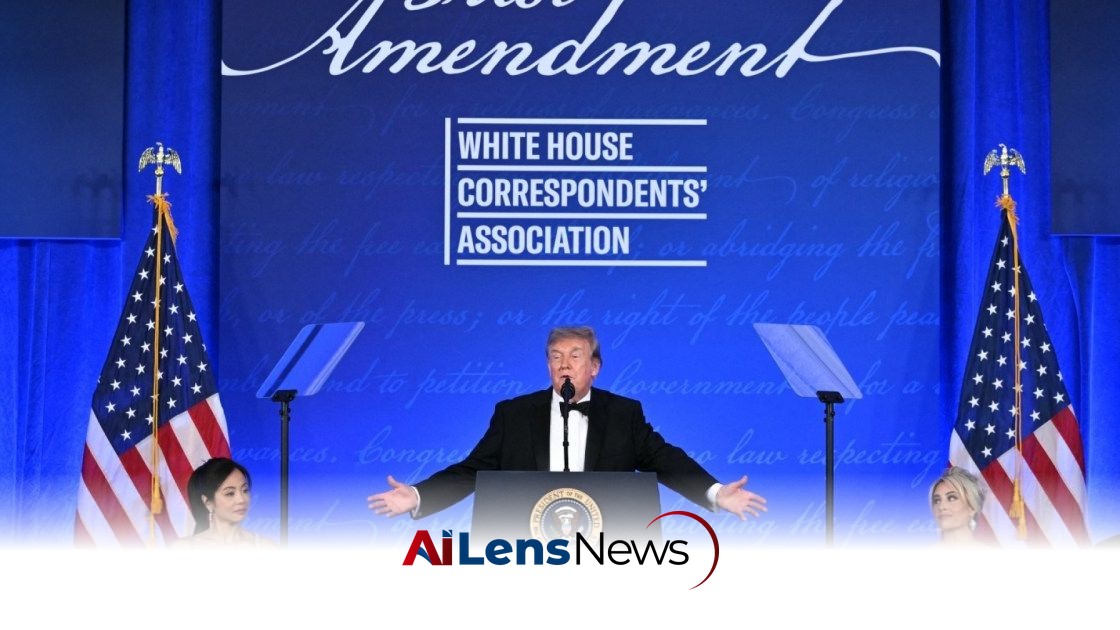


At the rescheduled White House Correspondents' Dinner, President Trump emphasized his accomplishments and criticized political rivals while addressing the press.
Washington DC, United States Jul 25, 2026 ALN: President Trump delivered a lengthy speech at the rescheduled White House Correspondents' Dinner, where he took the opportunity to insult his political rivals while also touting his accomplishments and his relationship with the press.
The event, known for its mix of humor and political commentary, saw Trump reflecting on his time in office, emphasizing key achievements that he believes resonate with the American public. He reiterated his administration's focus on various policies and initiatives that he claims have positively impacted the nation. These achievements often included references to economic growth, job creation, and tax reforms, which he argued have benefited a broad swath of Americans.
In a tone characteristic of his previous speeches, Trump did not shy away from criticizing opponents, using the platform to highlight perceived failures of his rivals. This approach, while controversial, aligns with his established communication style, which often blends bravado with direct attacks. His remarks included pointed jabs at Democrats and other political figures, framing them as obstacles to his administration's success. This combative style has both galvanized his base and drawn criticism from those who advocate for a more civil discourse in politics.
Trump's remarks also included a defense of his relationship with the media, which has often been contentious. He pointed to moments of cooperation and mutual respect, despite the backdrop of frequent clashes between his administration and various news outlets. This duality in his relationship with the press is notable; while he has frequently labeled certain outlets as "fake news," he also acknowledged instances where the media played a role in informing the public about critical issues. This acknowledgment may reflect a recognition of the media's essential role in a democratic society, even as he continues to challenge narratives that he perceives as unfavorable.
The Correspondents' Dinner, traditionally a night for light-hearted roasts and camaraderie among journalists and politicians, took on a more serious tone as Trump navigated the complexities of his presidency and the media landscape. The event serves as a unique platform where the lines between politics and entertainment blur, allowing for a variety of expressions, from comedic performances to poignant political commentary. Trump's appearance at the dinner, therefore, was not just a routine engagement but a strategic opportunity to reinforce his message and address his critics directly.
As the evening progressed, attendees were treated to a mix of humor and political rhetoric, reflecting the ongoing tensions in American politics. The atmosphere, typically characterized by a sense of levity, was punctuated by Trump's assertive declarations and the audience's reactions, which ranged from laughter to applause. This dynamic illustrates the polarized nature of contemporary political discourse, where humor can serve as both a unifying force and a source of division.
Trump's presence at the dinner underscored his continued influence and relevance in the political arena. Despite the controversies that have surrounded his presidency, he remains a central figure in American politics, with a significant following that resonates with his messaging. This influence is particularly important in the context of upcoming elections, where his ability to rally support and shape public opinion could have substantial implications for the political landscape.
In conclusion, the event served as a reminder of the intricate relationship between the presidency and the press, with Trump leveraging the platform to reinforce his narrative and engage with both supporters and critics alike. The Correspondents' Dinner not only highlights the ongoing dialogue between politicians and the media but also serves as a reflection of the broader societal tensions that characterize American politics today. As the nation continues to grapple with issues of governance, accountability, and the role of the press, events like the Correspondents' Dinner will remain significant in shaping the public's understanding of these dynamics.
Moreover, Trump's speech at the dinner can be seen as part of a larger trend in which political figures increasingly use media events to communicate directly with the public, bypassing traditional news channels. This shift has implications for how information is disseminated and consumed, as well as for the relationship between public figures and journalists. As politicians embrace social media and other platforms to share their messages, the role of the press evolves, leading to new challenges and opportunities in the realm of political communication.
As we look to the future, the Correspondents' Dinner will likely continue to serve as a barometer for the state of U.S. politics and media relations. The interplay between humor, criticism, and political commentary will remain a vital aspect of this annual event, reflecting the changing landscape of American democracy. Trump's approach at the dinner illustrates the ways in which political figures can harness the power of such events to shape their narratives and influence public perception, a strategy that may become increasingly important in an era of heightened political polarization.
In summary, the White House Correspondents' Dinner remains a significant cultural touchstone, where the interplay between politics and media is on full display. Trump's participation, characterized by his characteristic bravado and contentious remarks, serves to highlight the complexities of his presidency and the ongoing relationship between political leaders and the press. As the political landscape continues to evolve, events like these will play a crucial role in shaping the discourse and informing the public about the issues that matter most.
To understand the implications of Trump's remarks further, it is important to consider the historical context of the Correspondents' Dinner. This annual event has roots dating back to the 1920s and has traditionally served as a gathering for journalists and politicians to celebrate the importance of a free press while also engaging in light-hearted banter. Over the decades, it has evolved into a significant occasion for political figures to connect with the media and the public in a more relaxed environment. However, in recent years, the dinner has also become a focal point for tensions between the government and the press, especially as accusations of "fake news" and media bias have become prevalent in political rhetoric.
Trump's approach to the dinner reflects a broader trend among politicians who are increasingly aware of the power of media narratives and the importance of public perception. In the digital age, where news spreads rapidly through social media and other online platforms, political figures must navigate a complex landscape of information dissemination. The Correspondents' Dinner, therefore, serves not only as a venue for humor and camaraderie but also as a battleground for shaping narratives and influencing public opinion.
The implications of Trump's remarks extend beyond the immediate context of the dinner. They highlight the ongoing struggle for control over the narrative in American politics, where politicians often seek to define their opponents and shape public perception through direct engagement with the media and the public. This dynamic underscores the evolving relationship between political leaders and journalists, which has become increasingly transactional in nature. As politicians leverage media events to communicate directly with their constituents, the role of traditional journalism is challenged, raising questions about the future of press coverage and the standards of accountability in political reporting.
The dinner also provides insight into the broader cultural tensions that exist within American society. The polarized reactions to Trump's speech illustrate the deep divisions that characterize contemporary political discourse. While some attendees may have found humor in his remarks, others may have viewed them as divisive and counterproductive. This polarization reflects a larger trend in which political figures increasingly cater to their base, often at the expense of fostering constructive dialogue and understanding across party lines.
Furthermore, the Correspondents' Dinner serves as a reminder of the essential role that the press plays in holding political leaders accountable. Despite the contentious relationship between Trump and certain media outlets, the dinner underscores the importance of a robust and independent press in a democratic society. Journalists play a critical role in informing the public, scrutinizing government actions, and ensuring transparency in political processes. As political leaders continue to engage with the media in increasingly complex ways, the challenge of maintaining journalistic integrity and accountability becomes paramount.
In essence, Trump's participation in the White House Correspondents' Dinner exemplifies the intricate interplay between politics, media, and public perception. As the political landscape continues to evolve, events like these will remain significant in shaping the discourse and informing the public about the issues that matter most. The dinner not only highlights the ongoing dialogue between politicians and the press but also serves as a reflection of the broader societal tensions that characterize American politics today. In this context, Trump's approach at the dinner serves as a case study in the ways political figures can leverage media events to reinforce their narratives and engage with their supporters and critics alike.
To learn more about the latest developments in Politics, stay updated with our exclusive reports and analyses on AiLensNews.

