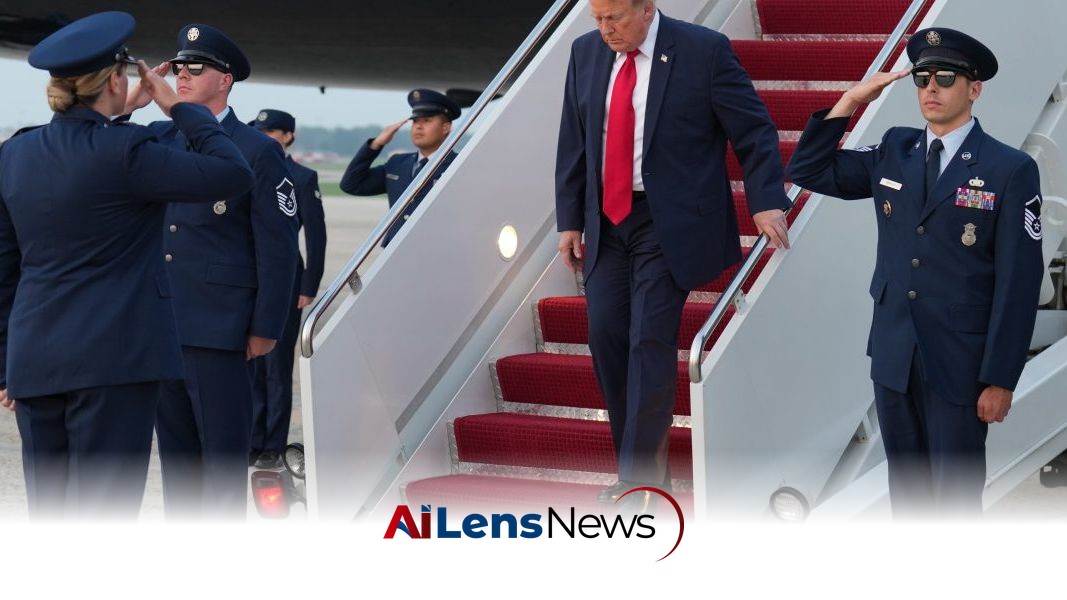


The Trump administration sought phone records of New York Times journalists and their relatives, aiming to unmask sources related to the Qatari-gifted Air Force One.
Washington DC, United States Jul 21, 2026 ALN: President Donald Trump’s administration has come under scrutiny for its aggressive pursuit of the phone records of several New York Times journalists, as well as some of their relatives. This revelation, stemming from a motion unsealed on a recent Monday, underscores a significant tension between the government and the press, particularly regarding the administration's attempts to unmask the confidential sources of reporters who have covered sensitive topics related to the Trump administration, including a Qatari-gifted Air Force One jet.
The efforts by the Trump administration to compel the disclosure of sources through additional subpoenas are notable not only for their scope but also for their timing. The relationship between the executive branch and the media has been increasingly fraught, with both sides often at odds over issues of transparency and accountability. The New York Times has characterized these efforts as unusually aggressive, revealing a broader strategy that extends beyond the immediate articles in question.
According to the Times, the subpoenas sought phone records beginning on January 1, 2026, which is significantly ahead of the timeline relevant to the articles that triggered the investigation. This discrepancy raises concerns that the Department of Justice (DOJ) may be using the investigation not merely to address specific allegations but rather to conduct a broader fishing expedition into the journalists’ source relationships. The lawyers representing the Times articulated this concern in their letter, suggesting that the DOJ's actions reflect an intent to gather information that goes well beyond the scope of the original reporting.
In addition to the phone records subpoenas, the Trump administration also issued grand jury subpoenas on July 10 to three journalists, demanding testimony about the identities of their sources. The Times has challenged these grand jury subpoenas in court, with a hearing scheduled for Thursday to discuss their validity. The legal battle highlights the ongoing struggle between the press's right to protect its sources and the government's interest in investigating potential leaks of classified information.
The timing of the subpoenas raises further questions about the motivations behind them. Some of the subpoenas for phone records were issued on the same day as the grand jury subpoenas, with additional requests following shortly thereafter. The Times' legal team argues that this sequence of events demonstrates bad faith on the part of the government, suggesting a lack of proper investigative protocol prior to seeking such intrusive measures against journalists.
In defense of its actions, the Justice Department has stated that reporters themselves are not the targets of the investigation; rather, the focus is on those responsible for leaking classified information. The department has claimed that all subpoenas are issued in accordance with federal law and internal policies. However, the implications of these actions are significant, as they could set a precedent for how future administrations interact with the press, particularly in cases involving national security and sensitive information.
Among the subpoenas issued were requests for the phone records of a reporter’s mother and the spouses of two journalists. The Times noted that the mother in question is a mental health professional with confidential client relationships, raising ethical concerns about the potential for compromising the privacy of individuals who are not involved in the reporting process. The inclusion of spouses in the subpoenas further complicates the issue, suggesting a broad and invasive approach to gathering information.
The ongoing legal challenge reflects a larger narrative surrounding the Trump administration's relationship with the media. The original subpoenas, which were delivered to reporters at their homes, marked an escalation in the administration's efforts to crack down on media leaks. This crackdown has been met with widespread condemnation from free press advocates, who view it as an attempt to intimidate news organizations and stifle journalistic inquiry. The FBI's earlier search of a Washington Post reporter’s home and the seizure of her electronic devices further exemplify the administration's aggressive stance toward the press.
The aircraft in question, a newly retrofitted jet gifted by Qatar to the United States, has become a focal point of scrutiny. The Trump administration reportedly invested $400 million to upgrade the plane, which recently entered service. However, Trump opted to use an older model of Air Force One to depart from a NATO summit in Turkey, raising questions about the security features of the newer aircraft. The Times reported, citing anonymous sources, that the switch was made at the recommendation of the Secret Service, who expressed concerns about the newer jet's lack of advanced security capabilities, including antimissile technology. In response, Trump publicly denied any security concerns on social media, further complicating the narrative surrounding the administration's handling of national security issues.
Since taking office, the Trump administration has faced a series of confrontations with various media outlets, ranging from traditional newspapers to television networks and even government-funded entities like the Voice of America. The methods employed have included lawsuits, administrative actions, and public threats aimed at discrediting unfavorable coverage. This ongoing conflict raises critical questions about the role of the press in a democratic society and the protections afforded to journalists under the First Amendment of the U.S. Constitution, which guarantees freedom of the press and the ability to operate without governmental interference.
The implications of the Trump administration's actions extend beyond the immediate legal challenges faced by the New York Times and its journalists. They highlight a broader concern regarding the erosion of press freedoms and the increasing willingness of government entities to pursue aggressive tactics in the name of national security. As the legal battle unfolds, it will be essential to monitor how these events shape the future of journalism in the United States and the protections afforded to those who seek to hold power accountable through reporting.
To learn more about the latest developments in Crime & Law, stay updated with our exclusive reports and analyses on AiLensNews.

