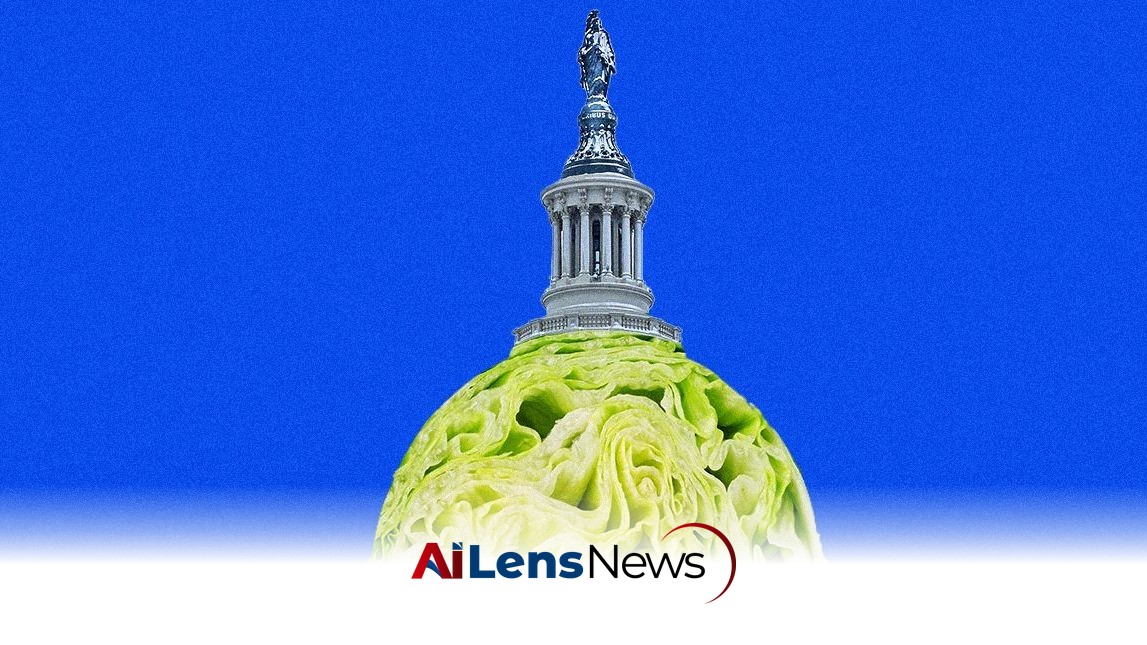


Taylor Farms has spent over $3.6 million on conservative lobbying efforts, including significant donations to MAGA groups, amid a recent food safety crisis.
Washington DC, United States Jul 22, 2026 ALN: The lettuce supplier at the center of the turbo diarrhea outbreak has spent millions of dollars to sway sentiment around food regulation and elect Donald Trump and other MAGA Republicans, according to public filings. The recent outbreak, which has affected thousands across multiple states, has drawn attention not only to the health implications but also to the political and regulatory landscape surrounding food safety in the United States.
Taylor Farms, a major player in the fresh produce market, donated more than $2 million to conservative political groups in 2025, according to Federal Election Commission filings. This substantial financial commitment includes a $1 million donation to MAGA Inc., a super PAC closely associated with former President Donald Trump, and an additional $1.1 million to other super PACs dedicated to electing Republican candidates. Such financial engagements raise questions about the influence of corporate money in politics and its potential impact on regulatory practices in the food industry.
From 2020 through the end of 2024, Taylor Farms contributed more than $1.6 million to conservative political action committees (PACs), including a notable $850,000 to AFP Action, a super PAC that advocates against regulatory measures and is linked to the Koch network, which has been known for its efforts to reduce government oversight in various sectors, including agriculture. This trend of corporate political spending reflects a broader strategy among large corporations to shape legislative outcomes in their favor, particularly concerning regulations that affect their operations.
Bruce Taylor, the chairman and CEO of Taylor Farms, has a long history of supporting Republican causes. Since 2020, he has personally donated over $900,000 to Republican PACs and candidates, including contributions to notable figures such as Texas Senator John Cornyn and Tennessee Senator Marsha Blackburn. This alignment with Republican candidates suggests a concerted effort to foster a political environment conducive to the interests of the agricultural sector, particularly in terms of regulatory frameworks that govern food safety.
In addition to its political contributions, Taylor Farms has also invested heavily in lobbying efforts aimed at influencing food safety regulations. In early 2025, the company hired lobbyists from the firm Sidley Austin to advocate on its behalf concerning “regulation of food safety.” Since then, Taylor Farms has expended approximately $810,000 on lobbying activities. This level of investment highlights the company's commitment to shaping the regulatory landscape in a way that aligns with its business interests, particularly in light of the recent health crisis.
Marion Nestle, a renowned food policy expert, commented on the implications of Taylor Farms’ political donations, stating that they are part of a larger issue within the American food industry. She emphasized that multibillion-dollar companies leverage their financial resources to advocate for policies that may diminish food safety regulations and accountability in the wake of outbreaks. Nestle pointed out that while the FDA has established regulations for food producers, the enforcement of these regulations often falls short due to the associated costs and complexities involved.
In a recent post on X, the US Department of Health and Human Services (HHS) sought to clarify the situation, emphasizing that Taylor Farms’ political donations did not influence the Trump administration’s response to the cyclospora outbreak. The HHS account stated, "This is how the FAKE NEWS works: imply collusion, ignore the facts. Nothing influences our decisions except science and the safety of the American people." This statement underscores the ongoing tension between public health agencies and corporate interests, particularly in the context of food safety.
Taylor Farms has expressed dissatisfaction with the Centers for Disease Control and Prevention (CDC) and the FDA regarding their handling of the cyclospora outbreak investigation. The company recently claimed that the FDA had "apologized" for announcing a false-positive test result for a sample of its lettuce; however, the FDA refuted this claim, stating that no official apology was made. This discrepancy highlights the complexities and challenges of communication between regulatory agencies and corporations, especially during a public health crisis.
Prior to the controversy surrounding the false positive, Taylor Farms executives had met with officials from the White House and the FDA to address what they described as "shortfalls" in the government agencies' response. Notably, this meeting occurred after the company hired Trent Morse, the former deputy director of the White House Presidential Personnel Office, who transitioned to start a government relations firm after leaving the Trump administration. This move suggests a strategic effort by Taylor Farms to enhance its influence within the government and navigate the regulatory landscape more effectively.
The recent diarrhea outbreak is not the first instance in which Taylor Farms has come under scrutiny from federal regulators. In 2013, the FDA identified Taylor Farms as a source of a cyclospora outbreak that sickened hundreds of consumers. Additionally, in 2015, the company voluntarily recalled several products containing celery due to potential contamination with E. coli. More recently, in 2024, Taylor Farms recalled certain yellow onions linked to an E. coli outbreak associated with McDonald’s Quarter Pounders. Following this outbreak, reports indicated that FDA inspectors discovered numerous violations at the Colorado Taylor Farms facility, including inadequate handwashing practices and unclean equipment.
Since 2025, the FDA has conducted inspections of 18 American plants associated with Taylor Farms. Of these inspections, three resulted in “voluntary action indicated,” meaning that while violations were identified, they were not severe enough to trigger mandatory enforcement actions. This pattern of inspections and findings raises concerns about the consistency of food safety practices within the company and the broader implications for public health.
Moreover, the Occupational Safety and Health Administration (OSHA) has cited at least 21 violations across Taylor Farms facilities in the United States since the beginning of 2025. In one particularly alarming case, the Department of Labor imposed a $1.1 million fine on a New Jersey facility due to safety violations following the tragic death of an employee who sustained injuries while cleaning an industrial blancher. This incident underscores the critical importance of workplace safety in addition to food safety, highlighting the need for comprehensive oversight in both areas to protect workers and consumers alike.
The intersection of corporate lobbying, political donations, and food safety regulations presents a complex landscape that requires careful scrutiny. As the recent diarrhea outbreak continues to unfold, it serves as a reminder of the ongoing challenges faced by regulatory agencies in ensuring the safety of the food supply while navigating the influence of powerful corporate interests. The implications of this situation extend beyond immediate health concerns, raising fundamental questions about accountability, transparency, and the role of government in safeguarding public health in an increasingly commercialized food system.
To learn more about the latest developments in Crime & Law, stay updated with our exclusive reports and analyses on AiLensNews.

