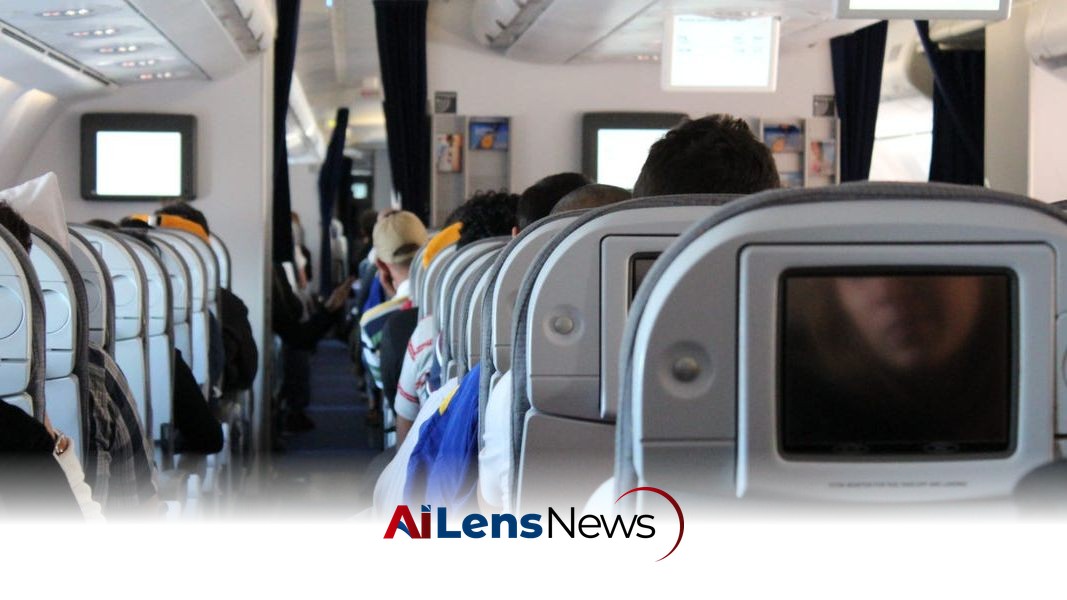


Lawmakers are pushing for a bill to ban phone calls on flights, citing safety and comfort for passengers and crew. Former flight attendants support the measure.
Washington DC, United States Jul 22, 2026 ALN: In recent years, the conversation surrounding the use of mobile phones during flights has gained significant traction, especially as in-flight WiFi technology has become more prevalent. With the introduction of a proposed bill in the House of Representatives aimed at banning in-flight phone calls, lawmakers are responding to growing concerns about passenger comfort, safety, and etiquette in the confined space of an airplane cabin.
The bill, known as the Quiet Skies Act, is co-sponsored by both Democratic and Republican representatives, highlighting a rare moment of bipartisan agreement on an issue that touches on the daily experiences of millions of air travelers. This legislative effort is particularly relevant as airlines increasingly offer WiFi services, which, while enhancing connectivity, also raise questions about appropriate behavior in shared spaces. The proposed law would require the Federal Aviation Administration (FAA) to implement a ban on phone calls within 180 days, addressing a gap that has persisted since Congress's 2018 vote mandating such a ban without a set timeline.
Former flight attendants have voiced strong support for the proposed legislation, emphasizing the need for a clear and enforceable rule to enhance the flying experience for both crew and passengers. Ally Murphy, a former flight attendant, articulated the challenges of managing passenger behavior in the close quarters of an aircraft, where loud conversations can disrupt the peace and comfort of others. "We're shoved into a tin can, and we're hurdling through the sky at 38,000 feet. It's not a normal situation to be in," she remarked, pointing out that the nature of air travel requires a level of consideration and respect for fellow passengers.
The implications of allowing phone calls on flights extend beyond mere inconvenience; they touch on broader issues of safety and communication. In-flight announcements from crew members are crucial for passenger safety, and loud conversations could drown out these important messages. Additionally, the potential for conflicts to arise between passengers and flight attendants over disruptive behavior poses another layer of complexity. Bobby Laurie, another former flight attendant, highlighted the difficulty of enforcing inconsistent rules, noting that subjective interpretations of what constitutes disruptive behavior can lead to uncomfortable confrontations.
Currently, major American airlines, including United, American, and Southwest, maintain policies that prohibit in-flight phone calls, yet some international carriers, such as British Airways and Virgin Atlantic, have ventured into allowing phone use under specific conditions. For instance, British Airways has announced that it would permit phone and video calls on aircraft equipped with Starlink WiFi, prompting discussions about the need for uniform regulations across the industry.
Paul Hudson, president of FlyerRights, a nonprofit organization advocating for airline passengers, supports the proposed ban but also suggests that airlines might consider designated areas for phone calls, akin to the "quiet cars" on Amtrak trains. This compromise could cater to the needs of business travelers and those with personal matters to discuss while still protecting the majority of passengers who prefer a quieter flying experience.
The conversation about in-flight phone calls is also intertwined with broader societal norms regarding public behavior. Jacqueline Whitmore, a former flight attendant and etiquette expert, emphasized that the close proximity of passengers in an airplane cabin makes it essential to consider the impact of one’s actions on others. "You're a finger's length from your seatmate, so they can hear every word you say," she pointed out, underscoring the need for mutual respect in shared spaces. This perspective aligns with the understanding that while technology enables greater connectivity, it also necessitates a heightened awareness of social etiquette in confined environments.
The potential ban on in-flight phone calls is not merely a matter of convenience; it raises questions about the evolving nature of air travel and the expectations of passengers. As airlines continue to innovate and adapt to changing consumer demands, the balance between providing connectivity and maintaining a peaceful atmosphere on flights will remain a contentious issue. The Quiet Skies Act represents a proactive approach to addressing these concerns, ensuring that the experience of flying remains enjoyable and safe for all passengers.
In addition to the immediate implications for airline policies, the proposed legislation reflects a broader trend in how society navigates the intersection of technology and interpersonal interactions. As mobile devices become more integrated into daily life, the challenges of managing their use in public spaces will likely continue to evolve. The outcome of the Quiet Skies Act could set a precedent for how similar issues are handled in other public transportation sectors, influencing not only air travel but also trains, buses, and other shared environments.
Ultimately, the proposed ban on in-flight phone calls is a reflection of the complexities inherent in modern air travel. As lawmakers work to finalize the legislation, the discussions surrounding it will likely continue to highlight the need for clear guidelines that prioritize passenger comfort and safety while allowing for the conveniences that technology affords. The outcome of this legislative effort will not only affect the airline industry but also shape the future of public etiquette in an increasingly connected world.
As the Quiet Skies Act moves through the legislative process, it is essential to consider the broader implications of such a ban. For instance, the act could drive airlines to rethink their in-flight services entirely, leading to innovations that enhance passenger experience without compromising comfort. Airlines may explore alternative technologies or service models that allow for communication while maintaining a serene atmosphere. This could include improved noise-canceling technologies or the introduction of soundproof booths where passengers could take calls without disturbing others.
Moreover, the conversation around in-flight phone calls also intersects with discussions about mental health and well-being during travel. The stress of flying is well-documented, and the addition of loud conversations could exacerbate anxiety for some passengers. By prioritizing a quieter environment, the Quiet Skies Act aims to contribute positively to the overall mental health of travelers, acknowledging that flying is not just a logistical challenge but also an emotional journey for many.
Additionally, the proposed legislation could spark further dialogue about the role of technology in our lives. As society grapples with the balance between connectivity and personal interaction, the Quiet Skies Act serves as a microcosm of the larger debate on how technology shapes our social norms. It may lead to a reevaluation of how we communicate in all public spaces, fostering a culture that values both connectivity and consideration for those around us.
In conclusion, the Quiet Skies Act stands as a significant legislative effort that addresses the multifaceted challenges posed by in-flight phone calls. It reflects a growing acknowledgment of the need for a harmonious balance between technological advancements and the comfort of passengers. As discussions continue, the act could pave the way for a more considerate approach to public behavior, setting a precedent that resonates beyond the realm of air travel and into the broader context of societal interaction in an increasingly digital age.
To learn more about the latest developments in Transport & Mobility, stay updated with our exclusive reports and analyses on AiLensNews.

