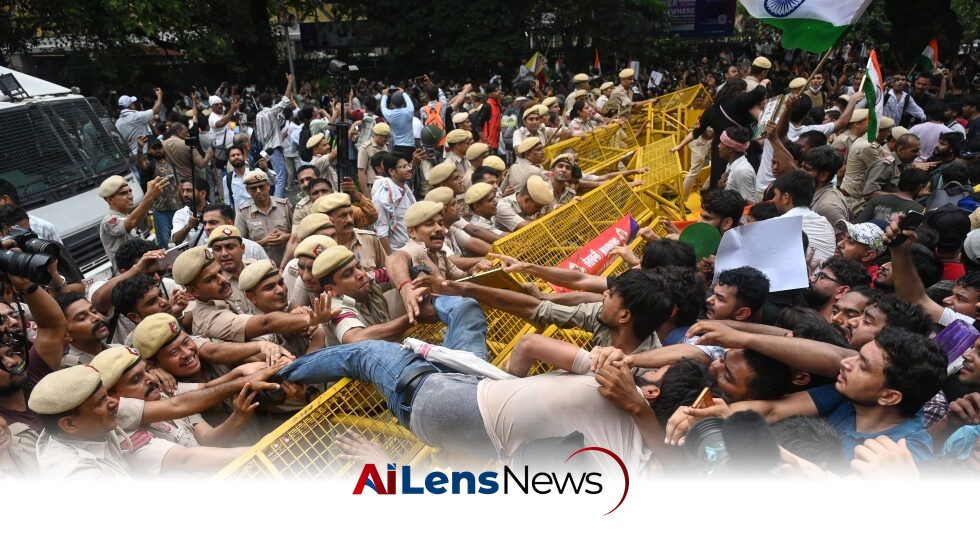


Supporters of India's youth-led 'cockroach' movement faced police violence as they marched to demand the resignation of the education minister.
Washington DC, United States Jul 21, 2026 ALN: Supporters of India’s youth-led “cockroach” movement faced police batons and tear gas as they attempted to march to Parliament to demand the resignation of the education minister. The Cockroach Janta Party emerged in May after a Supreme Court judge made a controversial comparison of unemployed youth to “cockroaches.” This statement, coupled with the recent leaks of crucial exam papers, has sparked widespread public anger and frustration among young people across the nation. The movement has gained significant political weight and is now calling for broader reforms within the education and employment sectors. Senior officials have taken a hard line against the movement, leading to heightened tensions.
The term "cockroach" has become emblematic of a broader sentiment among young Indians who feel marginalized and disrespected by their government. The derogatory comparison by a Supreme Court judge has ignited a firestorm of protest, with many young people believing that their struggles for employment and dignity are being trivialized. The Cockroach Janta Party has attracted a diverse coalition of students, job seekers, and activists, all united by a common goal: to demand accountability and reform from the government. This coalition reflects a growing awareness among youth about their collective power and the need for systemic change.
The immediate catalyst for the protests was the leak of exam papers for various competitive exams, which are critical for securing jobs in the public sector. This leak not only compromised the integrity of the examination process but also intensified the frustrations of countless young people who have invested significant time and resources into preparing for these tests. The government’s failure to adequately address such serious issues is perceived as indicative of a broader neglect of youth concerns, exacerbating feelings of disenfranchisement.
As the protests escalated, the Cockroach Janta Party has called for the resignation of the education minister, arguing that the current administration has failed to provide adequate opportunities for youth employment and education. The movement has gained traction on social media, with hashtags related to the protests trending and garnering support from various youth organizations and political groups. This digital mobilization has amplified the voices of protesters, allowing them to reach a wider audience and engage more young people in the cause.
The police response to these protests has been swift and severe. Officers have employed tear gas and batons to disperse crowds, leading to numerous injuries and arrests. The heavy-handed tactics have drawn criticism from human rights organizations and civil society groups, who argue that the government's response is disproportionate and violates the rights of peaceful protesters. Activists have pointed out that such actions only serve to deepen the divide between the government and the youth, further alienating a generation that is already feeling disillusioned with the political system.
In the backdrop of these protests, India’s youth unemployment rate remains a pressing concern. According to various reports, the unemployment rate for young people in India is significantly higher than the national average, with many graduates struggling to find jobs that match their qualifications. This economic reality has fostered a sense of hopelessness among the youth, who feel that their aspirations are being stifled by systemic failures. The high levels of unemployment can be attributed to a combination of factors, including a mismatch between educational outcomes and labor market demands, as well as a lack of sufficient job creation in the economy.
The Cockroach Janta Party is not just a reaction to recent events but also a response to long-standing grievances regarding the education system and labor market in India. Many young people have expressed frustration with the quality of education, which they believe does not adequately prepare them for the job market. The movement has called for reforms in the education sector, including better access to vocational training and a curriculum that aligns with the needs of the economy. The demand for educational reform is rooted in the belief that a more relevant and practical education system could enhance employability and reduce the skills gap that currently exists in the job market.
Moreover, the political implications of the Cockroach movement are significant. As the 2024 general elections approach, the youth vote could prove to be a decisive factor. Political parties are beginning to take notice of the movement, with some attempting to align themselves with the demands of the protesters in hopes of capturing the youth vote. This has led to a complex political landscape where the youth's aspirations and frustrations could shape the future of Indian politics. The growing engagement of young people in political discourse highlights their potential as a powerful electoral bloc that cannot be ignored by established political parties.
The government's hardline stance against the movement has also raised questions about its commitment to democratic principles and the right to protest. Critics argue that the suppression of dissent is indicative of an increasingly authoritarian approach to governance. The youth-led protests challenge the narrative of a stable and prosperous India, highlighting the discontent that exists beneath the surface. The government's response is being closely scrutinized, as it may have lasting implications for its relationship with the younger generation and their perception of democratic freedoms.
As the protests continue, the Cockroach Janta Party is likely to maintain its momentum, with plans for further demonstrations and rallies in the coming weeks. The movement's ability to sustain itself and translate its demands into concrete political change will depend on its capacity to mobilize support and maintain public attention on the issues at hand. The ongoing protests serve as a reminder of the power of collective action and the potential for youth-led movements to influence policy and governance.
In conclusion, the Cockroach movement represents a significant moment in India's socio-political landscape, as it brings to the forefront the voices of a generation that feels overlooked and undervalued. The government's response to these protests will not only determine the future of the movement but also reflect its stance on youth issues, employment, and education reform. The coming weeks will be crucial in shaping the narrative around youth discontent in India and the potential for meaningful change. As the situation evolves, it will be essential to monitor the developments within the movement and the broader implications for Indian society and governance.
To learn more about the latest developments in Crime & Law, stay updated with our exclusive reports and analyses on AiLensNews.

