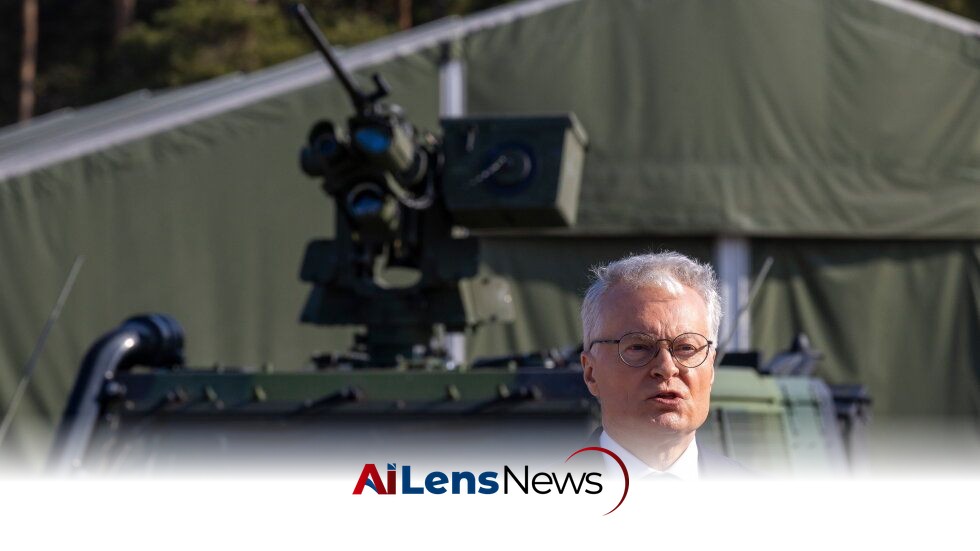


Lithuania's president warns of possible Russian attacks on critical infrastructure in the Baltic states and Poland, amid heightened military tensions.
Washington DC, United States Jul 16, 2026 ALN: VILNIUS, Lithuania — Lithuania’s president said Wednesday that intelligence assessments suggest that Russia is planning potential attacks on critical infrastructure in the Baltic states or Poland. This alarming statement comes amidst heightened tensions in the region, as the geopolitical landscape continues to shift following Russia's full-scale invasion of Ukraine in February 2022.
President Gitanas Nausėda stated that authorities were monitoring the risk of attacks that could disrupt the country’s energy and transport systems, including facilities supporting Lithuania’s connections with the European electricity grid. The mention of critical infrastructure highlights the vulnerabilities that many countries face in an era of hybrid warfare, where conventional military actions are often supplemented or replaced by cyberattacks, misinformation campaigns, and other non-traditional tactics.
“I cannot deny that we have such information and that it concerns limited kinetic operations likely targeting critical infrastructure,” Nausėda told Lithuania’s BNS news agency. This statement underscores the seriousness of the threat perceived by Baltic leaders, who have been on high alert since the onset of the Ukraine conflict. The intelligence did not specify a location or timing for the potential attacks, indicating that such provocations could involve conventional or other means, which adds an element of unpredictability to the situation.
Russia dismissed the claim as an excuse to justify NATO’s military buildup in the Baltics. Kremlin spokesman Dmitry Peskov characterized the warnings as a “fresh batch of bugaboos intended to continue the brainwashing and prepare the population for further militarization.” His comments reflect a broader narrative within Russia that portrays NATO as an aggressive entity encroaching on its borders, a narrative that has been used to justify various military actions and posturing in recent years.
Latvian President Edgars Rinkēvičs echoed concerns on Wednesday, warning that as Ukraine increasingly pressures Russia, Moscow might respond with provocations against NATO’s eastern flank. “Even without a total Ukrainian victory, Russia may indirectly test Article 5 and response mechanisms at the Alliance and European Union levels,” Rinkēvičs said, referring to NATO’s common defense guarantee. This statement illustrates the interconnectedness of the security situations in Ukraine and the Baltic states, as the outcomes in one region can have significant implications for the other.
“The next few months, or even the next 12 months, will be crucial for Baltic security,” he added, emphasizing the urgency of the situation. The three Baltic states — Lithuania, Latvia, and Estonia — along with Poland, have bolstered security around key transport and energy infrastructure in recent months in response to the Russian threat. These preparations reflect a recognition that the Baltic region has long been a target of Russian hybrid attacks, a threat that has intensified since Moscow’s full-scale invasion of Ukraine began.
On Tuesday and Wednesday, Poland intercepted Russian aircraft over the Baltic Sea that, according to the Polish government, were conducting surveillance of Poland’s air defense systems, despite remaining outside Polish territorial waters. This incident highlights the ongoing military tensions in the region and the constant vigilance required by Baltic states to monitor potential threats from Russia.
In Moscow, Kremlin spokesman Dmitry Peskov dismissed the Lithuanian intelligence warning about Russia’s purported plans to launch attacks on infrastructure in the Baltics and elsewhere in Europe. “To do this, they need to create an enemy image on the other side, our side in this case,” he said. This rhetoric reflects a broader strategy of disinformation and counter-narratives employed by the Russian government to undermine trust in Western institutions and narratives.
Nausėda’s comments echo warnings issued in recent weeks by Polish politicians, following multiple media reports that Russia could carry out a limited military or hybrid provocation against Poland in the near future. In late June, leading Polish outlet onet.pl reported that U.S. intelligence had warned its Polish counterparts about the possibility of a Russian attack. Citing its own sources, the outlet said that potential scenarios could include attacks on critical infrastructure, incursions by Russian soldiers near border areas, and drone operations.
Prime Minister Donald Tusk stated on July 3 that the warnings should be taken seriously, noting that he had been issuing similar alerts for weeks. “Poland is preparing very intensively for various scenarios,” Tusk said. “I don’t want to scare anyone, but the coming months, also because of the changing nature of the war in Ukraine, could be critical.” His comments reflect the growing concern among Polish leaders about the potential for Russian aggression and the need for robust defense measures.
Tusk emphasized that concerns were particularly pronounced in the Baltic states, which have historically faced direct threats from Russia. “We are not afraid; we are preparing for various scenarios, but we cannot take this lightly,” he said. “We are conscious of the dangers also because of information coming from our allies.” This acknowledgment of the need for preparedness is indicative of a broader trend among NATO allies to enhance their collective defense capabilities in response to perceived threats from Russia.
Foreign Minister Radosław Sikorski conveyed a message for Russian President Vladimir Putin: “We know what you are planning. Don’t do it.” This direct warning underscores the seriousness with which Polish leaders are treating the potential threat from Russia, as well as their determination to deter any aggressive actions.
Gen. Raimundas Vaikšnoras, Lithuania’s chief of defense, recently confirmed that the military had deployed additional forces to help protect strategic infrastructure in response to concerns over possible Russian provocations. This mobilization of military resources is a crucial step in ensuring the safety and security of critical assets in the region, as the potential for hybrid warfare necessitates a proactive approach to defense.
Vaikšnoras told reporters that Russia’s recent rhetoric targeting the Baltic states and Poland appears to serve a broader purpose, warning that Moscow has long sought to erode public trust in state institutions, the military, and the government. This strategy of undermining confidence in national institutions is a hallmark of hybrid warfare, which often seeks to exploit societal divisions and create instability.
Poland has similarly intensified protection of key infrastructure following a November attack on rail infrastructure blamed on Russia. The incident underscored the vulnerabilities faced by nations in the region and the need for heightened security measures to protect vital systems.
On Monday, the European Union stated that Russia’s FSB Center 16 had conducted cyberespionage and sabotage against defense industries and critical infrastructure across Europe, including a December attack against a Polish combined heat and power plant supplying heat to almost 500,000 customers. This revelation further illustrates the multifaceted nature of the threats posed by Russia, which include not only conventional military actions but also cyber operations designed to disrupt essential services.
A recent report from the International Institute of Strategic Studies think tank indicated that Russia likely used shadow ships to launch drones over Europe that repeatedly disrupted civilian aviation between 2024 and 2026. This highlights the evolving tactics employed by Russia in its attempts to project power and influence beyond its borders.
The Baltic region is under additional strain from stray Ukrainian drones that have reached Baltic countries as Ukraine ramped up attacks on Baltic Sea ports used for Russian energy exports. The implications of this situation are significant, as the presence of stray drones can lead to unintended escalations and further complicate the already tense security environment in the region.
In mid-May, Latvian Prime Minister Evika Siliņa resigned over the government’s handling of multiple incidents involving stray drones suspected to be from Ukraine crossing into Latvian territory. This incident reflects the challenges faced by Baltic leaders in managing the complex security landscape and the potential consequences of miscalculations in the region.
In late May, for the first time in a NATO and European Union capital, Lithuanians were pictured sheltering in underground parking garages in the capital, Vilnius, as authorities warned of unidentified drone activity. This unprecedented situation underscores the gravity of the threat perceived by the population and the need for comprehensive security measures to ensure public safety.
As the situation continues to evolve, the Baltic states and Poland remain vigilant in the face of potential Russian provocations. The heightened military readiness and increased cooperation among NATO allies serve as a deterrent against possible aggression, while also reflecting the broader geopolitical dynamics at play in Eastern Europe. The coming months will be critical in shaping the security landscape of the region, as Baltic leaders work to safeguard their nations against the multifaceted threats posed by Russia.
To learn more about the latest developments in World News & International Affairs, stay updated with our exclusive reports and analyses on AiLensNews.

