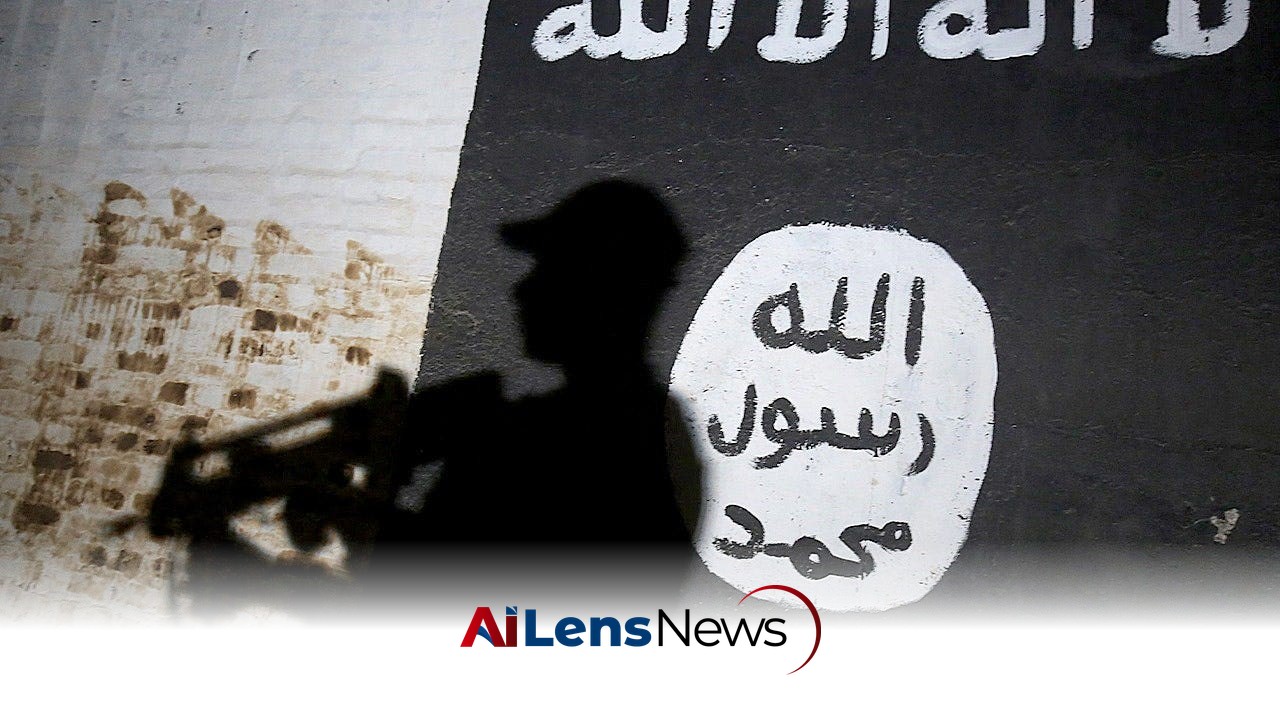


As the U.S. completes its withdrawal from Iraq, experts warn that ISIS is poised to exploit the resulting security vacuum, raising fears of renewed instability.
Washington DC, United States Jul 20, 2026 ALN: The Islamic State, commonly referred to as ISIS, is reportedly in the process of quietly rebuilding its operational capabilities as the United States approaches the completion of its withdrawal from Iraq. This development has raised significant concerns among regional security experts, who warn that the terror group could exploit the anticipated security vacuum left by the departing U.S. forces. Dr. Omar Mohammed, a counterterrorism expert and researcher affiliated with the George Washington University Program on Extremism, has voiced particular alarm regarding the potential implications of this withdrawal.
With U.S. military personnel scheduled to leave Iraq by September 30, the situation in the country could be entering a particularly perilous phase. This period is reminiscent of the events leading up to the fall of Mosul in 2014, a pivotal moment when ISIS seized control of the city, marking a significant escalation in the group's activities. Dr. Mohammed notes that the dynamics surrounding the U.S. withdrawal and the ongoing efforts by the Iraqi government to rein in Iran-backed militias could create an environment conducive to the resurgence of ISIS.
Dr. Mohammed has articulated that the fundamental question surrounding the U.S. withdrawal is not merely about the departure of American forces but rather about what will be left behind in terms of security and governance. He emphasizes that the militias operating in Iraq often invoke the threat of ISIS as a means to justify their continued armament and influence. Conversely, ISIS is able to recruit new members by capitalizing on the grievances and instability that these militias create. This cyclical relationship between the militias and ISIS has historical precedent; it mirrors the conditions that allowed ISIS to gain a foothold in Mosul prior to its capture in 2014.
In June 2014, ISIS launched a rapid offensive that culminated in the capture of Mosul, approximately 250 miles north of Baghdad. This operation was facilitated by the collapse of Iraqi security forces, which failed to mount an effective defense against the insurgents. During this period, ISIS established a complex network of underground operations characterized by assassination, extortion, intimidation, and infiltration. The group also seized significant quantities of U.S.-made weapons and financial resources, which further bolstered its capabilities. The culmination of these efforts was marked by the declaration of a self-proclaimed caliphate by then-leader Abu Bakr al-Baghdadi.
In response to the growing threat of ISIS, Iraqi forces, with support from the U.S.-led coalition, successfully recaptured Mosul in July 2017. However, despite the formal conclusion of the U.S. combat mission in Iraq in 2021, ISIS has continued to operate in various regions of both Iraq and Syria. U.S. Central Command (CENTCOM) has indicated its commitment to dismantling ISIS networks and preventing the group's resurgence; however, Dr. Mohammed has cited Iraqi intelligence estimates suggesting that the number of ISIS fighters in neighboring Syria has dramatically increased from around 2,000 to as many as 10,000 since the collapse of Bashar Assad's government in 2024. This alarming statistic underscores the potential for ISIS to regain strength and influence in the region.
Another significant factor contributing to the precarious security landscape in Iraq is the presence of the Popular Mobilization Forces (PMF), an umbrella organization comprising various armed factions that were integrated into Iraq's security forces. Dr. Mohammed estimates that the PMF has approximately 238,000 members and receives substantial financial support from the Iraqi government. However, many factions within the PMF maintain close ties to Iran and operate with a degree of autonomy that allows them to function outside the direct control of the Iraqi government. This complicates efforts to establish a cohesive and effective security strategy in Iraq.
The Iraqi government, under the leadership of Prime Minister Ali al-Zaidi, is currently attempting to bring these armed factions under full state control. Dr. Mohammed highlights that the dual deadlines of the U.S. withdrawal and the domestic disarmament initiative present a unique challenge for the Iraqi leadership. He notes that the relationship between the militias and ISIS is not merely coincidental; rather, they are deeply interdependent entities that thrive in the unstable environments where the central state is unable to maintain order.
The backdrop to these developments is a broader geopolitical context, particularly the implications of the U.S. withdrawal as outlined in a 2024 U.S.-Iraq agreement. This agreement envisions the end of the U.S. mission in Iraq by 2025, while still allowing for continued support for anti-ISIS operations in Syria through September 2026. Dr. Mohammed has cautioned against a repeat of past complacency, emphasizing that the fall of Mosul in 2014 was not solely a result of ISIS's strength but rather a consequence of a lack of attention, presence, and honest reporting on the ground in the years leading up to the crisis. He warns that a similar oversight could have dire consequences as the U.S. withdraws its forces.
The political ramifications of the U.S. withdrawal have also drawn criticism from neighboring Iran. Following Prime Minister al-Zaidi's meeting with U.S. officials on July 14, where the timeline for the remaining U.S. troop withdrawal was announced, Iranian officials expressed their disapproval. Ali Akbar Velayati, an adviser to Iran's Supreme Leader Mojtaba Khamenei, characterized the trip as "regrettable" and claimed it undermined Iraq's dignity. This reaction underscores Iran's vested interest in maintaining influence over Iraq, particularly in light of the challenges it faces due to U.S. military actions that have degraded parts of its proxy network in the region.
Dr. Mohammed emphasizes that Iran's strategic calculations regarding Iraq are more critical now than they have been in the past decade. Given the current geopolitical landscape, where Iraq represents one of the last strongholds of Iranian influence, Tehran's primary concern is not merely the resurgence of ISIS but rather its own potential irrelevance in the region. The prospect of a stable Iraqi government that successfully disarms militias, coupled with a U.S. withdrawal that aligns with Baghdad's interests rather than Tehran's, presents a scenario that could significantly alter the balance of power in the region.
As the situation unfolds in the coming months, Dr. Mohammed warns that the dynamics across the wider Middle East will not be dictated solely by the stated intentions or diplomatic promises of various actors. He reflects on the heavy toll that miscalculations can have on civilian populations, drawing from his experiences in regions affected by conflict. The question of whether ISIS will grow to a scale that threatens Iran or remain a manageable force that serves its interests will be a defining issue in the aftermath of the U.S. withdrawal from Iraq.
To learn more about the latest developments in World News & International Affairs, stay updated with our exclusive reports and analyses on AiLensNews.

