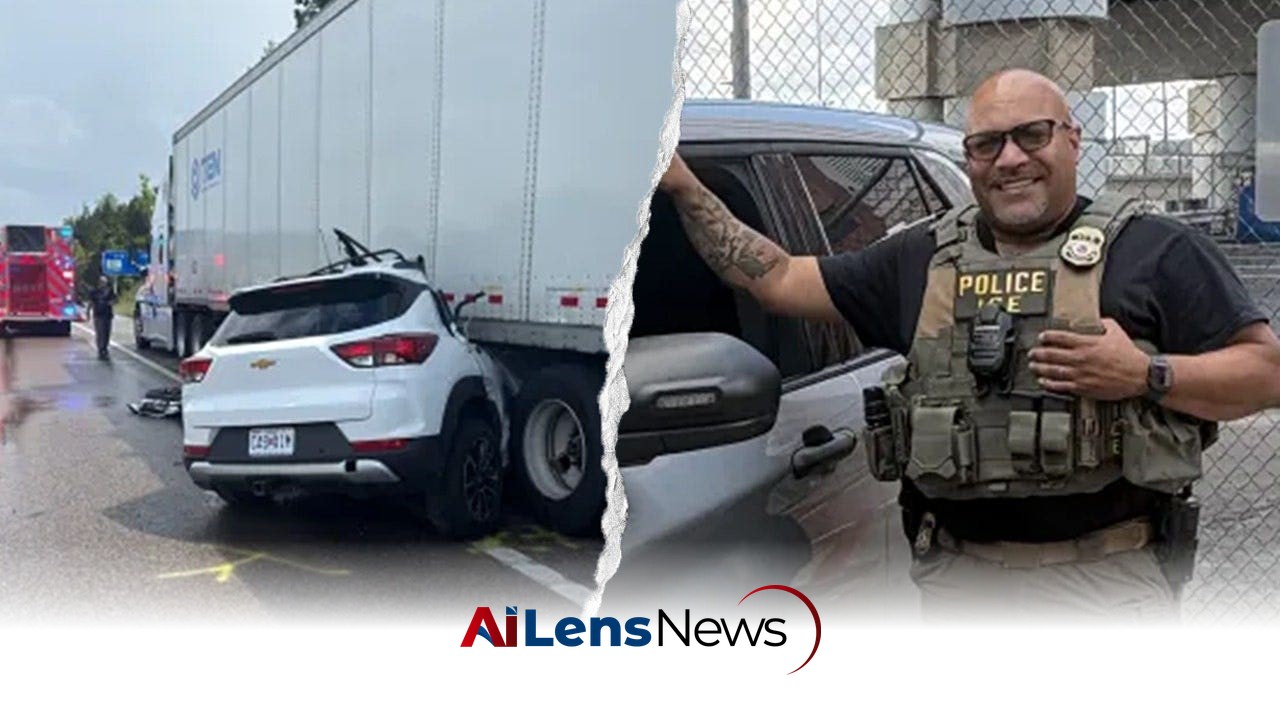


Officer Curtland Sawyer is commended for providing critical medical assistance to a motorist injured in a serious collision in Festus, Missouri.
Washington DC, United States Jul 15, 2026 ALN: An Immigration and Customs Enforcement (ICE) officer in Missouri is being praised by the Department of Homeland Security (DHS) for his quick actions in providing lifesaving medical care to a driver injured in a serious crash. Officer Curtland Sawyer witnessed the collision while driving home and immediately sprang into action, showcasing the critical role that law enforcement officers play in emergency situations.
This incident occurred on July 11, when Sawyer was on his way home from work. He observed a vehicle collide with a tractor-trailer outside of Festus, Missouri, a small city located approximately 40 miles south of St. Louis. The crash was severe, leaving the driver of the vehicle in a precarious situation. Without hesitation, Sawyer rushed to the scene to assist the injured driver, demonstrating not only his training but also his commitment to the safety and welfare of others.
According to reports from the DHS, Officer Sawyer provided crucial medical care at the scene. His training as an ICE officer likely equipped him with the necessary skills to respond effectively in emergencies. He applied a tourniquet to the driver's arm, which was essential to stop life-threatening bleeding. This swift action is a testament to the importance of first aid training for law enforcement personnel, as it can mean the difference between life and death in critical situations. Sawyer remained with the injured motorist until emergency medical technicians arrived to take over, ensuring that the driver received continuous care.
DHS Assistant Secretary Lauren Bis commended Officer Sawyer for his heroic actions, stating, "ICE law enforcement officer Curtland Sawyer immediately delivered lifesaving medical care to a driver who was involved in a serious collision with a tractor-trailer in Missouri. Officer Sawyer is a hero." Bis emphasized the dedication of ICE officers, remarking, "Our officers are the best of the best. When they see someone in need, they don’t hesitate to spring to action to help. If you see an ICE law enforcement officer, thank them for their service to our nation." This recognition highlights the vital role that ICE officers play beyond their primary duties of immigration enforcement and customs regulation, showcasing their commitment to community safety and emergency response.
This incident is part of a broader narrative regarding the role of law enforcement in emergency situations. In recent weeks, DHS has highlighted a series of rescues performed by ICE officers across the country, which not only underscores their training and preparedness but also their willingness to engage in life-saving actions outside of their typical responsibilities. For instance, last month, another ICE officer jumped into a swimming pool in Florida to rescue a 6-year-old child and performed lifesaving CPR. This incident, like Sawyer's, illustrates the readiness of law enforcement officers to act decisively in moments of crisis.
Additionally, ICE officers in Milwaukee recently rescued a woman trapped in her overturned vehicle after a collision caused by another driver running a red light. These incidents reflect a growing recognition of the multifaceted roles that law enforcement officers undertake, often stepping into the breach during emergencies to provide assistance that goes beyond their primary law enforcement duties.
Officer Sawyer's actions not only saved a life but also exemplify the commitment of law enforcement officers to serve and protect their communities. The public often views law enforcement as figures of authority, but incidents like these remind us that they are also trained professionals who can make critical decisions in life-threatening situations. The ability to provide immediate medical assistance can significantly impact the outcome of emergencies, reinforcing the need for ongoing training in first aid and emergency response for all law enforcement personnel.
The implications of Officer Sawyer's actions extend beyond the immediate rescue. They raise important questions about the training and preparedness of law enforcement officers across various agencies. As communities increasingly expect law enforcement to be not only enforcers of the law but also first responders in emergencies, there is a growing call for comprehensive training programs that include advanced first aid, CPR, and other lifesaving techniques. Such training could enhance the ability of officers to respond effectively to a wide range of emergencies, ultimately leading to better outcomes for individuals in crisis.
Moreover, these incidents contribute to a broader understanding of the relationship between law enforcement and the communities they serve. Positive interactions, such as those highlighted by DHS, can foster trust and cooperation between officers and the public. When officers are seen as community helpers and lifesavers, it can enhance the perception of law enforcement as a whole, potentially improving community relations and encouraging individuals to engage with law enforcement in a more positive manner.
In conclusion, Officer Curtland Sawyer's quick response to a serious crash exemplifies the dedication and heroism of law enforcement officers. His actions not only saved a life but also highlight the importance of training and preparedness in emergency situations. As communities continue to rely on law enforcement for safety and support, the recognition of officers' roles as lifesavers will contribute to a more comprehensive understanding of their contributions beyond traditional law enforcement duties. The ongoing acknowledgment of such heroism serves as a reminder of the vital role these officers play in ensuring the safety and well-being of the public, reinforcing the notion that they are indeed, as Assistant Secretary Bis stated, the "best of the best."
Such incidents also bring to light the ongoing discourse surrounding the role of law enforcement in society. While the primary functions of agencies like ICE focus on immigration enforcement and customs regulation, the reality is that officers often find themselves in situations where they must act as first responders. This duality of roles emphasizes the need for a shift in how law enforcement is trained and perceived. As emergency responders, officers must be equipped not only with the tools for enforcement but also with the skills necessary to handle medical emergencies, natural disasters, and other crises that may arise in the communities they serve.
Furthermore, the recognition of Officer Sawyer's actions could inspire similar responses from other officers across the country. By highlighting these stories, the DHS not only honors the individuals involved but also sets a standard for other officers to aspire to. It serves as a reminder that every officer has the potential to make a significant difference in someone's life, often in unexpected ways. This narrative can motivate law enforcement agencies to invest more in training that prepares officers for emergencies, ultimately leading to a more effective and responsive law enforcement community.
In summary, the actions of Officer Curtland Sawyer encapsulate a broader trend within law enforcement where officers are increasingly seen as essential community members who are prepared to assist in emergencies. As these stories gain recognition, they can help reshape public perceptions of law enforcement, fostering a sense of community and trust that is crucial for effective policing. The implications of this incident extend well beyond the immediate event, highlighting the importance of comprehensive training, community engagement, and the multifaceted roles that law enforcement officers play in society.
To learn more about the latest developments in Crime & Law, stay updated with our exclusive reports and analyses on AiLensNews.

