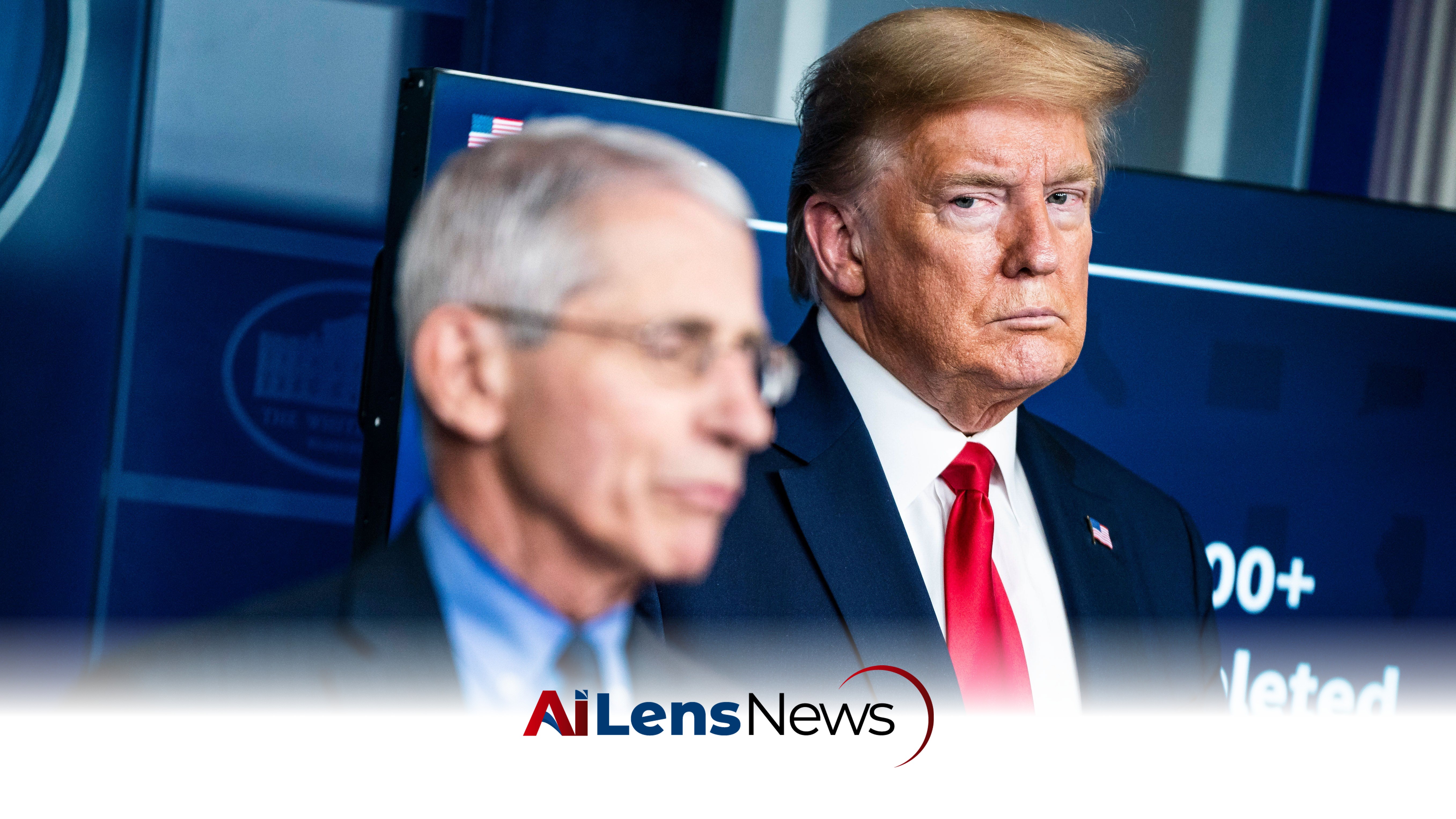


Dr. Anthony Fauci's newly released diary entries provide a candid look at his relationships with politicians and celebrities during the pandemic.
Washington DC, United States Jul 27, 2026 ALN: Newly released diary entries by Dr. Anthony Fauci offer an unfiltered look at what the nation's top infectious disease expert really thought of the politicians, television personalities, and celebrities who filled his orbit during the COVID-19 pandemic. The pandemic, which began in late 2019 and escalated rapidly throughout 2020, has had far-reaching effects on public health, the economy, and society as a whole. Dr. Fauci, as the director of the National Institute of Allergy and Infectious Diseases (NIAID), became a central figure in the U.S. government's response to the crisis, advising multiple administrations and becoming a household name in the process.
Released by Senate Homeland Security Committee Chairman Rand Paul, R-Ky., the diaries chronicle Fauci's day-to-day role during the COVID-19 pandemic through meetings, phone calls, and personal observations. The release comes days before Fauci is scheduled to testify before the Senate Homeland Security and Governmental Affairs Committee after being subpoenaed by Paul. This subpoena is part of a broader political battle surrounding the administration's handling of the pandemic, as well as Fauci's role in it. The diaries serve as a window into the complexities of public health communication and the often tumultuous relationships between health officials and political leaders.
The entries feature everyone from President Donald Trump to Julia Roberts, Steph Curry, Larry Ellison, and Hunter Biden, offering an unusually personal look at the people who crossed Fauci's path during the COVID-19 pandemic. The interactions detailed in the diary highlight the intersection of public health and politics, as well as the influence of media and celebrity culture on the public's perception of the pandemic.
Early entries portray a warm working relationship between Fauci and Trump. Fauci wrote that Trump repeatedly directed questions to him during White House meetings, called him "the smartest person in the world," told him, "We are counting on you," and later appeared "enamored" with him as Fauci's national profile grew. This relationship, however, was not without its challenges. As the pandemic progressed, Fauci faced increasing pressure from the administration to align his public messaging with the political narrative, which often conflicted with the scientific consensus on the virus and its implications.
Fauci's relationship with White House chief of staff Mark Meadows deteriorated throughout the pandemic. Fauci wrote that Meadows threatened to keep him off television, repeatedly pushed him to soften his public messaging, and, in one entry, recounted Meadows "screaming" over his public comments. This tension exemplifies the struggle between scientific integrity and political expediency, a theme that has recurred throughout the pandemic as public health officials navigated the often fraught landscape of political influence.
Despite these challenges, Fauci repeatedly described then-White House communications director Alyssa Farah as an ally during internal battles over media appearances. In one May 2020 entry, he wrote that Farah admitted White House staff had been "holding me back," said the situation had "gotten out of hand," and promised to begin clearing his television requests again. This dynamic illustrates the complexities of communication strategy within the administration, as Fauci sought to provide accurate information to the public while managing the political implications of his statements.
Not everyone in the administration's communications operation earned Fauci's praise. In a July 2, 2020 entry, Fauci called then-HHS Assistant Secretary for Public Affairs Michael Caputo "a con man who is completely full of sh--," writing that Caputo publicly claimed to support his television appearances while privately blocking them. This discord within the administration reflects the broader challenges faced by public health officials in conveying critical information during a time of crisis, as they often encountered obstacles from within their own ranks.
Television journalists also became recurring figures in Fauci's diary. CNN anchor Jake Tapper appears repeatedly, with Fauci documenting phone calls, text exchanges, and dinners at the Tappers' Washington home. The relationship between Fauci and the media is significant, as journalists played a crucial role in disseminating information about the pandemic to the public. Fauci wrote that Tapper privately checked to make sure a CNN interview hadn't caused problems with the White House. When The Atlantic's Peter Nicholas suggested Fauci had been "humiliated" over a canceled Tapper interview, Fauci fired back in his diary: "F--- you, Peter." This moment highlights the intense scrutiny and pressure Fauci faced from both the media and political figures, as he sought to balance transparency with the demands of his role.
After Fauci's heated exchange with Ohio Rep. Jim Jordan, Fauci wrote that CNN's Dana Bash texted him, telling him he was "a better man" and relaying that fellow CNN anchor Wolf Blitzer had joked no one would have blamed Fauci if he had told Jordan to "go f--- yourself." These interactions underscore the contentious nature of political discourse during the pandemic, as public health officials often found themselves at the center of heated debates over policy and response measures.
The diary also features colorful asides about billionaire Oracle co-founder Larry Ellison, whom Fauci described as "a bit of a loose cannon" while discussing White House efforts to use Oracle technology during the pandemic. Ellison's involvement in the pandemic response highlights the role of private sector partnerships in public health initiatives, as technology companies were called upon to assist in various capacities, from data management to vaccine distribution.
Beyond politicians and White House aides, Fauci's diary reads at times like a Hollywood guest list. Actress Julia Roberts hosted Fauci on Instagram Live, sent him flowers, and later presented him with an award, while Vogue editor Anna Wintour, comedian Trevor Noah, NBA star Steph Curry, actors Sean Penn and Matt Damon, and rapper Lil Wayne also make appearances as Fauci documented his growing celebrity during the pandemic. This intersection of celebrity culture and public health emphasizes how the pandemic created new platforms for communication and engagement, as individuals from various sectors came together to address the crisis.
The diary closes with another unexpected cameo. At the 2022 Kennedy Center Honors, Fauci wrote that he hugged Hunter Biden, who joked the internet "would explode" if someone photographed them together because they were both "being attacked by the far right GOP." This moment encapsulates the ongoing polarization surrounding the pandemic and its political implications, as figures from different sides of the political spectrum navigated their public personas in the wake of the crisis.
In conclusion, Dr. Fauci's diary offers a unique perspective on the intersection of public health, politics, and celebrity during one of the most challenging periods in recent history. It highlights the complexities of communication and the myriad challenges faced by public health officials as they sought to navigate a rapidly changing landscape. As the world continues to grapple with the implications of the COVID-19 pandemic, these insights serve as a reminder of the importance of transparency, integrity, and collaboration in addressing public health crises.
To learn more about the latest developments in Politics, stay updated with our exclusive reports and analyses on AiLensNews.

