

Ethiopian migrants in Saudi Arabia are facing death sentences for drug-related charges, with reports of unfair trials and dire prison conditions.
Washington DC, United States Jul 13, 2026 ALN: Amanuel wakes up each day not knowing if it will be his last. A rap at his cell door could mean his time is up; no farewell call, no last meal. Executions in Saudi Arabia often arrive without warning, creating an atmosphere of perpetual dread among prisoners. “I’m a dead man walking,” he says. “After my friends were executed, I don’t eat food, I don’t drink water.”
Amanuel is a pseudonym for one young prisoner who’s been imprisoned for several years. CNN obtained his account from inside Khamis Mushait prison, in the southwest of Saudi Arabia. CNN is not naming him for his own protection. He is among around 60 Ethiopians sentenced to death on drug-related charges in one cell alone at Khamis Mushait, according to rights groups, with more held in other cells there. This alarming trend highlights the precarious situation faced by migrants in the region, especially those from Ethiopia, a country that has been grappling with internal strife and economic challenges.
“These are not isolated cases,” said Maya Foa, chief executive of human rights group Reprieve. “There is a clear pattern of Saudi authorities targeting vulnerable migrants. Often, their true ‘crime’ appears to have been crossing the border, in search of a better life.” This sentiment echoes throughout the international community, where human rights organizations have increasingly criticized Saudi Arabia for its treatment of foreign nationals, particularly those from impoverished backgrounds.
CNN has also heard from relatives of three other men held on death row in Saudi Arabia on similar charges. All said they had learned of the arrests only weeks after sentencing, through word of mouth or community contacts, not from Ethiopian or Saudi officials. This lack of communication raises serious questions about transparency and the legal processes in place for those facing capital punishment.
“What I’m praying for, and what I need from the world, is to put positive pressure on the Saudi government to reconsider this decision,” said Selam, a sibling of one of the men, using a pseudonym to protect their family. “Please, Saudi government, we beg your mercy to my brother and others in a similar situation.” This plea highlights the desperation and helplessness felt by families of those on death row, who often find themselves powerless in the face of a legal system that appears indifferent to their plight.
A total of 356 people were executed in Saudi Arabia last year, the highest number in recent history, according to Saudi records compiled by NGOs. Of those, 240 had been convicted of drug offenses, most of them foreigners. This statistic underscores a concerning trend where non-violent drug offenses lead to capital punishment, particularly affecting marginalized groups. Two years before that, in 2023, the same monitors recorded two such executions in the entire year. The number executed for non-lethal drug crimes this year has reached 71, with Ethiopians representing the biggest number of foreign nationals. This shift in the execution statistics raises alarm bells about the potential for an escalating cycle of violence against vulnerable populations.
Taha al-Hajji, a Saudi lawyer living overseas who’s the legal director of the European Saudi Organization for Human Rights, outlined serious concerns about due process in the kingdom. “Capital trials in Saudi Arabia routinely fail to meet even minimum guarantees of fairness,” he said. “Defendants are denied legal representation and adequate interpretation, leading to migrants being convicted and sentenced to death without understanding the process – often on the basis of torture ‘confessions.’” This assertion sheds light on the broader issues of judicial integrity and human rights violations that have been documented in Saudi Arabia.
“This is not justice: it is state violence, inflicted on defenseless people.” These words resonate with the experiences of many who have been caught in the web of a legal system that appears to prioritize punitive measures over rehabilitation or fair trial rights.
Khamis Mushait, where Amanuel is held, holds many stories like his, human rights advocates say. The prison has become a symbol of the plight of foreign detainees in Saudi Arabia, where harsh conditions and a lack of legal recourse create an environment of despair. Reports from inside the prison indicate that mental health issues are rampant, with prisoners suffering from anxiety and depression due to the uncertainty of their fates.
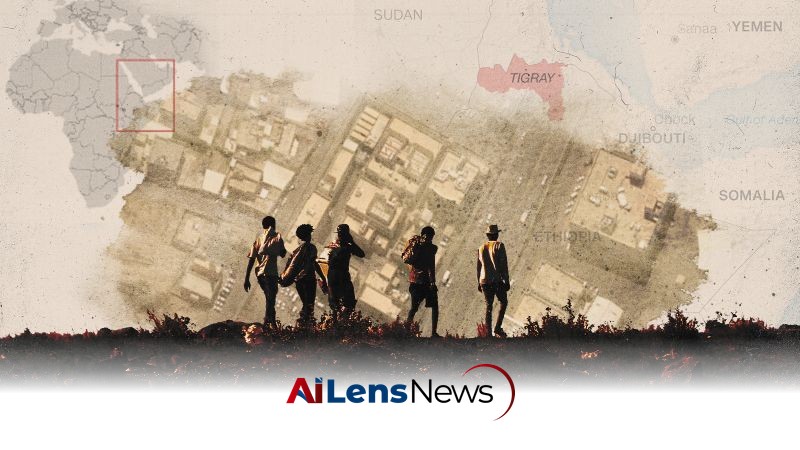
Amanuel says he fled Ethiopia’s Tigray region during the pandemic, in the middle of the country’s civil war, and spent two years stranded in Yemen before eventually crossing into Saudi Arabia. He says he worked there as a shepherd for three months. His journey reflects the desperation faced by many Ethiopians, who have been fleeing conflict and economic instability in search of better opportunities abroad.
When that ended, his employer, a Saudi national, offered him something else, a job moving goods from place to place, and Amanuel says he didn’t think much of it. “The men who offered me the work were Saudi. I trusted them.” This misplaced trust would have dire consequences, as Amanuel found himself ensnared in a legal nightmare that he never anticipated.
A few years ago, while making a delivery, he tells CNN he was arrested after police found hashish in his vehicle. “We thought just we were carrying some normal things,” he said. This reflects a common scenario for many migrants who may unknowingly become involved in illegal activities due to a lack of awareness of local laws and customs.
What came next, he says, was a beating with an electrical cord and kicks to his body. Documents in a language he could not read were placed in front of him to sign regardless. He says no lawyer came, nor anyone from the Ethiopian embassy in Riyadh. This lack of support and representation is a critical issue that many foreign nationals face in Saudi Arabia, where access to consular assistance is often limited.
Of his three court hearings, only the last had a translator – a brief session in which the judge read out the sentence. There was no appeal, he was told. Amanuel was sentenced to death. This experience illustrates the systemic failures in the judicial process, particularly for marginalized groups who are often left without adequate legal protections.
A Christian, Amanuel no longer wears a cross for fear of persecution and was once beaten for it. “He tied my hands behind my back, beat me, and left me in the sun for three hours.” He says he can no longer practice his faith at all. This highlights the broader issue of religious freedom in Saudi Arabia, where non-Muslims often face discrimination and persecution for their beliefs.
Four of his cellmates have attempted to take their own lives, he says. Each time, the others in the cell intervened to save them. This tragic reality underscores the psychological toll that life on death row can take on individuals who are already grappling with immense trauma and despair.
Saudi Arabia has not yet responded to CNN’s request for comment on the foreign prisoners detained in its prisons on drug-related charges, the conditions under which they are held, their access to legal representation and the number executed. The lack of transparency and accountability in the Saudi legal system remains a pressing concern for human rights advocates.
Two weeks ago, five of Amanuel’s cellmates were executed. “First, they called two names, then five more. Then the first two came back. The other five didn’t,” Amanuel says. This account illustrates the arbitrary nature of executions in Saudi Arabia, where prisoners often have little warning or recourse to challenge their sentences.
In a public statement, the Saudi authorities said the individuals “undertook to jointly smuggle hashish into the Kingdom … the investigation resulted in charges being brought against them for committing the crime. They were referred to the competent court … The ruling became final after appeal and subsequent affirmation by the Supreme Court.” The statement added: “(The) Kingdom of Saudi Arabia is committed to protecting the security of citizens and residents from the scourge of drugs, and to imposing the harshest penalties prescribed by law against those who smuggle and promote them.” This official stance reflects the Saudi government’s hardline approach to drug-related offenses, often at the expense of due process and human rights.
“(After the execution) a guard crossed the block and spoke to a Saudi prisoner, who signed to us what happened with a finger to his neck. We had to notify the families ourselves,” Amanuel told CNN. This chilling account underscores the brutal reality of life in Saudi prisons, where prisoners must navigate a system that is often indifferent to their suffering.
He has not, however, told his mother or his father that he is on death row. “I don’t want the news to be the thing that kills them.” Only distant relatives have some inclination of the severity of his situation, he says, and he’s only asking them for one thing: “Pray for me.” This poignant plea captures the desperation of those facing death row, as they cling to hope amidst overwhelming despair.
Amanuel’s journey to Saudi Arabia is a harrowing tale of desperation and survival, reflecting the plight of many migrants seeking a better life. The challenges faced by migrants like Amanuel are compounded by the complex geopolitical dynamics in the Horn of Africa, where political instability, economic hardship, and social unrest create a perfect storm of challenges for those seeking refuge or opportunity abroad. As the international community grapples with these issues, the stories of individuals like Amanuel serve as a stark reminder of the human cost of migration and the urgent need for reforms to protect the rights of vulnerable populations.
To learn more about the latest developments in Crime & Law, stay updated with our exclusive reports and analyses on AiLensNews.

