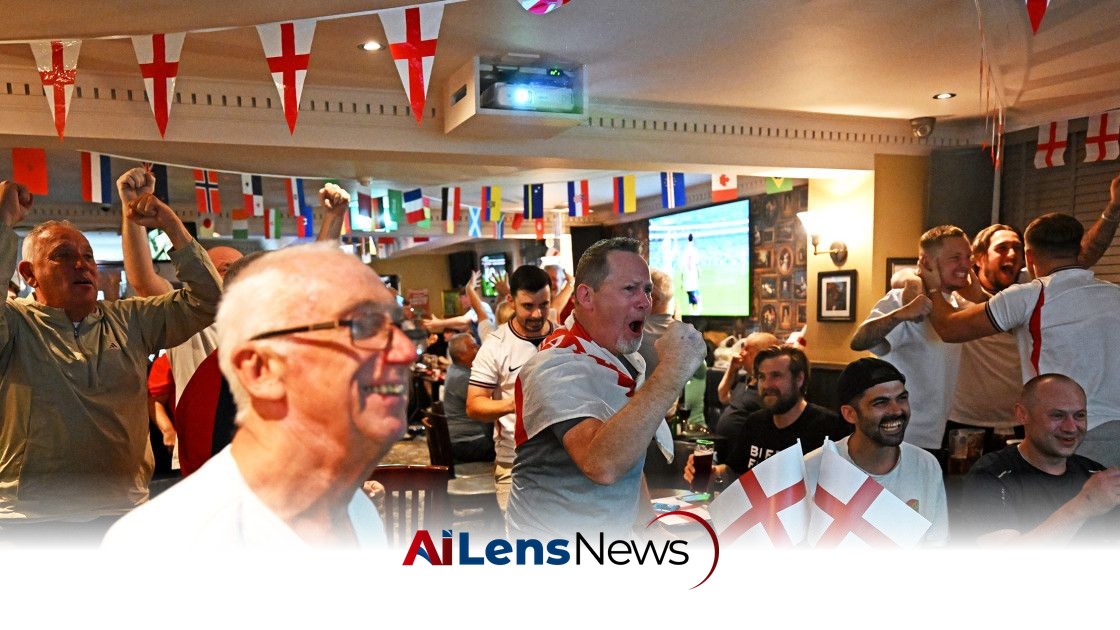


As England faces Argentina in the World Cup semifinals, pubs expect a significant boost in beer sales, despite ongoing challenges in the industry.
Washington DC, United States Jul 15, 2026 ALN: LONDON — Scotland fans famously drank Boston dry. However, the narrative surrounding the World Cup extends beyond Scotland's past exploits and into the current fervor enveloping England's pubs, which have been experiencing a significant uptick in beer sales as the national team advances in the tournament. This surge comes at a time when many pubs are grappling with financial difficulties, making the influx of customers during such events particularly impactful.
As England prepares to face off against their arch-rival Argentina in the World Cup semifinals, anticipation is building among fans. The match is scheduled for Wednesday at 8 p.m. local time (3 p.m. ET), and it is expected to draw large crowds to pubs and bars across the country. Many supporters are eager to witness their team potentially reach its first World Cup final in 60 years, an event that could ignite nationwide celebrations.
The financial implications of such matches are significant for pubs. For instance, Steve Haslam, the owner of the Bread and Cheese pub in Thundersley, a small village approximately 40 miles east of London, reported that the profit generated from the World Cup typically constitutes around 15% of his annual sales. In an interview, he expressed optimism about the upcoming match, predicting an increase of approximately £7,000 to £9,000 ($9,400 to $12,000) in sales compared to an average Wednesday.
This phenomenon is not isolated to Haslam's establishment. The hospitality sector as a whole has seen a notable increase in sales during the tournament. According to UK Hospitality, a trade body representing the hospitality and leisure sector, around 5.5 million extra pints were sold during the group stages of the World Cup alone. Emma McClarkin, the CEO of the British Beer and Pub Association (BBPA), indicated that Wednesday's match could see even greater sales, with estimates suggesting that more than 6 million extra pints could be sold, marking a staggering 75% increase from the average 8 million pints typically sold on a Wednesday in July.
Despite this surge in sales during significant sporting events, the pub industry is facing considerable challenges. Recent figures compiled by the BBPA reveal that 161 pubs across Britain closed between January and March of this year, which translates to nearly two closures per day. This alarming trend underscores the precarious state of the pub industry, which has been further exacerbated by rising operational costs, including high business rates and taxes.
Haslam, who also serves as a director of Aim Pubs, a family business owning eight pubs across the U.K., highlighted the financial strain on establishments like his own. He noted that the margins for profit are getting tighter, making the influx of customers during events like the World Cup crucial for survival. The government has taken some steps to address these issues, including relaxing licensing laws for certain matches, allowing pubs to extend their operating hours to accommodate late-night games. However, industry leaders argue that more comprehensive measures are needed to secure the future of pubs in Britain.
Both UK Hospitality and the BBPA have called on lawmakers to implement more robust support for the industry. They attribute the wave of pub closures to a combination of high business rates, excessive taxation, and the overall economic climate. Ash Corbett-Collins, the chairman of the Campaign For Real Ale (CAMRA), emphasized the importance of recognizing the vital role that pubs play in local economies and communities. He warned that without meaningful support, the industry risks losing more establishments, which would have significant repercussions for social cohesion and community life.
Corbett-Collins suggested that fairer business rates and reduced taxes on food and drink, including beer, could provide much-needed relief for struggling pubs. He cautioned that the industry cannot rely solely on sporadic events, such as a sports tournament every four years, to sustain itself. The need for a long-term strategy to bolster the pub sector is urgent, especially as consumer habits continue to evolve and competition increases from other leisure activities.
In response to the concerns raised by industry representatives, a spokesperson for Britain’s Treasury stated that the government is actively supporting the hospitality sector through various measures. These include tax cuts on family attractions and children's meals, reforming business rates, and extending opening hours during the World Cup. The government also announced in January that pubs and live music venues would receive a 15% discount on their business rates starting in April, with no increases for two years. While these measures are seen as beneficial, the BBPA has characterized them as "vital but temporary," emphasizing the need for a more sustainable, long-term plan to protect pubs, jobs, and the cultural fabric of communities.
Haslam echoed this sentiment, expressing skepticism about the effectiveness of the recent tax cuts. He believes that a more comprehensive revision of business taxes is necessary to genuinely support the pub industry. "The great British pub is the heart of the country. People go to pubs to make memories. They’re social hubs doing so much good for the community," he stated, underscoring the integral role that pubs play in fostering social interactions and community ties. Haslam's personal connection to the pub industry is evident as he reflected on how it has profoundly impacted his life and the lives of many others.
As the World Cup semifinals approach, the excitement among fans is palpable, and the potential for increased beer sales presents a glimmer of hope for pubs facing economic challenges. However, the broader issues affecting the industry remain a pressing concern, and the need for sustained support from policymakers is critical to ensure the survival of these cherished establishments. The upcoming match against Argentina will not only be a test of England's football prowess but also a significant moment for the pub industry, highlighting the intersection of sports, community, and economic resilience in the face of adversity.
To learn more about the latest developments in Health & Public Safety, stay updated with our exclusive reports and analyses on AiLensNews.

