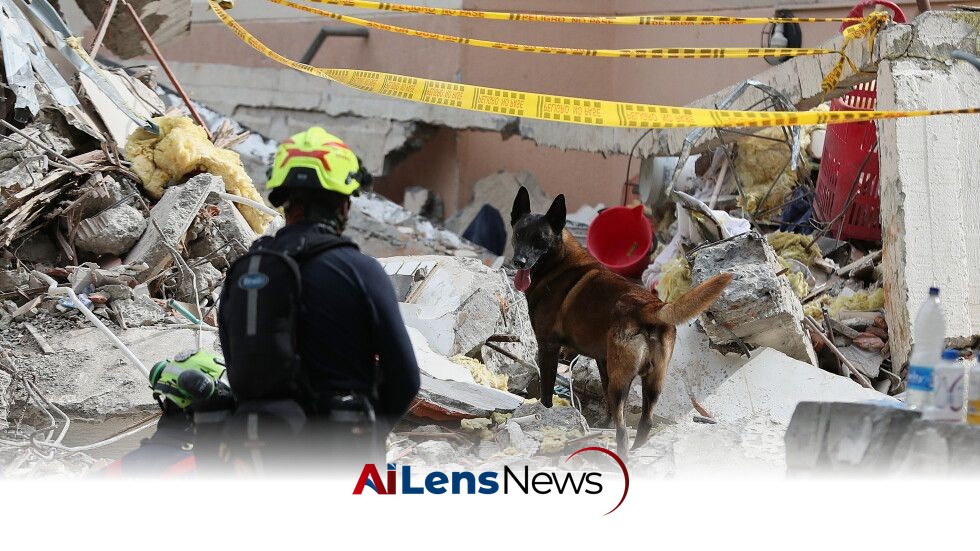


Colombia's new government grapples with the aftermath of a devastating earthquake, as search teams race against time to locate survivors amidst the rubble.
Washington DC, United States Aug 13, 2026 ALN: PEREIRA, Colombia — Tons of aid from regional partners began to roll into Colombia on Wednesday, as the search for survivors in the rubble of a powerful earthquake grew more desperate after the temblor razed buildings, buckled roads, and crushed cars. The earthquake, which registered a magnitude of 7.4, struck the western part of the country, causing widespread destruction and prompting an immediate response from both governmental and non-governmental organizations.
The devastation has tested Colombia’s new president, Abelardo de la Espriella, and his government as it scrambles to respond to the disaster and civil society as it pushes to provide aid to the most affected communities. President de la Espriella, who took office earlier this year, is facing one of the most significant challenges of his administration as he coordinates emergency responses and addresses the needs of the displaced and affected populations.
De la Espriella said Wednesday evening that at least 265 people died in the earthquake. This tragic loss of life underscores the severity of the disaster, which has shocked the nation and drawn international attention. The president also reported that nearly 500 people were missing; however, civilian-run databases have indicated that the number could be much higher, exceeding 4,100. This discrepancy highlights the difficulties in communication and data collection in the immediate aftermath of such disasters. In total, more than 25,800 families were impacted, de la Espriella said, with many losing their homes and livelihoods.
“Our efforts are focused on the disappeared,” he told journalists in Colombia’s capital, emphasizing the urgency of locating those still unaccounted for. The search and rescue operations are being conducted by a combination of local authorities, national agencies, and international aid groups, all of whom are working tirelessly to locate survivors and provide necessary medical assistance.
Teams continued to pick through the rubble in the hardest-hit cities of Cali, Pereira, Manizales, and Quibdo, as time ticked away for victims to be found — and rescued — alive. Aid agencies consider the first 48 to 72 hours crucial for retrieving survivors, though that threshold can be extended if those trapped have access to food and water. The work is dangerous and arduous, as rescuers navigate unstable structures and debris. The emotional toll on the rescue teams is also significant, as they witness the devastation and the plight of families searching for their loved ones.
On Wednesday afternoon, Alejandro Eder, the mayor of Cali, told reporters that rescue teams continue to find signs of people alive under the rubble and are racing to save them. His comments reflect a glimmer of hope amidst the overwhelming despair. “The next 20 hours are the most critical to find and rescue people alive,” he said. “Every minute is vital.” The urgency of the situation is palpable, as families cling to hope that their loved ones will be found.
In Pereira, rescuers pulled Daniela Largo alive from the rubble late Tuesday, capping a complex 12-hour rescue in which crews carved a small opening in the debris to free her pinned arm and a doctor administered IV fluids to stabilize her. Wrapped in a blue blanket, the young woman was carried to an ambulance as firefighters embraced and onlookers cheered. This successful rescue serves as a poignant reminder of the resilience of the human spirit and the dedication of those involved in the rescue efforts.
The situation on the ground remains fluid, with reports of ongoing aftershocks complicating rescue operations. These aftershocks can hinder the stability of already damaged buildings, posing additional risks to both victims and rescuers. As the search continues, local authorities are also preparing for the long-term implications of the earthquake, including the need for rebuilding infrastructure and addressing the psychological impact on survivors.
In the wake of the disaster, various organizations have mobilized to provide support to the affected communities. Humanitarian aid is being delivered in the form of food, water, medical supplies, and temporary shelter. Local charities and international NGOs are working collaboratively to ensure that assistance reaches those in need. The Colombian Red Cross, among other organizations, has been instrumental in coordinating relief efforts and providing medical care to those injured during the earthquake.
The earthquake has also sparked discussions about disaster preparedness and response mechanisms in Colombia. The country, located in a seismically active region, has experienced earthquakes in the past; however, the scale of this disaster has prompted calls for a reevaluation of existing emergency response strategies. Experts are emphasizing the importance of investing in infrastructure that can withstand seismic events and developing comprehensive disaster response plans that include community training and education.
As the rescue efforts continue, the government faces the challenge of not only addressing immediate needs but also planning for the long-term recovery of affected areas. This includes rebuilding homes and infrastructure, restoring services such as electricity and water, and providing psychological support to those who have lost loved ones or have been traumatized by the events. The road to recovery will be long and arduous, but it is essential for the healing process of the communities impacted by this tragedy.
In summary, Colombia's response to the recent earthquake is multifaceted, involving immediate rescue efforts, humanitarian aid, and long-term planning for recovery. The dedication of rescue teams and the outpouring of support from the community and international partners are critical in navigating this crisis. As the nation rallies together in the face of adversity, the focus remains on finding survivors and providing assistance to those who have been most affected by this devastating event.
To learn more about the latest developments in Crime & Law, stay updated with our exclusive reports and analyses on AiLensNews.

