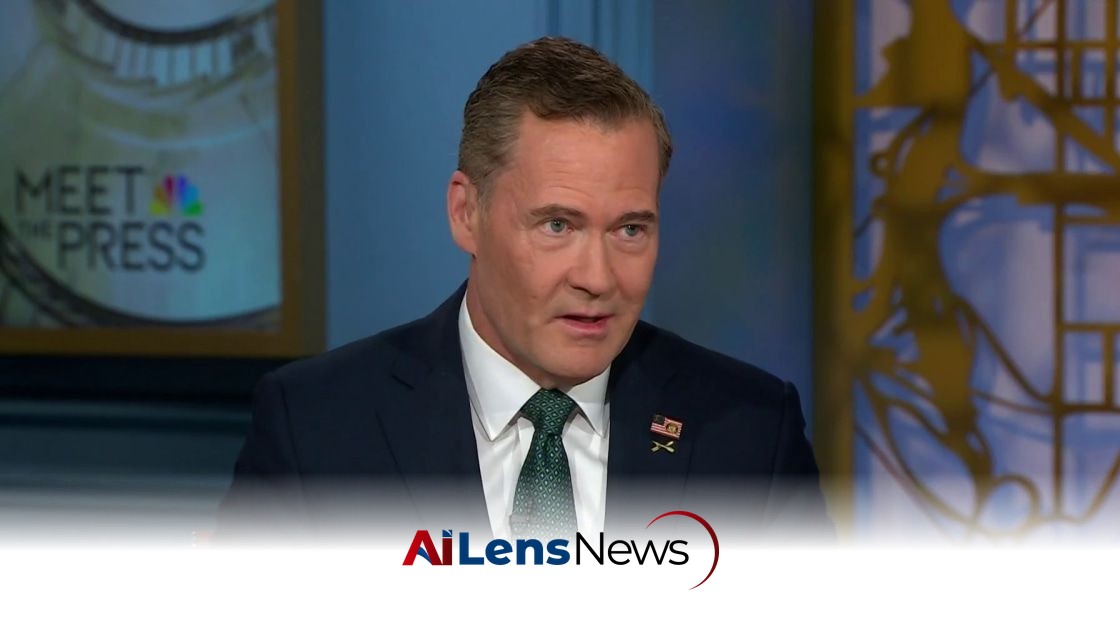


In an interview, U.S. Ambassador Mike Waltz discusses the military's current state amid supply shortages, emphasizing its preparedness and the challenges inherited from previous administrations.
Washington DC, United States Jul 26, 2026 ALN: U.S. Ambassador to the United Nations Mike Waltz recently addressed concerns regarding military supplies during an interview on Meet the Press. He noted that the Trump administration "inherited" a depleted stockpile of munitions, a situation highlighted by an NBC News report. This report revealed that military commanders have been selectively intercepting Iranian attacks to conserve dwindling weapon supplies. The implications of these remarks extend beyond immediate military concerns, touching on broader themes of national security, international relations, and the future of U.S. military strategy.
The issue of military readiness has become a focal point of discussion as global tensions rise, particularly in regions such as the Middle East, Eastern Europe, and the Indo-Pacific. The U.S. military's ability to respond effectively to threats is critical not only for national security but also for maintaining alliances and deterring adversaries. The concerns raised about military supplies are not new; they reflect a broader trend that has been observed over several years, exacerbated by ongoing military engagements and the complexities of modern warfare. Historical context is essential to understand this situation, as the U.S. military has been involved in various conflicts since the early 2000s, leading to a gradual depletion of resources.
Waltz emphasized that despite these challenges, the military has "everything that it needs" to operate effectively. This assertion is crucial for maintaining public confidence in the military's capabilities. The ambassador's confidence may stem from the military's ongoing efforts to adapt and innovate in the face of resource constraints. For instance, the U.S. military has been increasingly reliant on technology, including precision-guided munitions and advanced surveillance systems, which can enhance operational effectiveness even when traditional stockpiles are low. This shift towards technology underscores a significant evolution in military strategy, where efficiency and precision are prioritized over sheer quantity.
Moreover, the complexities of managing military resources in the face of ongoing threats cannot be overstated. The U.S. military operates within a framework of strategic decision-making that prioritizes national security while also considering the implications of resource allocation. This involves not only the physical stockpiles of munitions but also the logistical capabilities to deliver those resources where they are needed most. The military's ability to intercept Iranian attacks selectively, as mentioned by Waltz, illustrates the need for careful planning and execution in resource management. Such strategic choices reflect the military's emphasis on deterrence and the maintenance of operational readiness in a fluid geopolitical environment.
The discussion surrounding military readiness is further complicated by geopolitical dynamics. The U.S. is engaged in multiple theaters of operation, each with its own set of challenges. In the Middle East, for example, the threat posed by Iran continues to be a significant concern, prompting military leaders to make difficult choices about how to allocate limited resources. Similarly, in Eastern Europe, the ongoing conflict between Russia and Ukraine has raised questions about NATO's collective defense posture and the readiness of U.S. forces to respond if necessary. These situations require not just military might but also diplomatic finesse, as the U.S. navigates its relationships with allies and adversaries alike.
Waltz's comments come at a time when military readiness is under scrutiny, particularly as tensions in various regions continue to escalate. Analysts have pointed out that while the U.S. military remains one of the most advanced in the world, the challenges of supply chain management and resource allocation must be addressed to ensure that it can meet its obligations. The military's ability to project power and maintain deterrence is contingent upon having the necessary resources available at the right time and place. This reality has prompted discussions about the need for increased funding and investment in military infrastructure and capabilities.
In recent years, the U.S. has experienced disruptions in its supply chains, which have been exacerbated by the COVID-19 pandemic and ongoing global supply chain issues. These disruptions have raised concerns among military leaders about the sustainability of munitions and other critical supplies. The Defense Department has been working to address these issues through initiatives aimed at enhancing domestic production capabilities and diversifying supply sources. Such efforts are essential not only for immediate military needs but also for long-term strategic independence, reducing reliance on foreign suppliers who may not always be reliable partners.
The implications of these supply chain challenges are far-reaching. They highlight the interconnected nature of modern military operations and the importance of resilience in logistical planning. The military's ability to respond to crises is increasingly contingent upon its supply chain efficiency, which has led to a reevaluation of procurement strategies and partnerships. Additionally, the focus on domestic production aligns with broader economic goals, such as job creation and technological innovation, which are vital for maintaining a competitive edge in defense.
In conclusion, while the military faces challenges related to munitions supply, Waltz's statements reflect a commitment to maintaining operational readiness and addressing the issues inherited from previous administrations. The ongoing dialogue about military readiness underscores the importance of strategic resource management in an increasingly complex global landscape. As the U.S. navigates these challenges, the emphasis on maintaining a capable and ready military force remains paramount for national security and international stability. The ability to adapt to changing circumstances, embrace technological advancements, and ensure a steady supply of resources will be critical as the U.S. seeks to uphold its commitments to allies and safeguard its interests around the world.
To learn more about the latest developments in Politics, stay updated with our exclusive reports and analyses on AiLensNews.

