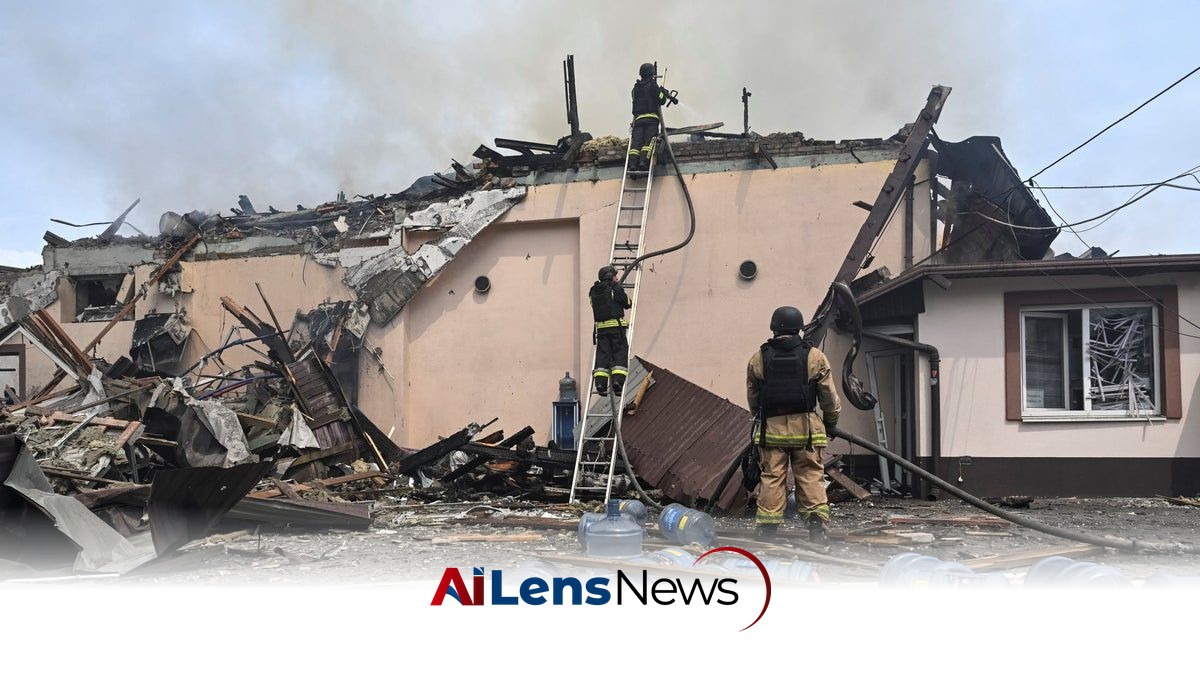


Ukrainian President Volodymyr Zelensky warns of Russia's plans to bring in North Korean troops as Kyiv faces renewed missile strikes.
London, United Kingdom Jul 26, 2026 ALN: Ukrainian President Volodymyr Zelensky has made alarming claims regarding the potential escalation of the conflict in Ukraine, specifically stating that Russian President Vladimir Putin is preparing to deploy an additional 30,000 North Korean troops to the battlefield. This assertion was made during a recent address, where Zelensky emphasized that preparations have been underway in Russia’s Voronezh region since June to accommodate these troops. However, he did not provide concrete evidence to substantiate this claim, which has raised questions about the validity of the information and its implications for the ongoing war.
The context of Zelensky's statement is critical, as it comes amid a series of missile strikes on Kyiv, with Ukraine's Air Force reporting that Russia has been utilizing ballistic missiles in its attacks on the capital. This escalation in hostilities underscores the persistent volatility of the situation and the potential for further military engagement. The mention of North Korean troops is particularly significant, given North Korea's historical ties with Russia and its prior military support. If true, this development could represent a substantial increase in Russian military capabilities and a shift in the dynamics of the conflict.
The suggestion of North Korean troops being deployed also raises broader geopolitical concerns. North Korea has been isolated internationally due to its nuclear ambitions and aggressive military posturing. Its involvement in the Ukraine conflict could signal a new level of collaboration between Pyongyang and Moscow, potentially complicating the international response to the war. This partnership could provide Russia with additional manpower and resources, while North Korea might gain leverage and legitimacy on the global stage.
In the midst of these developments, Kazakhstan's President Kassym-Jomart Tokayev has expressed a more diplomatic perspective, suggesting that a peace deal between Russia and Ukraine might be achievable if both nations agree to freeze the conflict and return to negotiations. Tokayev made these comments while appearing alongside Putin at a forum in Omsk, where he praised Putin's diplomatic flexibility. This stance indicates that there are still avenues for dialogue, even as military actions escalate. However, the feasibility of such negotiations remains uncertain, given the entrenched positions of both sides.
The humanitarian toll of the conflict continues to rise, as evidenced by a tragic incident in which twelve individuals, including five children, lost their lives in a drone attack on a holiday camp located in a Russian-held area of Ukraine's Zaporizhzhia region. Russian-installed authorities have accused Ukraine of deliberately targeting civilians, a claim that Kyiv has not yet addressed. This incident highlights the severe impact of military operations on civilian populations, which has been a recurring theme throughout the conflict. Both Russia and Ukraine have consistently denied targeting civilians, yet numerous reports indicate that civilian casualties have resulted from military engagements.
Reports surrounding the drone attack suggest that it occurred overnight, leading to significant casualties and injuries. Russian officials stated that the attack was aimed at a resort area near Melitopol, strategically located along the coast of the Sea of Azov. The targeting of such facilities raises ethical questions about the conduct of war and the protection of non-combatants, emphasizing the need for adherence to international humanitarian law.
In a related development, a fire was reported at Russia's Engels-2 military airfield in Saratov Oblast, where strategic aircraft are stationed. Eyewitnesses described a large fire and smoke rising from the site, raising concerns about the security of Russian military assets. Such incidents may indicate vulnerabilities within the Russian military infrastructure and could potentially affect its operational capabilities in the ongoing conflict.
In terms of military mobilization, Zelensky has pointed to alarming statistics regarding Russian enlistment and casualties. He cited intelligence reports suggesting that Moscow has recruited 221,000 individuals into its military this year, while simultaneously suffering nearly 225,500 losses, including 131,000 killed and approximately 93,000 wounded. Zelensky noted that many of these injuries are severe, exacerbated by inadequate medical care at the front lines. This information paints a picture of a protracted and costly conflict for both sides, with significant human costs.
The ongoing war has resulted in a profound humanitarian crisis, with millions displaced and in need of assistance. The international community has been closely monitoring the situation, with various nations and organizations calling for an end to hostilities and the establishment of humanitarian corridors to aid those affected by the conflict.
In another incident reflecting the heightened tensions in the region, Romania recently shot down a foreign drone that breached its airspace. This event marks the first interception of its kind amidst rising concerns over drones straying into NATO territory. The Romanian defense ministry confirmed that an F-16 fighter jet was involved in the operation, underscoring the vigilance of NATO members in protecting their airspace amid escalating military activities in the region.
As the situation evolves, the international community remains watchful of developments, particularly regarding the potential involvement of North Korean troops and the ongoing humanitarian crisis stemming from the conflict. The implications of these events could be far-reaching, potentially affecting global security dynamics and international relations. The prospect of North Korean troops entering the conflict adds a new layer of complexity, raising concerns about the potential for further escalation and the challenges of achieving a lasting peace in the region.
To learn more about the latest developments in World News & International Affairs, stay updated with our exclusive reports and analyses on AiLensNews.

