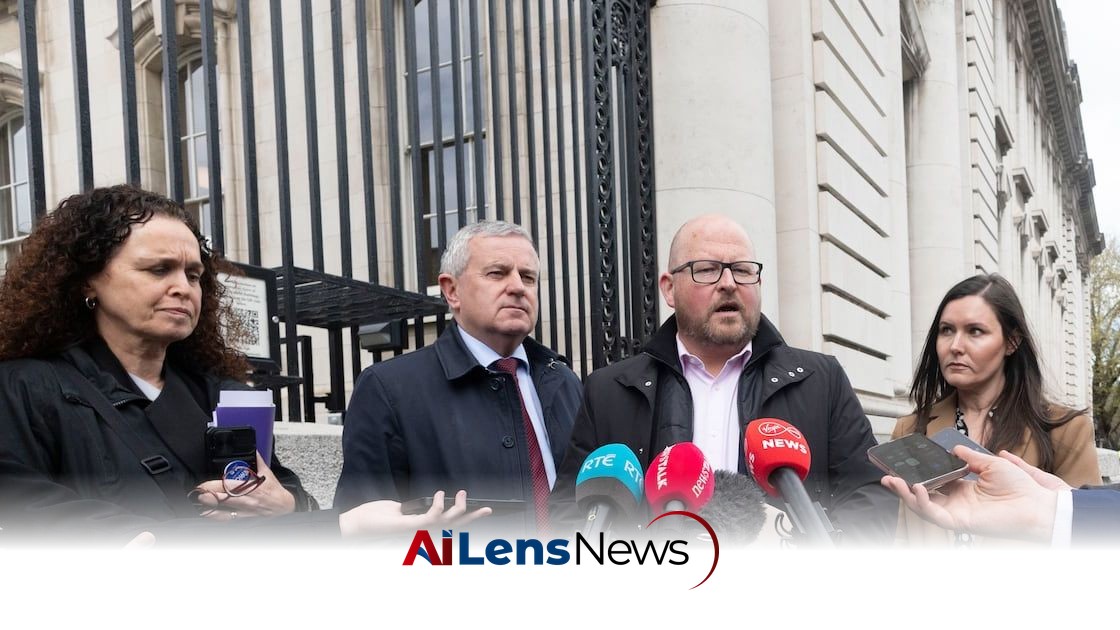


With less than 90 days until Budget 2027, public pay negotiations remain stagnant amid rising tensions between unions and the government.
London, United Kingdom Jul 13, 2026 ALN: With fewer than 90 days until Budget 2027 is announced in the Dáil, talks on a public pay deal are going nowhere fast. In fact, they haven’t started, against a backdrop of increased militancy from public-sector unions and heightened Government caution.
Meetings of the two sides to thrash out a multibillion-euro accord every few years have become a well-established part of the choreography of Irish public administration.
But after abortive efforts to kick things off, talks have not even reached first gear and the unions are publicly flirting with the idea of no deal being struck at all.
Fórsa general secretary Kevin Callinan said it was probably “better for the country” if a multiyear public pay deal was struck, “but if it can’t be agreed, we don’t have to have one”.
The unions are not against dangling the prospect of industrial action and a future where traditional industrial relations battlegrounds are not tackled within the confines of an overarching agreement.
This, Callinan says, would leave the State without certainty regarding the scale of the public pay bill, or any guarantee of co-operation when it comes to public service reform. All these things would “have to be bargained and are potential flashpoints” should a deal not be reached.
It is not a promising start to a process in which both sides have a lot on the line.
The most recent pay deal expired at the end of last month, and Callinan is one of four senior trade unionists – the leadership of the public services committee (PSC) of the Irish Congress of Trade Unions – who will lead the negotiations.
This delegation sits down with Department of Public Expenditure and Reform (DPER) officials, and ultimately the Government, to grind out agreements which are then put to hundreds of thousands of public servants for approval.
These overarching accords have for years guaranteed a degree of industrial peace for the State side and pay security for its employees. However, the union side left a preliminary series of discussions with DPER officials unconvinced that a basis exists for proceeding further.
They say the Government is seeking a new multiyear deal but the unions want some form of commitment on pay before moving on to other matters, such as public-service reform and efficiencies. This is an inversion of the usual approach where pay is the last thing agreed. The unions also want the pay element to include a formula to protect living standards in the face of inflation.
“We have to make sure that if we do enter into [talks] that we have a mechanism to adjust if inflation spikes or inflation falls,” says Phil Ní Sheaghdha, head of the Irish Nurses and Midwives Organisation (INMO) and another PSC member.
In May, Minister for Public Expenditure Jack Chambers, who has ultimate political responsibility for shepherding a deal through, said the Government wanted an agreement but it would not be “at any price”. He said “very challenging discussions” were happening while Ireland faced a volatile international environment.
Chambers last said the Government was happy to engage with everything on the table, but not with preconditions – a clear shot at the union side’s goal of getting something nailed down on pay before the detailed talks begin.
“It has never happened where an offer is tabled and that forms the basis for discussion,” said one senior Coalition figure.
Siptu general secretary John King, another PSC member said: “Given the level of apathy and real anger there is out there among workers, we’re sensing that’s not going to work this time.”
The Government’s assessment is that unions will be more bolshie due to a variety of factors – what one Coalition figure describes as a “febrile underlying instinct”. The mix includes the absence of an income-tax package in Budget 2026, inflationary pressures and the fallout from fuel protests, which saw the Government provide hundreds of millions of euro in additional supports to try kill off widespread disruption at Easter.
Senior Coalition figures believe the unions feel they must demonstrate that they too can flex muscle to extract wins for a membership that is angry and detached. They note recent instances where union members rejected pay deals recommended by their leadership as another thing the union negotiators have to be wary of.
This view is not exactly disowned by union leaders. King says public-sector workers “are sitting back and looking at the Government rolling over and looking after the interests of business, and they feel they’re being excluded from that”.
Rather than knuckling down for preliminary talks, unions are preparing ballots of their members that could clear the way for industrial action. Some say this could happen before the end of the summer, and they are pointing the finger of blame directly at the Government.
Unite union shop stewards decided on Wednesday to ballot members over Government failure to table “a meaningful offer on pay”. It said the ballot is “protective in nature” and intended to ensure “members are in a position to respond should further negotiations fail”.
The leadership of Fórsa, the largest public-service union, on Thursday unanimously agreed to organise a ballot. Fórsa, Callinan said, was satisfied the basis for a dispute existed due to the expiry of the previous deal “and the absence of a positive response to our proposed approach”.
On behalf of the PSC, Fórsa said on Friday that its 19 affiliated unions would convene their national executive bodies to prepare for potential industrial action ballots. The Irish National Teachers’ Organisation told members it would liaise with other teaching unions to co-ordinate strategy before arranging consultation meetings on industrial action in September.
Kieran Christie, head of the Association of Secondary Teachers Ireland, said his union intended to ballot “as soon as is practicable”. Ní Sheaghdha said the INMO would be meeting on Tuesday and she “will be seeking a mandate” from its executive to commence a ballot for industrial action of nurses and midwives working in the public sector.
“We’re serious about this, and the public-sector unions are all serious about this,” she added. “A public-sector strike in pursuance of pay claims is the alternative to having an agreement.”
A lot of this can be put down to pre-talks posturing, the country is not on the precipice of strikes just yet. But it hardly represents positive mood music.
In addition to pay increases, public-sector unions have a long-held goal of having influence over government policy. They stop short of calling for a return to the heyday of social partnership, but senior officials are unenthusiastic about the current forum for government-trade-union-employer dialogue, the Labour Employer Economic Forum.
“We believe social dialogue should be action orientated rather than consultative,” says Callinan.
While Taoiseach Micheál Martin has said he believes “we need to go further than the current model of social dialogue”. Chambers is extremely cool on anything that looks like the old social partnership model, and has said so publicly. He is understood to be supportive of improving what is there now, but a process that relegates policy and budget-making to an offshoot of an industrial relations carve up, with an associated dilution of ministerial power, is anathema to him and to his department’s DNA.
Nobody is setting deadlines just yet, but if a shape doesn’t begin to emerge, and an agreement isn’t signed in time for October’s budget, it creates a problem for the Government – not least because it would be flying blind on how much to put aside for increases to the public pay bill.
The odds still favour a deal being agreed, but it looks like negotiations will be more fraught this time around.
“It’s part of the dance,” says a senior Government figure, who admits the parties are “not yet on the same dance floor”.
To learn more about the latest developments in Politics, stay updated with our exclusive reports and analyses on AiLensNews.

