

As the fragile ceasefire collapses, the Pentagon requests billions to cover military costs, with casualties rising and Senate hearings set to address the situation.
London, United Kingdom Jul 21, 2026 ALN: Top U.S. defense officials are set to testify in front of a Senate committee as Donald Trump’s administration continues to escalate a war with Iran after a 10th consecutive night of attacks. This escalation comes amid rising tensions in the region, which have been exacerbated by a series of military confrontations, political maneuverings, and deteriorating diplomatic relations. The conflict has roots that trace back several years, influenced by a complex interplay of historical grievances, geopolitical rivalries, and the ongoing struggle for influence in the Middle East.
Tuesday’s testimony from Defense Secretary Pete Hegseth and Chairman of the Joint Chiefs of Staff Dan Caine follows the deaths of at least three American service members within two days, with nearly 100 other troops injured within the last month after the collapse of a fragile ceasefire agreement. The situation has raised alarms regarding the safety of U.S. personnel deployed in the region and highlights the precarious nature of military engagements in a volatile environment.
At least 18 American troops have died since the beginning of the war, and more than 400 others have been injured. These numbers underscore the human cost of the conflict, which has not only affected military personnel but also has broader implications for U.S. foreign policy and military strategy in the Middle East. The loss of life has reignited debates within Congress regarding the authorization of military force and the role of the U.S. in international conflicts.
Hegseth and Caine last testified to members of Congress about the war in May, around the same time they last delivered a public briefing to the press. They are asking for another $67 billion from Congress to cover mounting costs for the war after asking for $88 billion earlier this year. This request for additional funding has raised questions about the sustainability of U.S. military operations abroad and the potential impact on domestic priorities. Critics argue that such expenditures could be better allocated to pressing domestic issues, while supporters emphasize the need to maintain a strong military presence to deter adversaries.
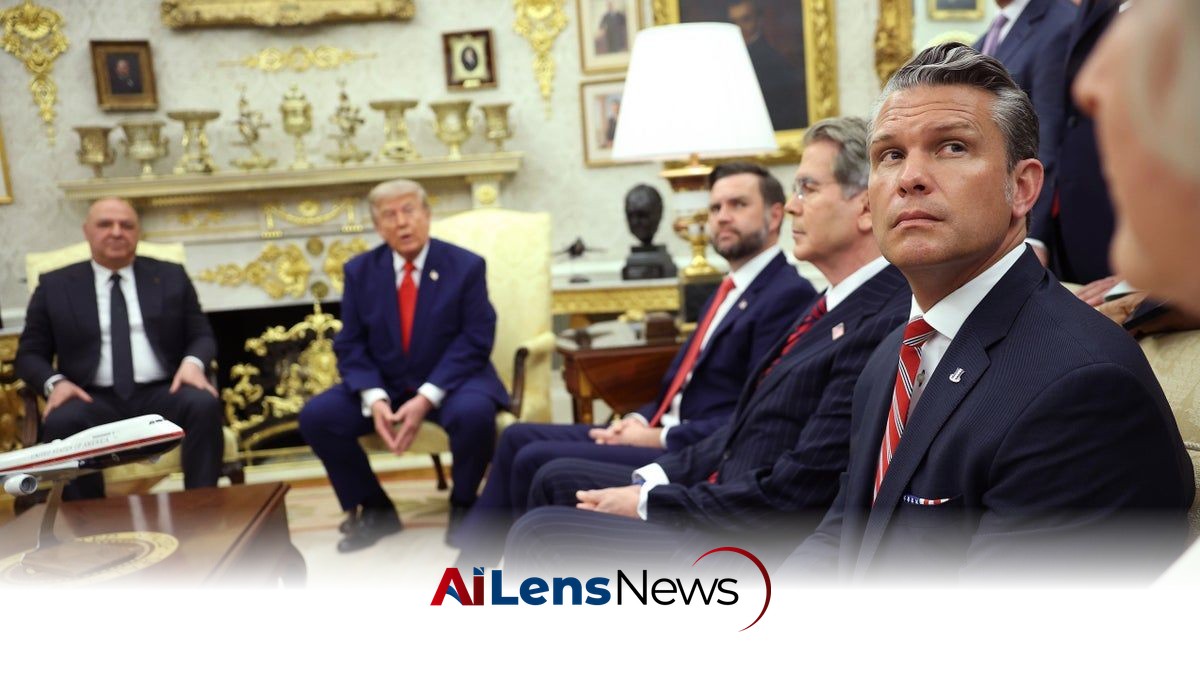
Their appearance follows the president’s meeting at the White House alongside Lebanese President Joseph Aoun, where Trump told reporters that the U.S. could devastate Iran’s infrastructure in ways that it would “decades” for Tehran to rebuild. This statement reflects a broader strategy of deterrence that the Trump administration has employed, aiming to convey a message of strength to both allies and adversaries in the region. The implications of such rhetoric can lead to escalated tensions and provoke further military responses from Iran, which has historically reacted strongly to perceived threats against its sovereignty.
Massad Boulos, a senior adviser to Trump on Arab and Middle Eastern affairs, told reporters that the president’s meeting with Lebanese President Joseph Aoun “went very well.” This meeting is indicative of the U.S. administration's efforts to build alliances in the region, particularly in light of the ongoing conflict with Iran. Boulos emphasized the positive chemistry between the two leaders, suggesting that there may be a shared understanding of the challenges posed by Iranian influence in the region.
“There was a very good chemistry between the two presidents,” Boulos said. “It went very well. It was very productive.” The productive nature of the discussions could potentially lead to collaborative efforts in addressing mutual security concerns, including the threat posed by Hezbollah, a Lebanese militant group that has been a focal point of U.S. foreign policy in the region.
When asked whether the U.S. has any leverage over Hezbollah, Boulos stated, “there are always options.” This statement reflects the complex dynamics at play, as the U.S. seeks to navigate its relationships with various actors in the Middle East. “There are many, many tools,” Boulos added. “You have seen already some of them by the Treasury Department, by other departments. The president and Secretary of State have always said they have tools at their disposal that they may choose to take up at any time.” This suggests that the U.S. may consider a range of diplomatic and economic measures in addition to military action in its approach to Iran and its proxies in the region.
Sgt. Michael Emmanuel Swinton, 30, of Fayetteville, North Carolina, was killed in action during a controlled detonation of a downed Iranian drone in Iraq on July 19. His death adds to the growing toll of American service members in the ongoing conflict, highlighting the risks associated with military operations in a region fraught with danger. Sgt. Swinton was assigned to D Battery, 2nd Battalion, 55th Air Defense Artillery Regiment, 108th Air Defense Artillery Brigade, Fort Bragg, North Carolina.
Swinton was among at least three service members who were killed in recent days. At least two other service members were killed during a strike in Jordan, and remains that were recovered are believed to belong to a third service member who was missing after that attack. The increasing number of casualties has sparked renewed discussions about the U.S. military's role in the region and the potential for further escalation of hostilities.
The U.S. has issued a “worldwide caution” for Americans in the Middle East following the collapse of an interim ceasefire agreement. This alert serves as a reminder of the precarious security situation in the region, urging citizens to remain vigilant and prepared for potential disruptions. “Americans currently in the Middle East should exercise caution and heightened vigilance and should be prepared for possible flight cancellations, periodic airspace closures, and potential travel disruptions,” read a social media post on the government’s travel page.
“Please monitor embassy and consular security alerts, local authorities, and the news for breaking developments. Americans outside the Middle East should reconsider travel to and through the region.” This advisory reflects the U.S. government's commitment to ensuring the safety of its citizens abroad, particularly in areas where military conflict is ongoing.
It said that the environment “remains complex with the potential for unforeseen escalation.” The statement added that “US diplomatic facilities, including outside the Middle East, have been targeted,” indicating that the ramifications of the conflict extend beyond the immediate region and could pose risks to American interests globally.
President Donald Trump warned Iran that the U.S. has been “nice” so far in its attacks against the Middle East nation as tensions continue to rise and the threat of full-blown war remains. This warning underscores the precarious balance of power in the region and the potential for miscalculations that could lead to a broader conflict. The president’s remarks reflect a strategy aimed at projecting strength and resolve, but they also carry the risk of escalating hostilities.
Trump snapped at a female reporter when pressed on whether he has a plan for the escalating war. This interaction highlights the challenges faced by the administration in articulating a coherent strategy amidst rapidly changing circumstances on the ground. The lack of a clear plan has led to criticism from various quarters, including lawmakers and foreign policy experts who argue that a well-defined strategy is essential for achieving U.S. objectives in the region.
A Republican lawmaker stated that Americans killed in Iran is just the 'nature of warfare.' This remark reflects a perspective that views military engagement as an inherent risk of national defense, underscoring the complex moral and ethical considerations surrounding military operations. Such statements can be polarizing, eliciting strong reactions from both supporters and opponents of the war.
As the situation unfolds, the Pentagon's request for additional funding highlights the increasing costs of the ongoing conflict and the urgency for a strategic resolution. The implications of this conflict extend far beyond the battlefield, affecting U.S. foreign policy, military readiness, and domestic priorities. The continued escalation of hostilities raises critical questions about the future of U.S. involvement in the region, the potential for diplomatic solutions, and the long-term consequences of military engagement. As lawmakers consider the funding request and the broader implications of the conflict, the need for a comprehensive strategy that addresses both immediate security concerns and long-term stability in the region remains a pressing challenge for the U.S. government.
To learn more about the latest developments in Politics, stay updated with our exclusive reports and analyses on AiLensNews.

