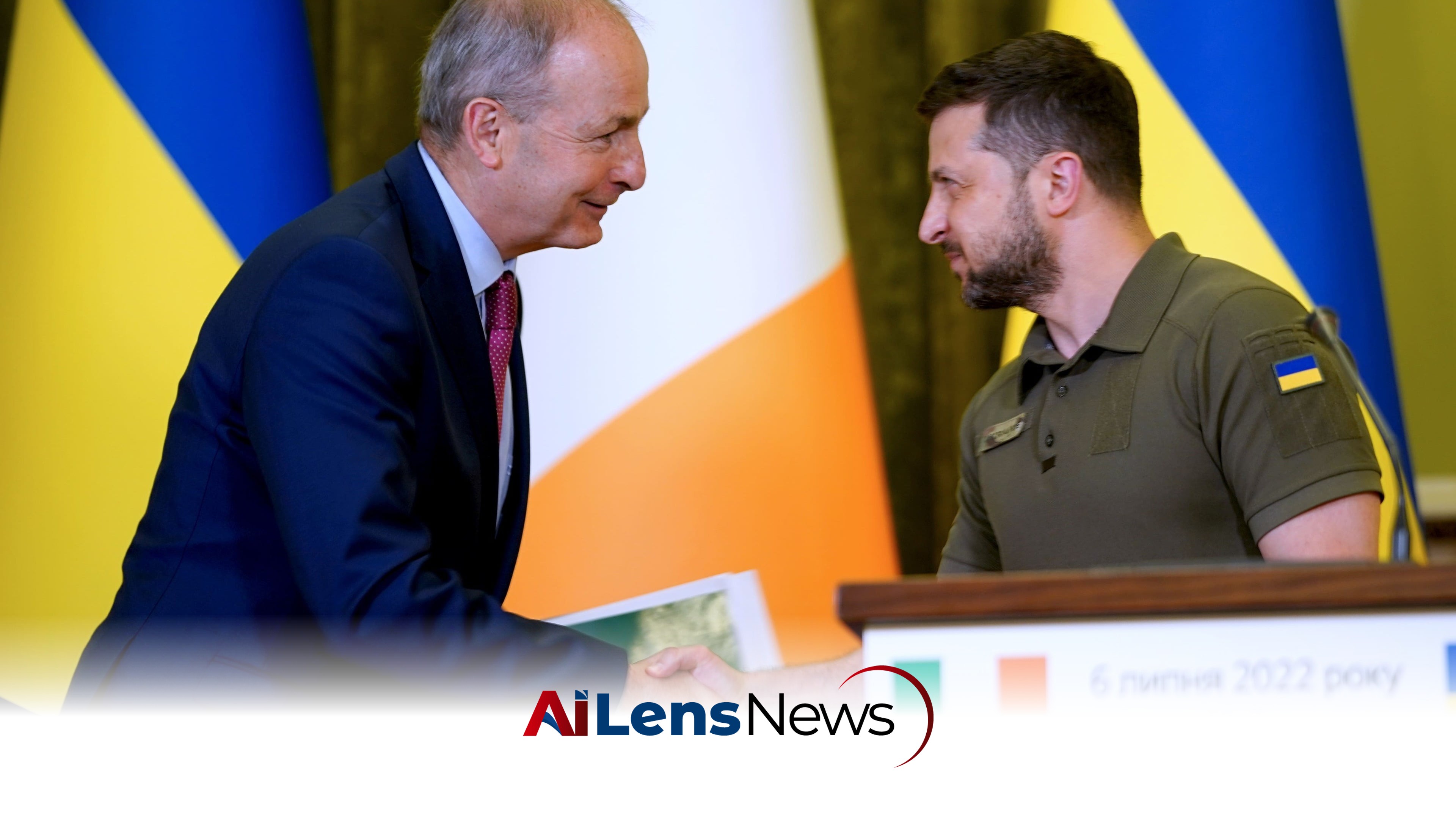


Irish Premier Micheál Martin is set to meet Ukrainian President Volodymyr Zelensky in Kyiv to discuss ongoing support for Ukraine amidst the ongoing conflict.
London, United Kingdom Jul 23, 2026 ALN: Irish Premier Micheál Martin is scheduled to meet with Ukrainian President Volodymyr Zelensky in Kyiv, marking a significant diplomatic engagement aimed at reinforcing Ireland's support for Ukraine during its ongoing conflict with Russia. This meeting is particularly noteworthy as it represents not only a bilateral discussion but also reflects the broader commitment of the international community to support Ukraine in its time of need.
The meeting is expected to focus on various aspects of assistance, including humanitarian aid and military support, as Ukraine continues to face challenges stemming from the invasion that began in February 2022. The conflict has led to widespread devastation across Ukraine, displacing millions of people and causing extensive damage to infrastructure, homes, and public services. As the war enters its third year, the need for sustained international support has become increasingly urgent.
Martin's visit underscores Ireland's commitment to standing in solidarity with Ukraine. The Irish government has previously expressed its support through various channels, including financial aid and humanitarian efforts. Ireland has contributed to the European Union’s collective response to the crisis, which has included sanctions against Russia, financial assistance to Ukraine, and support for refugees fleeing the conflict.
In recent months, Ireland has also increased its military assistance to Ukraine, providing equipment and training to Ukrainian forces. This shift in Ireland's traditionally neutral stance reflects a broader change in the European landscape, where countries have reassessed their defense and foreign policy strategies in light of the Russian aggression. Martin’s visit to Kyiv is a clear indicator of Ireland's evolving role in European security matters.
This meeting comes at a crucial time as Ukraine seeks to bolster its defenses and recover from the extensive damage caused by the conflict. The discussions are likely to cover Ireland's role in the European Union's response to the crisis and the broader international community's efforts to support Ukraine. The EU has been instrumental in coordinating aid and sanctions against Russia, and Ireland's participation in these efforts highlights its commitment to collective security.
In addition to military and humanitarian support, the meeting may address economic assistance and reconstruction efforts, as Ukraine faces the enormous task of rebuilding its war-torn regions. The challenges are not only physical but also economic, as the war has disrupted trade and investment, leading to significant economic contraction. The support from Ireland and other nations will be crucial for Ukraine's recovery and long-term stability.
Martin's engagement with Zelensky follows a series of high-level meetings between European leaders and Ukrainian officials, aimed at reinforcing unity and support for Ukraine. Leaders from across Europe have visited Kyiv to demonstrate solidarity, and these engagements have often resulted in pledges of increased military aid and financial support. The Irish Premier's visit is part of a broader trend of increasing diplomatic activity in the region, emphasizing the importance of international cooperation in addressing the crisis.
In recent months, Ukraine has also received military support from various countries, including advanced weaponry and training for its armed forces. The discussions between Martin and Zelensky may explore how Ireland can further contribute to these efforts, possibly by providing additional training or logistical support.
As the situation in Ukraine continues to evolve, the outcomes of this meeting may have implications for future international support and cooperation. Observers will be keen to see how Ireland's contributions are integrated into the wider efforts to assist Ukraine. The meeting could set the stage for new initiatives or collaborations that bolster Ukraine’s defense capabilities and humanitarian response.
Moreover, as the conflict shows no signs of abating, ongoing discussions about the future of Ukraine will be critical. The potential for further escalations in the conflict or shifts in the geopolitical landscape could influence the nature and extent of international support. Ireland's role, while traditionally seen as non-aligned, is evolving as the country seeks to balance its historical neutrality with the pressing need for solidarity in the face of aggression.
In conclusion, the meeting between Micheál Martin and Volodymyr Zelensky is a testament to the ongoing solidarity between Ireland and Ukraine, emphasizing the importance of international cooperation in times of crisis. As both leaders discuss critical support measures, the outcomes of their discussions will be closely monitored by international observers and could shape the future of Ireland's involvement in European security and humanitarian efforts.
The implications of Ireland's support for Ukraine extend beyond immediate military and humanitarian assistance. The ongoing conflict has highlighted the importance of international alliances and partnerships in addressing security threats. As Ireland steps up its involvement, it may also influence other nations to reassess their positions and commitments regarding military assistance and humanitarian aid to Ukraine.
Furthermore, the situation in Ukraine serves as a critical case study for the effectiveness of international sanctions against aggressor states. The EU's sanctions against Russia have been a focal point of discussions among member states, and Ireland's active participation in these measures reinforces the collective approach to dealing with violations of international law. The outcomes of these sanctions, particularly in terms of their economic impact on Russia and their effectiveness in supporting Ukraine, will be closely scrutinized.
As the conflict continues, the potential for a prolonged engagement raises questions about the sustainability of support for Ukraine. Countries like Ireland, which have traditionally maintained a stance of neutrality, face the challenge of balancing their historical policies with the realities of modern geopolitical conflicts. This balancing act is essential not only for Ireland's foreign policy but also for the broader European response to security threats.
The humanitarian crisis resulting from the war in Ukraine cannot be overstated. Millions of Ukrainians have been displaced, and the need for humanitarian assistance is at an all-time high. Ireland's support, both in terms of financial aid and logistical assistance, will play a crucial role in addressing the needs of those affected by the conflict.
As discussions between Martin and Zelensky unfold, the humanitarian aspect will likely be a significant focus. This includes addressing the needs of refugees who have fled to neighboring countries, as well as those who remain within Ukraine. The provision of essential services, such as healthcare, food security, and shelter, is critical for the survival and well-being of the affected population.
International cooperation in humanitarian efforts is vital, and Ireland's involvement can serve as a model for other nations. By committing resources and support, Ireland can help to galvanize further action from the international community, ensuring that the plight of those affected by the conflict remains a priority on the global agenda.
The upcoming meeting between Irish Premier Micheál Martin and Ukrainian President Volodymyr Zelensky symbolizes a pivotal moment in international relations, particularly in the context of European security and humanitarian response. As Ireland continues to navigate its evolving role in this landscape, the outcomes of their discussions will not only impact Ukraine but may also reshape Ireland's foreign policy and its approach to international solidarity in the face of aggression. The commitment to support Ukraine is a testament to the enduring values of cooperation, humanitarianism, and collective security that underpin the European Union and its member states.
To learn more about the latest developments in World News & International Affairs, stay updated with our exclusive reports and analyses on AiLensNews.

