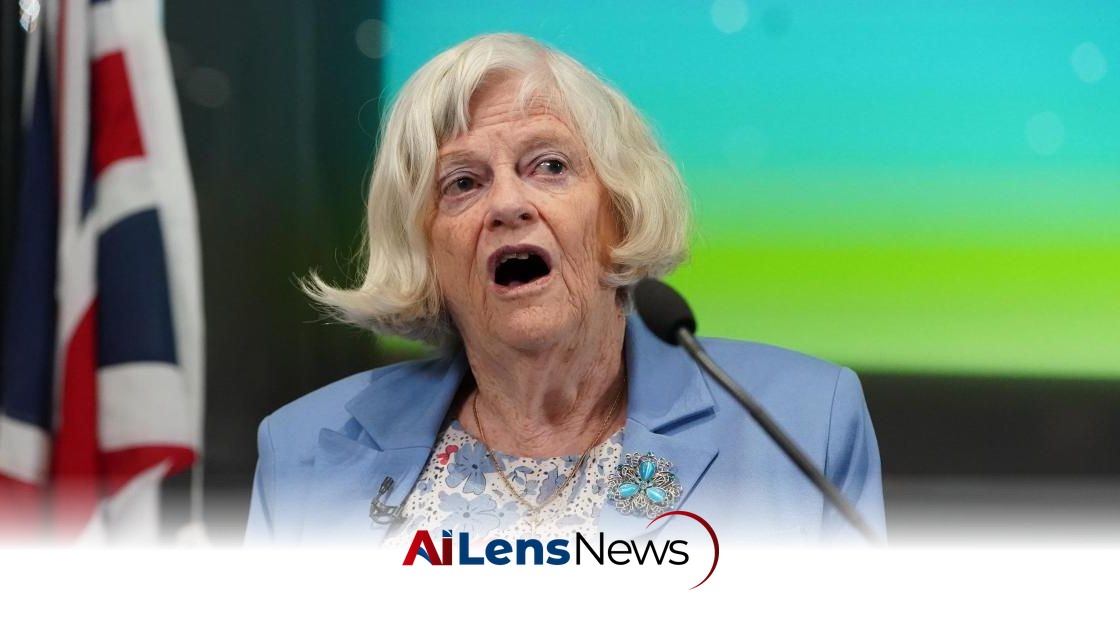


Counter terrorism police are now leading the investigation into the death of former Conservative minister Ann Widdecombe, following new evidence.
London, United Kingdom Jul 13, 2026 ALN: The investigation into the death of former Conservative minister Ann Widdecombe has taken a significant turn, as counter-terrorism police have now assumed leadership of the inquiry. This decision arises from the emergence of "new information and evidence" that has prompted law enforcement to reassess the circumstances surrounding her tragic death.
Ann Widdecombe, 75, was discovered deceased at her residence in Haytor, a picturesque village located on Dartmoor in Devon, at approximately 11:40 AM on Thursday. Reports indicate that she sustained serious injuries, the nature of which has not been publicly disclosed. The suddenness of her death has raised numerous questions among the public and political circles alike, given her prominence in British politics and her long-standing career as a member of the Conservative Party.
The involvement of counter-terrorism police in this case has raised eyebrows and sparked speculation. Normally, such units are deployed in cases where there is a potential threat to national security or where the circumstances of a death may be linked to broader patterns of violence or extremism. In this context, the decision to involve counter-terrorism units may indicate that authorities are taking no chances in ensuring that all aspects of the case are thoroughly examined, particularly given the current climate of political polarization in the UK.
In connection with the investigation, a 28-year-old white British man was apprehended at a property in Rotherham, South Yorkshire, on Saturday evening. This arrest has drawn attention due to the geographical distance; Rotherham is over 200 miles away from Widdecombe’s home in Devon. The suspect is currently in police custody, and authorities are continuing to gather evidence and assess the situation. The rationale behind the arrest and any potential links between the suspect and Widdecombe remain unclear, which only adds to the public's anxiety regarding the circumstances of her death.
On Sunday, a noticeable police presence was observed at a residence on Byrley Road in the Kimberworth Park area of Rotherham, which is associated with the arrested individual. The presence of law enforcement in this area suggests that investigators are diligently working to piece together the events leading up to Widdecombe's death and to understand the suspect's potential connection to her. The geographical distance between the two locations raises questions about how the suspect may be involved and what evidence led to his arrest.
Assistant Chief Constable Matt Longman of Devon and Cornwall Police addressed the media on Sunday, providing updates about the ongoing investigation. He stated that, at this point, there is no indication that the incident is terrorism-related, nor are police searching for any additional suspects. Longman emphasized, "At this stage, there is nothing to suggest that it was politically motivated," which may come as a relief to those who feared that the death of a former politician could be linked to broader political violence or extremism. This statement is significant as it helps to alleviate some fears surrounding the safety of public figures in an increasingly polarized political environment.
Widdecombe's political career spanned several decades, during which she became known for her outspoken views and her role in various government positions. She served as a Member of Parliament (MP) for the Conservative Party from 1997 to 2010 and held several ministerial roles, including Minister of State for Prisons and Minister of State for Education. Her tenure in politics was marked by her strong stances on issues such as law and order, education reform, and social values. Widdecombe was a prominent figure in the Conservative Party, often representing the party's more traditional values and perspectives.
Following her retirement from politics, Widdecombe transitioned into a career in media and public speaking. She has appeared on various television programs, sharing her opinions and insights on political matters, social issues, and her personal experiences. Her presence in the media has kept her in the public eye, and she has remained a polarizing figure, admired by many for her convictions while also facing criticism for some of her views. Widdecombe's outspoken nature and her willingness to engage in controversial topics often made her a subject of both admiration and critique, contributing to her complex legacy in British public life.
The implications of her death are significant, not only for her family and friends but also for the political community and the public at large. The investigation led by counter-terrorism police raises concerns about safety and security, particularly in light of the current climate of political polarization and the potential for violence against public figures. The involvement of counter-terrorism units may also reflect a broader trend of heightened vigilance among law enforcement agencies regarding the safety of politicians and public figures, especially in an era where political discourse can sometimes escalate into hostility.
As the investigation continues, the public awaits further information regarding the circumstances of Widdecombe's death and the nature of the evidence that prompted the involvement of counter-terrorism police. The outcome of this investigation could have far-reaching implications, not only for the individuals directly involved but also for broader discussions about the safety of public figures and the potential for politically motivated violence. The ongoing scrutiny of the investigation may also influence public perceptions of safety and security in the political landscape.
In the meantime, tributes and condolences have begun to pour in for Widdecombe from various political figures and members of the community. Many have expressed their shock and sadness at the news of her death, reflecting on her contributions to public life and the impact she had on those around her. As the investigation unfolds, it is likely that more details will emerge, shedding light on the circumstances that led to this tragic event. These tributes highlight the complex legacy that Widdecombe leaves behind, as both a respected politician and a controversial figure in British society.
Authorities have urged anyone with information related to the case to come forward, emphasizing the importance of community involvement in ensuring justice is served. As the investigation progresses, the focus will remain on uncovering the truth behind Ann Widdecombe's untimely death and ensuring that those responsible are held accountable. This call for public assistance underscores the collaborative nature of investigations and the critical role that community members can play in aiding law enforcement efforts.
In conclusion, the death of Ann Widdecombe has sparked a complex investigation that intertwines issues of public safety, political implications, and community response. As the narrative develops, it will be crucial to monitor how this situation evolves and what it means for the future of political discourse and safety in the United Kingdom. The investigation not only seeks to address the circumstances surrounding Widdecombe's death but also reflects broader societal concerns regarding the safety of public figures and the potential for violence in a politically charged environment.
To learn more about the latest developments in Crime & Law, stay updated with our exclusive reports and analyses on AiLensNews.

