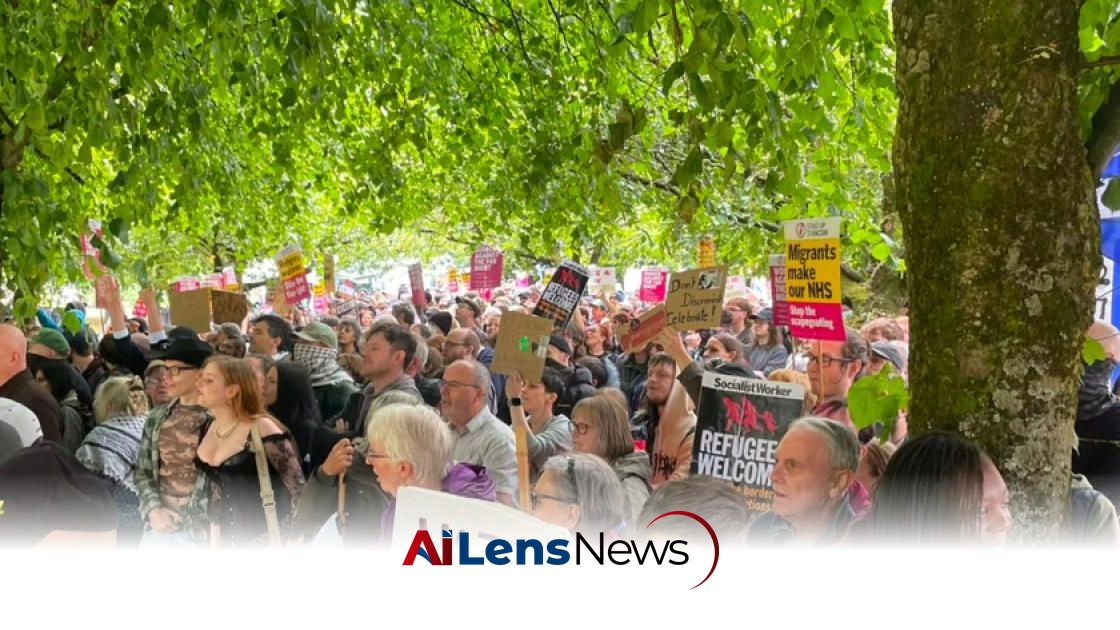


Over 1,000 anti-racism campaigners gathered in Glasgow to protest a meeting of the far-right group Unite the Clans, amidst rising anti-immigration tensions.
London, United Kingdom Jul 25, 2026 ALN: Over 1,000 anti-racism campaigners gathered in Glasgow to hold a rally aimed at countering a meeting of the far-right group known as Unite the Clans. This protest at Glasgow Green is significant not only for its immediate context but also for the broader implications it carries regarding the rise of far-right movements in the UK and the community's response to such ideologies.
The protest comes amid a backdrop of escalating anti-immigration sentiment that has been observed in various parts of the city in recent weeks. This increase in hostility towards immigrants and minority groups has raised concerns among community leaders, activists, and ordinary citizens who fear for the safety and inclusivity of their neighborhoods. The anti-racism rally is a direct response to this climate of fear and division, aiming to promote unity and solidarity among diverse communities in Glasgow.
A substantial police presence was deployed to the area to maintain order, with approximately 10 police vans and officers on horseback overseeing the events. The presence of law enforcement highlights the tensions surrounding such demonstrations, as clashes between opposing groups can often escalate into violence. The police's role in separating the counter-demonstrators from the Unite the Clans meeting underscores the need for careful management of public gatherings that involve contentious political ideologies.
The counter-demonstration was organized by a coalition of groups, including Stand Up To Racism (SUTR) and Women Against The Far Right, reflecting a broad-based effort to resist the rise of far-right ideologies. Support for the rally also came from various organizations such as the University College Union (UCU) and Refuweegee, which emphasizes the collective action taken by different sectors of society to oppose racism and xenophobia. These groups work together to foster a sense of community resilience against hate and discrimination, highlighting the importance of solidarity in the face of division.
Activists at the rally were observed surrounding the Unite the Clans meeting, with police facilitating the separation of the two groups to prevent potential violence. This physical manifestation of opposition underscores the heightened stakes involved in contemporary political discourse in the UK, particularly regarding issues of race, immigration, and national identity.
Unite the Clans first gained significant attention in March when it organized a demonstration outside the Scottish Parliament. This event called for “patriots” to gather from across Scotland, which was notably met with a robust counter-protest that saw around 1,000 individuals rallying against their message. The contrasting numbers at these demonstrations illustrate the polarized nature of public opinion regarding far-right movements and the willingness of communities to stand against them.
Since that initial demonstration, Unite the Clans has held additional rallies, with their Glasgow event being described as "peaceful" by the group. They invited affiliated groups from various cities, including Perth, Dundee, Edinburgh, and Falkirk, as well as groups from England, indicating a network of far-right sympathizers that extends beyond Scotland. This interconnectedness among far-right groups raises concerns about the potential for coordinated efforts to promote their ideologies across regions.
Stand Up to Racism has characterized Unite the Clans as a fascist organization that seeks to establish a street movement opposed to a range of rights, including those of migrants, LGBT+ individuals, women, and Palestinians. This assertion underscores the broader implications of far-right ideologies, which often seek to undermine the rights and dignity of marginalized communities. The group's invitation to Britain First, a well-known far-right organization, to participate in their Glasgow rally further complicates their claims of peaceful intent and raises questions about their true objectives.
Prominent figures within Unite the Clans have previously expressed support for Adolf Hitler, and there have been instances of attendees at their events being linked to extremist ideologies. For example, a member of Patriotic Alternative, a group known for its far-right and nationalist views, was photographed at a rally holding a banner featuring the neo-Nazi slogan known as the "Fourteen Words." Such associations serve to reinforce the fears of many who oppose Unite the Clans, as they highlight the potential for violence and hate that can accompany such movements.
The implications of these rallies and counter-protests extend beyond the immediate events in Glasgow. They reflect a larger trend of rising far-right sentiments across Europe and the United Kingdom, where anti-immigrant rhetoric and nationalist sentiments have gained traction in recent years. The response from anti-racism groups illustrates the importance of community mobilization and activism in combating these ideologies. The ability of diverse groups to come together in solidarity against hate is a powerful testament to the resilience of communities in the face of division.
The ongoing struggle against far-right movements also raises important questions about how society can effectively address the root causes of such ideologies. Issues such as economic insecurity, social disenfranchisement, and political disillusionment often contribute to the appeal of far-right narratives. Addressing these underlying issues may be crucial in diminishing the allure of extremist groups and fostering a more inclusive society.
As the situation in Glasgow illustrates, the fight against racism and far-right extremism is far from over. The actions taken by both anti-racism campaigners and far-right groups will continue to shape the discourse around national identity, immigration, and social justice in the UK. The outcomes of these protests and the community's responses could have lasting implications for the future of political engagement and activism in Scotland and beyond.
To learn more about the latest developments in Crime & Law, stay updated with our exclusive reports and analyses on AiLensNews.

