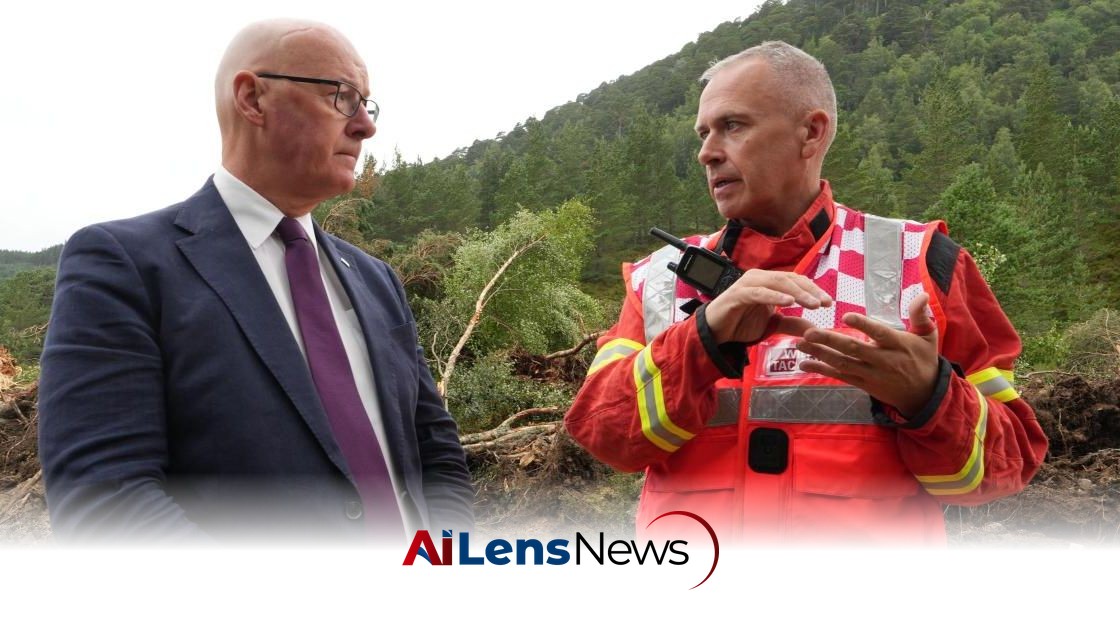


The First Minister has sought military support from the UK Government as the Cairngorms wildfire continues to threaten local communities.
London, United Kingdom Jul 26, 2026 ALN: The wildfires currently raging in the Cairngorms National Park have become a significant crisis, prompting urgent responses from government officials and emergency services. The situation has escalated to the point where the First Minister of Scotland has formally requested military aid from the UK Government to assist in combating the blaze. This request underscores the severity of the incident, which has already led to the evacuation of residents from the highland village of Nethy Bridge and surrounding areas.
The Cairngorms National Park, known for its stunning landscapes and diverse ecosystems, has been grappling with this wildfire for over ten days. Over 500 firefighters are actively engaged in efforts to control the fire, which has posed a considerable threat to both human safety and the local environment. The declaration of a major incident reflects the scale of the emergency and the challenges faced by firefighting teams on the ground.
As the situation unfolds, residents in Nethy Bridge have expressed their anger and frustration regarding the evacuation orders. Many feel a mix of anxiety and helplessness as they are forced to leave their homes, often with little time to gather their belongings. The emotional toll of such evacuations cannot be understated, as families are uprooted and local communities are disrupted. The psychological impact of living under the threat of a wildfire can lead to long-term stress and anxiety, especially for vulnerable populations such as the elderly and those with pre-existing health conditions.
In his recent updates, First Minister John Swinney acknowledged the ongoing challenges posed by the wildfire while also noting some positive developments in firefighting efforts. He described the situation as a "major and serious" incident, but indicated that there was an "improved picture" as of Saturday afternoon. This nuanced assessment reflects the dynamic nature of wildfire management, where conditions can shift rapidly due to factors such as wind patterns and humidity levels.
In his remarks, Swinney emphasized the importance of collaboration among various emergency services, including the Scottish Fire and Rescue Service (SFRS), Police Scotland, and local councils. The coordinated response is vital in managing both the immediate threats posed by the fire and the broader implications for public safety and infrastructure. The involvement of multiple agencies highlights the complexity of emergency management in the context of natural disasters, where effective communication and resource sharing are essential.
Swinney's request for military assistance specifically targets aerial support, which can be crucial in firefighting efforts, especially in remote and rugged terrain like that found in the Cairngorms. Aerial firefighting resources, such as helicopters and water bombers, can provide rapid response capabilities to suppress flames and protect vulnerable areas. However, as of the latest updates, the military has not yet deployed any aerial firefighting operations in the region, leaving local firefighters to rely on existing resources and strategies.
In addition to the immediate firefighting efforts, the Scottish Government is also prioritizing preventative measures to stop the fire's spread. This includes monitoring weather conditions, assessing fire behavior, and implementing strategies to protect critical infrastructure and natural resources. The long-term implications of the wildfire extend beyond the immediate crisis, as ecosystems can take years to recover from such events. The Cairngorms, home to diverse wildlife and unique habitats, may experience significant ecological changes as a result of the fire.
As the situation develops, the Scottish Government continues to hold meetings through the Scottish Government’s Resilience Room (SGORR), where key officials gather to assess the situation and coordinate responses. The involvement of various stakeholders, including government ministers and representatives from local agencies, reflects a comprehensive approach to crisis management. These meetings are crucial for ensuring that all parties are informed and that resources are allocated effectively to meet the challenges posed by the wildfire.
Residents defying evacuation orders have raised concerns about the response to the wildfire, critiquing the speed and effectiveness of the emergency measures in place. Such sentiments are common in disaster scenarios, where individuals may feel a sense of urgency to protect their property and livelihoods. However, emergency services consistently emphasize the importance of following evacuation orders for safety reasons. The risks associated with remaining in affected areas during a wildfire can be life-threatening, and emergency responders need to focus their efforts on controlling the blaze without the added complication of civilian presence in dangerous zones.
As Swinney reiterated in his statements, the cooperation of the public is vital in ensuring the safety of both residents and emergency personnel. He urged individuals to adhere to the advice of emergency services and to avoid affected areas, which not only jeopardizes their safety but also hampers firefighting efforts. The cooperation of the community can significantly impact the efficiency of emergency responses and the overall outcome of the crisis.
The ongoing wildfire in the Cairngorms serves as a stark reminder of the increasing frequency and intensity of wildfires globally, often attributed to climate change and environmental factors. As regions grapple with the consequences of changing weather patterns, the need for robust emergency preparedness and response strategies becomes ever more critical. The implications of such natural disasters extend beyond immediate firefighting efforts, as communities must also consider long-term recovery and resilience planning.
In conclusion, the request for military aid from the UK Government reflects the gravity of the wildfire situation in the Cairngorms National Park. With ongoing efforts by firefighters and emergency services, the situation remains fluid, and the cooperation of residents is essential in navigating this crisis. As authorities work to mitigate the impact of the blaze, the broader implications for the environment, community safety, and future preparedness will continue to be a focal point of discussion in the weeks and months to come.
To learn more about the latest developments in Health & Public Safety, stay updated with our exclusive reports and analyses on AiLensNews.

