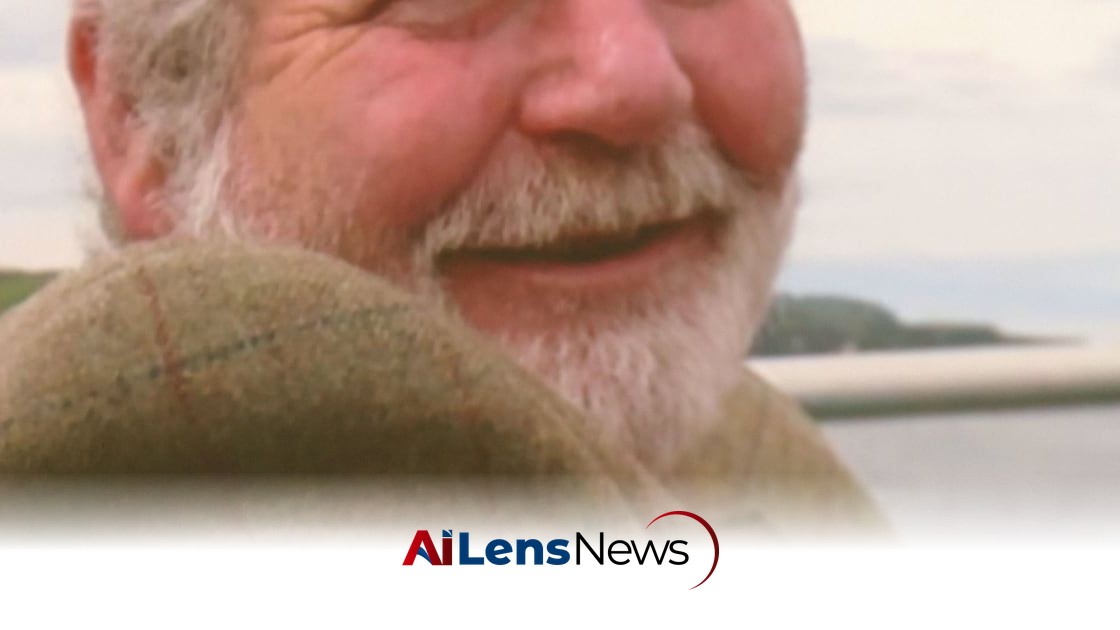


The family of Ronald O’Neill, found dead in unexplained circumstances, alleges police mishandling and seeks a thorough investigation into his death.
London, United Kingdom Jul 27, 2026 ALN: The family of a Co Antrim man who died in unexplained circumstances say they were ‘laughed at’ by a PSNI officer when they asked for phone records to be investigated.
The body of Ronald O’Neill was found at his home in the Town Parks estate in Antrim in June 2024.
In the weeks before his death, the 63-year-old had withdrawn and become isolated from his family.
The former nursing assistant’s children, Gareth O’Neill (40) and Desnà O’Neill (38), have spent the past two years trying to piece together events leading up to their much-loved father’s untimely death.
They believe the PSNI failed to properly investigate the circumstances and have highlighted what they believe are significant shortcomings in the police probe.
Desnà, a personal trainer, was even forced to take six months off work as she carried out her own investigation into her father’s death.
The siblings suspect their father died due to “a violent act” and was beaten before his death, while the PSNI insist he took a fall.
Mr O’Neill’s family say officers failed to test blood and other samples recovered at the scene, and highlight a failure to “triage” a mobile phone used by their father.
Naked from the waist down and covered in bruises, which police say were historical, Mr O’Neill was later found to have suffered near identical broken ribs on both sides of his body. An explanation for how he received the injuries has never been provided.
The condition of his flat when his body was discovered, which included broken mirrors, doors and smashed walls, have fuelled concerns that Mr O’Neill may have been in contact with people who exploited him in the weeks before his death.
His family fear Mr O’Neill may have been a victim of ‘cuckooing’ in the weeks before his death. This involves a vulnerable victim’s home being taken over by others, often drug dealers, to use as a base.
They say officers did not seize CCTV footage and have not followed up on a list of names provided to police of people who may hold important information.
Mr O’Neill’s remains were found in his flat by Desnà and her mother Jacqui O’Neill after he failed to make contact with worried relatives over a period of several weeks.
His children have now broken their silence in a bid to have their father’s death fully investigated and have flagged what they believe are a series of failings by the PSNI.
These, they say, include a failure to put a cordon in place after his body was found.
Desnà reveals that although she provided a statement to the coroner, she has never given one to police about finding her father’s remains.
Her brother Gareth, who works as a physiotherapist in England, also confirms he was allowed entry to his father’s flat after his body was found.
He said “no samples or blood, faeces or urine” were taken from the scene.
His sister confirms “there were no items retrieved for forensics”, adding that “crucial evidence was lost at the scene because the appropriate procedures weren’t followed”.
When she later asked police if they had taken samples of blood found in the flat, she says an officer responded that it was “assumed” it belonged to her father.
Desnà believes the response exposed a lack of “professional curiosity as to whether it might be somebody else’s”.
“That was one of the things that really triggered us, there was absolutely no curiosity, and no matter what evidence we brought forward to them to say, look this makes no sense, please look into it, we just kept getting fobbed off and told to go,” she said.
The grieving daughter said that when concerns were raised directly at Antrim PSNI station “we were ushered away…and told to put it into an email”.
The siblings reveal how their initial suspicions were raised when they returned to Mr O’Neill’s flat.
“We thought we were cleaning what was just a barbaric scene to protect our dad’s dignity, and it was during that…the penny started to drop, and we were like, ‘oh hang on a wee second’, and things sort of started not to look right,” said Desnà.
“Because…the amount of destruction that was on the property, how we found our dad, the position of where we found him, the state in which we found him, the extent of the bruising on his body, the other people’s clothes that were present, it was completely unaligned to his standard of living, standard of care.”
After his death, no money was found in the flat and Mr O’Neill’s medication had disappeared.
“All wallets had been emptied, cupboards had been emptied of medication...it was just complete destruction,” Desnà said.
“And whilst we were standing in it, we looked around and thought, ‘oh my God, how did we not notice this’?”
At an inquest last year, a coroner found Mr O’Neill had died from alcoholic ketoacidosis, a condition caused by a combination of chronic heavy alcohol use and sudden starvation.
Although Mr O’Neill had previous issues with alcohol, he was found not to have any traces of drink in his system after his death.
His family also asked for their father to be tested for drugs, but this never took place.
Gareth, who has a medical background, suggests “other factors that could have contributed” to ketoacidosis have not been considered.
While several issues of concern to the family, including how Mr O’Neill’s ribs were broken, were not dealt with by the inquest, his family say a corner recommended the PSNI open an investigation into the circumstances surrounding his death.
“The PSNI have never been back in touch with us, ever,” Desnà said.
“So what we want is the investigation reopened, we want it looked at again through fresh eyes, to give us the answers that aren’t there at the minute, that make no sense.”
A promised meeting with senior PSNI officers has also never taken place, the family say.
At the time of death, Mr O’Neill was awaiting spinal surgery and had mobility issues.
Concerns have been raised about the injuries to his ribs from both a medical and non-medical perspective.
While police believe these injuries resulted from a fall, unusually there were no marks to Mr O’Neill’s head or face.
“And for someone who requires assistance to walk and to stand, for him not to tell anyone, not to tell the people closest to him, who live around the corner...to not tell anyone that he has got two sets of broken ribs and unable to walk is very unusual,” his daughter said.
Desnà said that in the weeks before his death her father “just completely withdrew from seeing me and the kids”.
“He just became so isolated, inexplicably, and his behaviours completely changed,” she said.
His family say there is evidence other people were present at Mr O’Neill’s home before his death.
Gareth points out that in April 2024, just two months before his father died, Mr O’Neill’s phone was used to contact an out-of-hours doctor’s service “seeking urgent medical assistance”.
While details of the call cannot be shared with the O’Neill family due to data protection laws, the siblings are confident it was not made by their father, adding weight to the belief someone else was in his property.
They believe the call may have been made the night their father suffered the first injury to his ribs and it was from this period on that he became withdrawn.
The last contact family members had with Mr O’Neill was June 13, 2024.
On that date his credit card was used to pay an overdue phone bill.
Mr O’Neill had earlier been cut off for a failure to pay his bill, which his family say was highly unusual for him.
A mobile phone company has confirmed the call to pay the outstanding bill was not made from Mr O’Neill’s phone.
The company has also said information about who made the call could be obtained from them by the PSNI, which it is believed has not sought to retrieve the data.
Desnà said she was ‘laughed at’ when she raised the matter directly with a PSNI officer.
“Again, they wouldn’t do that, and the (officer) actually laughed…when I raised this to him in person, and I said this is relevant, and he laughed and said I don’t know what relevance a phone bill has,” she explained.
“And I said again, there’s a third party present in this home that has ended up in this state, we need to know who that is, so that’s another call being made from dad’s phone that’s not him.”
It has also emerged that on June 13, Mr O’Neill’s phone was used to contact the Ulster Bank and a discontinued number was dialled.
At the time Mr O’Neill had an account with a different bank.
“So, to us it appeared that a third party was trying to transfer money or get access to his bank in some way, because dad would have known that wasn’t his bank,” Desnà said.
The O’Neill family have been told June 13 was the last day significant activity was recorded on his phone.
The family say various apps “and things that weren’t in keeping with dad” were found on his phone by them.
“There was a lot of VPN stuff, there was a lot of encryption type apps that were there, “Desnà said.
“That’s what we were crying out for when I gave them the phone and I asked them to triage it, they didn’t even ask for it, we begged them to take it, and they still haven’t triaged it to this day,” Desnà said.
The daughter explained how she took time off work to investigate her father’s death.
“Literally six months off work, and I sat trying to figure all this out, through the bank statements, through everything, to do the investigations that they (police) weren’t doing, and then everything that we were presenting to them, we just kept getting it thrown back in our face, with nobody looking at it.”
The family also asked police to retrieve CCTV footage from fast food outlets on the outskirts of Antrim after they found receipts in Mr O’Neill’s house.
Due to his physical condition, their father was unable to make the journey on foot and did not drive.
“We’ve been left as a family to do these investigations ourselves, my father has no justice,” she said.
“We’ve been left heartbroken and devastated, with absolutely no support, and I get that the PSNI keep saying ‘we’re understaffed, we’re under-resourced’, you know, ‘we don’t have this and we don’t have that’, but what do me and Gareth have?
“An iPhone, and the curiosity that they didn’t, that’s it.”
Desnà said she “no faith at all in the PSNI” and believes her family was shown no sympathy.
“They weren’t looking at anything objectively,” she said.
“They certainly weren’t looking at us with any empathy, or any want to figure out what was wrong.”
She believes the police approach was coloured by her father’s previous issues with alcohol.
Desnà said she cannot “put into words” how her father’s death has impacted her and her brother.
“I don’t even feel that me and Gareth have had a chance to grieve properly,” she said.
“We were faced with that from day one and…the next six months of my life, I went into investigative mode, and I felt such a responsibility to find out the things that we needed to know before they disappeared to get dad justice,” she said.
“Now we’re two years down the line and I still feel…there’s days where I haven’t got to grieve properly as a daughter who’s lost her dad.
“Because the PSNI didn’t step in I had to play a different role than just being Desnà who’s lost her father and Gareth who’s lost his dad.”
She remains haunted by what she saw the day she found her father’s body.
“I will never not see my dad lying there,” she said.
“That will live with me for the rest of my life.
“And I can close my eyes, and I am right back there.
“I’m at his door, I’m trying to get in, I’m reliving that moment every day.”
To learn more about the latest developments in Crime & Law, stay updated with our exclusive reports and analyses on AiLensNews.

