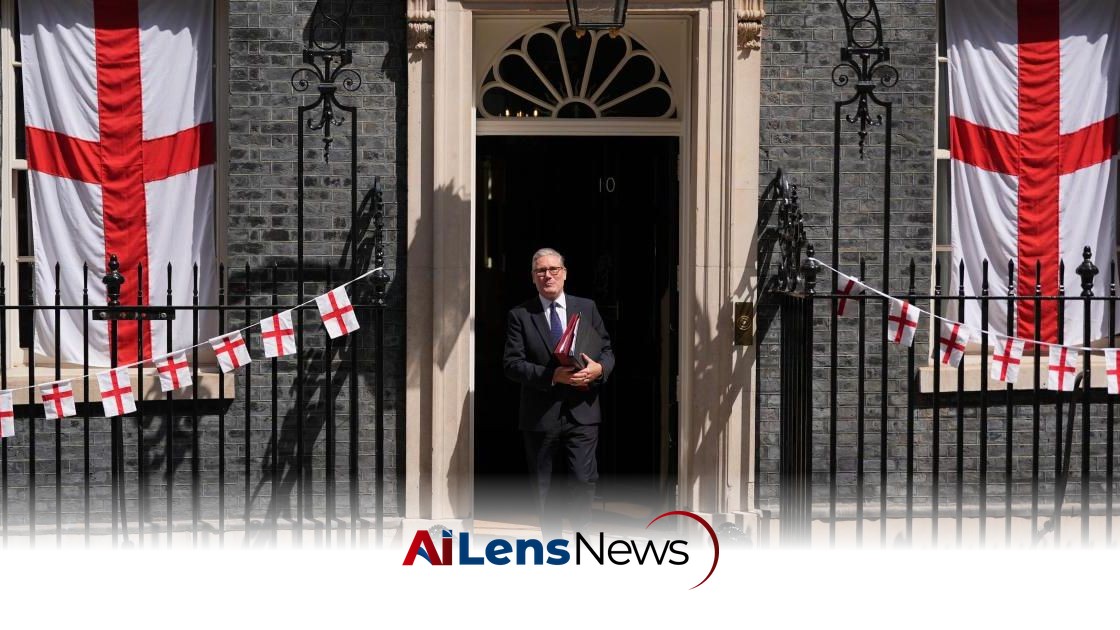


As England prepares for its World Cup semi-final against Argentina, Downing Street is festooned with St George's Crosses, sparking discussions about national representation.
London, United Kingdom Jul 16, 2026 ALN: Downing Street has been decked out in countless England flags ahead of the country's World Cup semi-final against Argentina.
In decor seemingly inspired by the interiors of the Bristol Bar, St George's Crosses have been flown from the windows and balconies in a less-than subtle display. This vibrant display of national pride reflects the enthusiasm that often accompanies major sporting events, particularly in football, where national identity and collective spirit are prominently showcased.
The showing could prompt Scotland fans to question why a similar scene wasn't put on for our historic return to the tournament in June ... but we all know the answer to that already. The contrasting reactions to England's and Scotland's participation in the World Cup highlight the complex relationship between the nations of the United Kingdom, particularly in the realm of sports. The historical context of football in the UK is deeply intertwined with national pride, regional identities, and historical grievances, making any sporting event a potential flashpoint for broader discussions.
Prime Minister Sir Keir Starmer departs 10 Downing Street, London, to attend his final scheduled Prime Minister's Questions at the Houses of Parliament (Image: Yui Mok)
Downing Street is not, and never has been, representative of the UK nations. It is representative of England. This distinction is essential in understanding the cultural and political dynamics at play within the UK. While the Union Jack symbolizes the unity of the four nations—England, Scotland, Wales, and Northern Ireland—Downing Street has often been perceived as an emblem of nationalism, particularly in times of sporting triumph. The prevalence of flags in this context raises questions about the inclusivity of national celebrations and whether they adequately represent the diverse identities within the UK.
Even incoming prime minister Andy Burnham's "Number 10 North" gives that away, despite his apparent desire to chart a different course than previous leaders. Burnham's initiative reflects a growing sentiment among some political leaders and citizens that the north of England deserves greater recognition and representation in national affairs, especially in contrast to the south, which has historically dominated political and economic power. This geographical divide adds another layer to the current narrative surrounding the World Cup, as it underscores the regional disparities that exist within England itself.
This display of flags is not merely a decoration; it is a manifestation of national pride that resonates deeply with many fans. The semi-final match against Argentina is steeped in historical rivalry, particularly due to the infamous 1986 World Cup quarter-final, where Diego Maradona's controversial "Hand of God" goal and his stunning second goal became iconic moments in football history. This rivalry adds an extra layer of emotion to the upcoming match, fueling excitement and anticipation among fans. The memory of that match is still vivid in the minds of many, and it serves as a reminder of the passionate and often contentious relationship between the two nations.
It comes after some folks have been treating tonight's match in a decisively not-normal way. The fervor surrounding the game has led to heightened emotions and discussions that transcend mere sporting rivalry. The match has become a focal point for various social and political commentaries, as evidenced by the discourse surrounding the Falklands War. Commentators have been bringing up the Falklands War and suggesting this game could actually have an impact on the islands' ownership. Such assertions, while exaggerated, illustrate how deeply intertwined football is with national identity and historical grievances, particularly in the context of England and Argentina. This intersection of sport and politics is not unique to this match but is a recurring theme in international football, where the stakes often feel higher than just a game.
PMQs was filled with nonsense questions about football. And before that, the Scottish Secretary saw fit to instruct us all to get behind England. This directive from political figures can be seen as an attempt to unify support for the national team, but it also raises questions about regional identities and loyalties within the UK. While some may rally behind the England team, others, particularly in Scotland, may feel a sense of detachment or even resentment towards being asked to support a team that they do not identify with. This sentiment reflects a broader conversation about national identity and belonging, particularly in a multi-national context like the UK.
Forget all the chatter about the Scots "politicising" the Beautiful Game. All the politicising we've seen today have been coming from south of the Border. The politicization of football is not a new phenomenon; it has been a recurring theme throughout history, especially during major tournaments. Football often serves as a platform for expressing national pride, social issues, and even political sentiments, making it a powerful tool for both unity and division. The way football is perceived and celebrated can vary significantly across different regions, with some viewing it as a source of pride and others as a reminder of historical grievances.
As the match approaches, the atmosphere is charged with anticipation. Pubs and homes across England are set to be filled with fans donning their jerseys, ready to cheer on their team. The camaraderie and shared experience of watching a World Cup match can create a sense of belonging and community among supporters. However, this sense of unity can also be polarizing, as not everyone shares the same enthusiasm for the England team, particularly in regions such as Scotland, where football loyalties are often tied to national identity. This dichotomy highlights the complexities of national pride and how it can manifest differently across the UK.
The implications of this semi-final extend beyond the pitch. It serves as a reminder of the historical and cultural complexities that exist within the UK. The outcome of the match could have ramifications not only for the teams involved but also for the broader national conversation about identity, representation, and unity. In a time when discussions about nationalism and regional identities are increasingly relevant, the World Cup serves as a microcosm of these larger societal themes. The way the match is framed in media and public discourse can influence perceptions of national identity and unity, further complicating the narrative surrounding the tournament.
As the game unfolds, all eyes will be on the players, but the spectators' reactions will also be telling. The fervor with which fans support their teams can offer insights into the current state of national sentiment and identity. Whether England triumphs or faces defeat, the discussions that arise in the aftermath will likely echo the sentiments expressed leading up to the match, further fueling the ongoing dialogue about what it means to be part of the United Kingdom in the context of sport. The semi-final is not just a sporting event; it is a reflection of the multifaceted nature of national identity, regional pride, and the complex relationships that exist within the UK.
To learn more about the latest developments in Politics, stay updated with our exclusive reports and analyses on AiLensNews.

