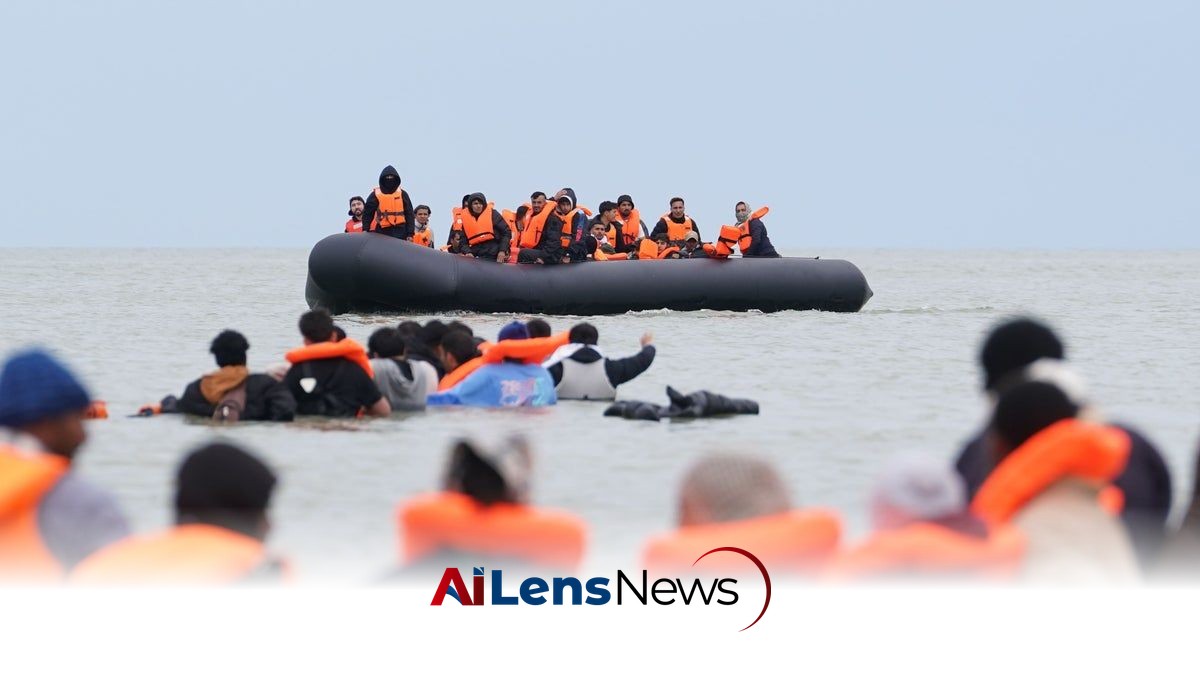


Small boat crossings to the UK have decreased significantly, with experts uncertain about the reasons behind this trend. The decline raises questions about migration policies and their impacts.
London, United Kingdom Jul 18, 2026 ALN: Small boat crossings to the UK have almost halved while the irregular crossings to Europe are down almost 40 percent so far this year, analysis reveals. Home Office data indicates that 12,214 people have arrived in the UK on small boats by July 9 this year, marking a 42 percent drop from 2025, when 21,117 individuals made the perilous journey across the Channel in the same timeframe.
While migration experts agree that numbers are falling, the reasons behind this decline remain unclear. EU border officials have suggested that partnerships in North Africa may be curbing the number of onward journeys, but experts caution that these agreements often come with severe humanitarian costs. Nearly 1,300 lives have been lost in the Mediterranean this year, according to the International Organisation for Migration (IOM). This tragic statistic underscores the ongoing dangers faced by migrants attempting to cross these treacherous waters, often in overcrowded and unseaworthy vessels. The Mediterranean has long been considered one of the deadliest migration routes in the world, and the loss of life continues to raise alarms among humanitarian organizations and advocates for migrant rights.
Current Trends in Small Boat Arrivals
As of the end of June this year, 11,884 migrants had arrived on dinghies, which is down 41 percent from the same period in 2025—a notably high year for crossings, second only to the record-breaking 2022. Labour has attempted to reduce these numbers by increasing financial support to French police to prevent migrants from departing their shores and by sending small boat migrants back to France in exchange for asylum seekers. However, the effectiveness of these measures is still under scrutiny, as many experts argue that financial incentives alone may not address the root causes of migration.
However, the “one in, one out” scheme, initiated in August 2025, has only resulted in a small number of removals, with only 1,087 people sent back to France by the end of June. Reports indicate that the French government may terminate the program in October to focus on a broader European strategy for tackling irregular migration. This potential shift could have significant implications for the future of migration policy in Europe, as countries grapple with the need for cooperative solutions to manage migration flows while also addressing humanitarian concerns.
Factors Influencing the Decline
Dr. Mihnea Cuibus, a senior researcher at the University of Oxford’s Migration Observatory, noted that pinpointing a single policy change or factor contributing to the decline in crossings is challenging. He stated, “Arrivals are down throughout Europe. They were also significantly down last year, which is significant because you would expect a bit of a lag as people travel through Europe to the UK.” This observation suggests that the dynamics of migration are complex and influenced by multiple factors, including political, social, and economic conditions in both origin and destination countries.
In 2026, 187 boats have arrived in the UK, compared to 362 boats during the same period last year. The size of dinghies has increased as smugglers adapt to heightened police activity on French beaches, with larger boats now operating offshore to pick up migrants. A record 128 migrants arrived in one dinghy this week, surpassing the previous record of 125 set in September 2025. This adaptation by smugglers indicates a persistent demand for irregular migration despite increased enforcement efforts, highlighting the resilience and determination of those seeking a better life.
Origins of Small Boat Migrants
Eritrea was the top country of origin for arrivals last year, with many fleeing compulsory national service and oppressive conditions. The number of Afghan migrants has decreased significantly, falling to second place after a peak in 2022 following the Taliban takeover. In the first three months of 2026, Eritrean numbers remained high, with 743 citizens making the crossing, compared to 735 Sudanese and 598 Afghans. This shift in demographics reflects broader geopolitical events and the varying conditions that drive people to seek asylum in Europe.
Judith Sunderland from Human Rights Watch (HRW) highlighted the ongoing humanitarian crisis in Sudan, which has led to a massive outflow of people. “We’ve seen an increase in Sudanese on boats to Europe, and there could be a significant rise if various factors align,” she stated. The situation in Sudan remains precarious, with ongoing conflict and instability contributing to the desperation of many individuals and families who feel they have no choice but to embark on dangerous journeys in search of safety and stability.
Irregular Crossings into Europe
Irregular crossings into Europe have also decreased by nearly 40 percent in the first five months of 2026 compared to the previous year, with nearly 39,000 crossings recorded. This decline is attributed to increased cooperation between the EU and African nations to enhance police enforcement at departure points. The Western African route saw the steepest decline, with detections down by 71 percent year-on-year. Such statistics may suggest that collaborative efforts are having an impact, but they also raise questions about the humanitarian implications of stricter border controls and the potential for increased suffering among migrants.
Human rights organizations have raised concerns about the EU’s approach to migration, arguing that it carries significant risks and suffering for those attempting to cross. Sunderland emphasized that focusing solely on numbers obscures the humanitarian crises faced by migrants. The reduction in crossings does not inherently signify an improvement in conditions; rather, it may reflect the increased dangers and barriers that migrants face, as well as the potential for more clandestine and perilous journeys.
Conclusion
As the situation continues to evolve, experts stress the need for a comprehensive understanding of the factors influencing migration patterns. The decline in small boat arrivals may reflect changes in policies, but it also highlights the ongoing challenges faced by migrants and the complexities of international migration dynamics. Policymakers must balance the need for border security with the imperative to protect human rights and provide humanitarian assistance to those in need. As Europe grapples with these issues, the stories of migrants and the realities of their journeys must not be overlooked, as they are central to the ongoing discourse surrounding migration and asylum in the region.
To learn more about the latest developments in Local & Regional, stay updated with our exclusive reports and analyses on AiLensNews.

