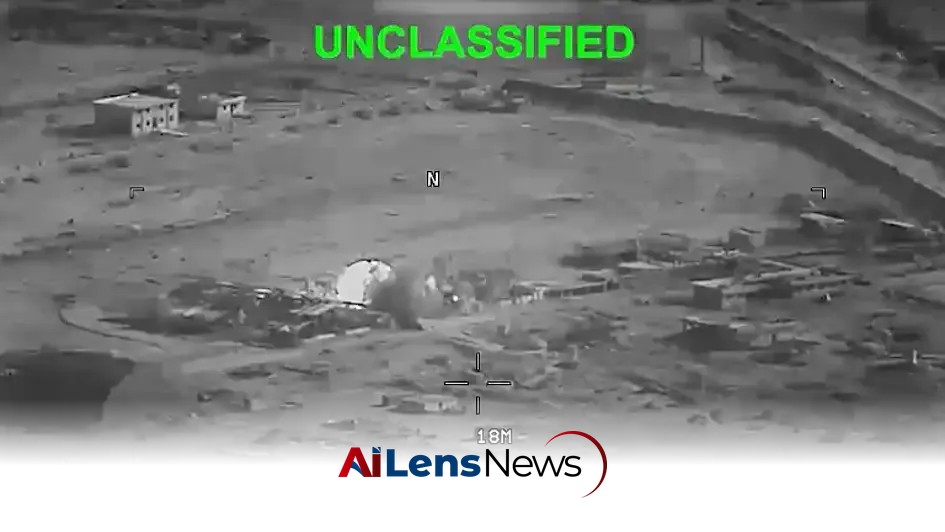


The US military has intensified its operations against Iran, marking the 13th consecutive night of strikes. Iran's Foreign Minister warns of the dangers of asset confiscation.
Abu Dhabi, United Arab Emirates Jul 24, 2026 ALN: The US military has completed its 13th consecutive night of strikes against Iranian targets, escalating tensions in the region. This series of operations comes amid ongoing conflicts and heightened military presence, particularly in areas where US interests and personnel are at risk. The strikes are part of a broader strategy by the United States to counter Iranian influence in the Middle East, which has been a significant concern for US policymakers for years.
The backdrop of these military actions is rooted in a complex web of historical grievances, geopolitical rivalries, and recent provocations. The United States and Iran have been at odds since the 1979 Iranian Revolution, which led to the overthrow of the US-backed Shah and the establishment of the Islamic Republic of Iran. Since then, the relationship has been characterized by mutual distrust and hostility, punctuated by a series of military confrontations, proxy wars, and diplomatic standoffs. This historical context is crucial in understanding the current dynamics, as the two nations have repeatedly clashed over issues ranging from nuclear ambitions to regional influence.
In recent years, tensions have escalated significantly due to Iran's nuclear program and its support for militant groups across the region, including Hezbollah in Lebanon and various factions in Iraq and Syria. The US has accused Iran of destabilizing the region and has imposed a series of sanctions aimed at curtailing its nuclear ambitions and reducing its influence. The situation has been further complicated by the US withdrawal from the Joint Comprehensive Plan of Action (JCPOA) in 2018, which was intended to limit Iran's nuclear capabilities in exchange for sanctions relief. The withdrawal was met with widespread criticism, as many believed it would lead to increased instability and a potential arms race in the region.
In a recent statement, Iran's Foreign Minister, Abbas Araghchi, commented on the implications of asset confiscation, stating, "Seizing another nation's assets to pay for unrelated future claims is an incendiary precedent. Those who celebrate or profit from such funds should remember: once governments normalize confiscation, no one's assets are safe. Ensuing chaos will not be pretty or peaceful." This statement reflects Iran's deep concerns about the US's tactics, particularly regarding the seizure of Iranian assets abroad, which Iran views as a violation of international law and an attack on its sovereignty. Such actions have exacerbated the already fraught relationship, leading to calls within Iran for a more aggressive stance against US interests.
Araghchi's remarks underscore the potential repercussions of the US's actions, as they could set a dangerous precedent for international relations and asset security. The idea that governments can unilaterally seize the assets of other nations raises alarms about the stability of international financial systems and the rule of law. If such practices become normalized, it could lead to retaliatory actions by other nations, further destabilizing global markets and international relations. This situation is particularly concerning for countries that rely on foreign investments and international trade, as it could lead to a chilling effect on economic cooperation.
The strikes against Iranian targets have not only escalated military tensions but have also sparked fears of a broader conflict in the region. Both nations remain on high alert, with military operations continuing to unfold across the Middle East. The US has increased its military presence in the Persian Gulf, deploying additional naval assets and air support to deter Iranian aggression and protect its interests. In response, Iran has vowed to retaliate against any attacks on its sovereignty, raising the specter of direct military confrontation. This cycle of action and reaction has created a volatile environment where miscalculations could easily lead to wider hostilities.
The international community watches closely as the conflict escalates, raising concerns about stability and peace in the Middle East. Countries in the region, particularly those with close ties to the US or Iran, are feeling the pressure as they navigate this precarious situation. Nations such as Saudi Arabia and Israel, which have historically viewed Iran as a primary threat, may see the US strikes as a necessary step to curb Iranian ambitions. Conversely, countries that maintain more neutral or positive relations with Iran, such as Iraq and Oman, may call for de-escalation and dialogue. These differing perspectives highlight the complexities of regional alliances and the potential for diplomatic solutions to be undermined by military actions.
Moreover, the ongoing conflict has significant implications for global energy markets. The Middle East is a critical region for oil production, and any escalation in hostilities could disrupt supply chains, leading to increased oil prices and economic uncertainty worldwide. Analysts are closely monitoring the situation, as rising tensions could have far-reaching effects on global economies already grappling with the impacts of the COVID-19 pandemic and other geopolitical challenges. The interconnectedness of global markets means that disruptions in the Middle East can lead to spikes in energy prices, impacting everything from transportation costs to consumer prices in various countries.
As the situation continues to evolve, it is essential for diplomatic channels to remain open. The potential for miscalculation or unintended escalation is high, and the consequences of a broader conflict could be catastrophic, not only for the US and Iran but for the entire region and beyond. The international community, including organizations like the United Nations, may need to step in to facilitate dialogue and prevent further military escalation. Diplomatic efforts could focus on restoring the JCPOA or negotiating new terms that address both nuclear concerns and regional security issues.
In conclusion, the US military's ongoing strikes against Iranian targets represent a significant escalation in an already tense situation. The historical context, geopolitical implications, and potential for further conflict underscore the urgency for diplomatic efforts to resolve the underlying issues. As both nations remain on high alert, the world watches closely, hoping for a resolution that prioritizes peace and stability in the region. The stakes are high, and the need for a balanced approach that considers the security concerns of all parties involved is more critical than ever.
Stay tuned for further updates as this situation evolves.
To learn more about the latest developments in Crime & Law, stay updated with our exclusive reports and analyses on AiLensNews.

