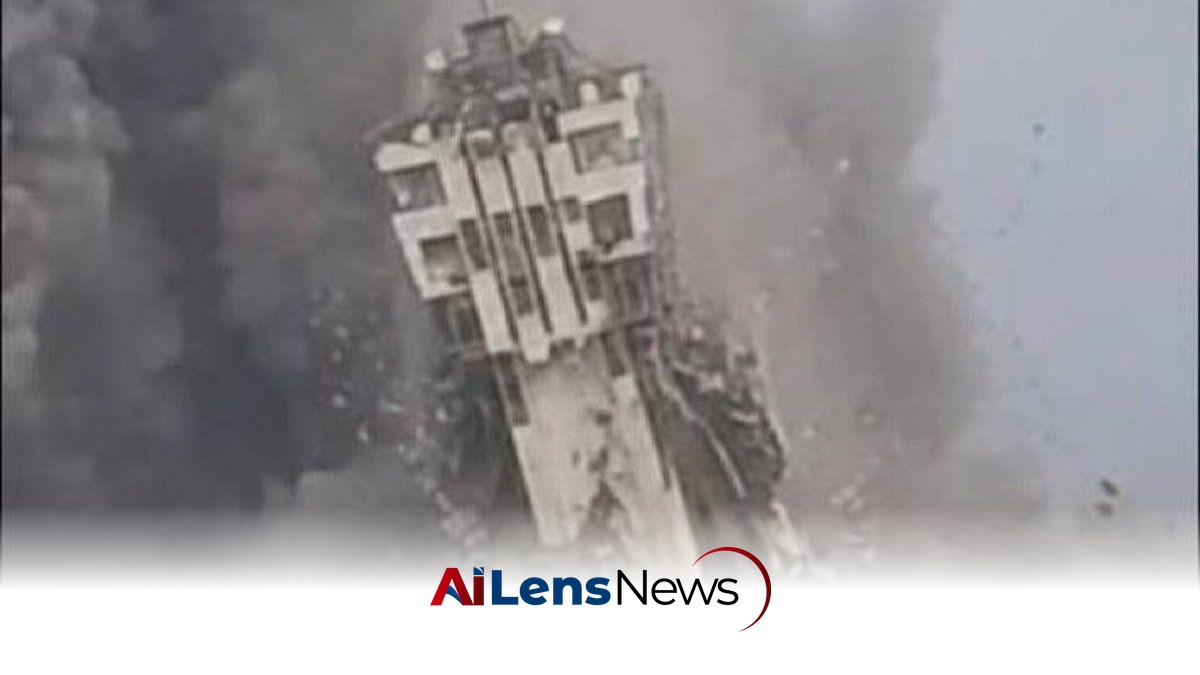


Recent US airstrikes have hit Iran's Chabahar port and key bridges, intensifying military tensions in the region and impacting vital trade routes.
Abu Dhabi, United Arab Emirates Jul 17, 2026 ALN: The recent escalation of military tensions between the United States and Iran has drawn significant attention, particularly following the US airstrikes targeting Iran's Chabahar port and various critical infrastructure, including bridges in Hormozgan province. These developments come amid a backdrop of long-standing geopolitical rivalries and ongoing conflicts in the region, highlighting the complexities of US-Iran relations.
Chabahar port, located on Iran's southeastern coast, has been a focal point for trade and logistics, particularly for landlocked Afghanistan. The port's strategic significance cannot be overstated; it serves as a vital conduit for goods entering and leaving Afghanistan, facilitating trade routes that bypass Pakistan. The US strikes have not only targeted the physical infrastructure of the port but also a tower used to monitor commercial traffic, which is reportedly associated with operations of the Iranian Revolutionary Guard Corps (IRGC). The IRGC has been involved in various military and paramilitary operations across the region, often acting independently of the Iranian government and contributing to the complexity of Iran's military and political landscape.
The airstrikes on Chabahar are part of a broader strategy by the United States to counter Iranian influence in the region. The US has previously conducted military operations against Iranian interests, particularly in response to actions perceived as threatening to American allies or interests. The targeting of Chabahar port is particularly significant given India’s investment and support for its development, which aims to enhance connectivity and trade opportunities, particularly for Afghanistan. This relationship illustrates the geopolitical chess game in the region, where multiple countries vie for influence, often leading to tensions and conflicts.
In addition to the operations at Chabahar, US airstrikes also targeted several bridges in Iran’s southern Hormozgan province, including key routes connected to Bandar Khamir, which is strategically located near the Strait of Hormuz. This waterway is one of the most critical maritime chokepoints in the world, through which a significant portion of global oil supplies is transported. The targeting of infrastructure such as bridges can severely disrupt not only military logistics but also civilian transportation and commerce, further escalating tensions within the region.
The specific bridges targeted included the Gariveh Bridge, which connects Bandar Abbas with Khmeir and Lar, as well as other significant routes. Reports indicate that the strikes also caused damage to a railway junction in Bandar Abbas and affected power lines in the surrounding areas, further compounding the humanitarian impact of the strikes. Local authorities have advised residents to avoid the affected areas to allow emergency teams to operate effectively, indicating the immediate repercussions of the military actions on civilian life.
The US Central Command (CENTCOM) has characterized these airstrikes as part of a sustained campaign against Iranian military capabilities. CENTCOM's assertion that this operation marks the sixth consecutive night of strikes underscores the intensity of the ongoing military engagement. The command reported that US forces utilized a combination of fighter jets, aerial drones, and naval assets to execute precision strikes on Iranian military targets, which included coastal surveillance sites, air defense systems, and military logistics infrastructure.
This military strategy aims to degrade Iran's ability to conduct operations in the region and to hold the Iranian government accountable for its actions, particularly those perceived as threats to commercial shipping and regional stability. The statement from CENTCOM, highlighting the presence of over 50,000 US service members across the Middle East, reflects the US commitment to maintaining a robust military posture in the region amid rising tensions.
The implications of these strikes are profound. They not only signal a potential escalation in military engagements but also raise questions about the broader strategic objectives of the United States in the region. The ongoing military actions could provoke further responses from Iran, potentially leading to a cycle of retaliation that could destabilize the region further.
Moreover, the strikes may impact diplomatic efforts aimed at resolving tensions between the US and Iran. The nuclear deal negotiations, which have been fraught with challenges, could be further complicated by military actions that heighten hostilities. Iran's response to these strikes will be closely monitored, as any retaliatory measures could escalate the situation further and draw in other regional actors.
Overall, the situation surrounding the US airstrikes on Chabahar port and bridges in Hormozgan province is emblematic of the broader geopolitical struggles in the Middle East. As the US continues to assert its military presence and capabilities in the region, the potential for conflict remains high, with significant implications for regional stability, international trade, and diplomatic relations. The coming days and weeks will be crucial in determining how Iran responds to these provocations and whether the cycle of military engagements can be curtailed in favor of diplomatic solutions.
The history of US-Iran relations is marred by decades of animosity, particularly following the 1979 Iranian Revolution, which saw the overthrow of the US-backed Shah and the establishment of a theocratic regime. The subsequent hostage crisis, where American diplomats were held captive for 444 days, set the tone for a fraught relationship characterized by mutual distrust and hostility. Over the years, various incidents, including the Iran-Iraq War, the US invasion of Iraq, and ongoing disputes over Iran's nuclear program, have further exacerbated tensions.
In recent years, the situation has been complicated by the US withdrawal from the Joint Comprehensive Plan of Action (JCPOA) in 2018, which had aimed to limit Iran's nuclear capabilities in exchange for sanctions relief. The reimposition of sanctions by the US has severely impacted Iran's economy, leading to increased domestic discontent and a more aggressive foreign policy stance by Tehran. The US, in turn, has ramped up its military presence in the region, citing the need to protect its allies and interests, particularly in light of Iran's alleged support for proxy groups across the Middle East.
The strategic importance of the Strait of Hormuz cannot be understated, as it is a vital artery for global oil transportation. Any disruption in this region can have far-reaching consequences for global energy markets and economic stability. The US airstrikes targeting infrastructure in Iran, particularly those affecting key transport routes, are likely to be viewed by Tehran as acts of aggression, prompting potential retaliatory actions that could further escalate tensions.
The involvement of regional powers, such as Saudi Arabia and Israel, in the ongoing conflict adds another layer of complexity. Both countries have expressed concerns regarding Iran's military ambitions and its influence in neighboring countries, including Iraq, Syria, and Lebanon. Their support for US actions, coupled with their own military capabilities, could lead to a broader regional conflict if tensions continue to escalate.
In summary, the US airstrikes on Chabahar port and bridges in Hormozgan province represent a significant development in the ongoing struggle for influence in the Middle East. The potential for escalation remains high, and the international community is watching closely as the situation unfolds. The coming weeks will be critical in determining whether diplomatic efforts can prevail over military confrontations, or if the region will be drawn further into conflict as both sides navigate their complex and often adversarial relationship.
To learn more about the latest developments in World News & International Affairs, stay updated with our exclusive reports and analyses on AiLensNews.

