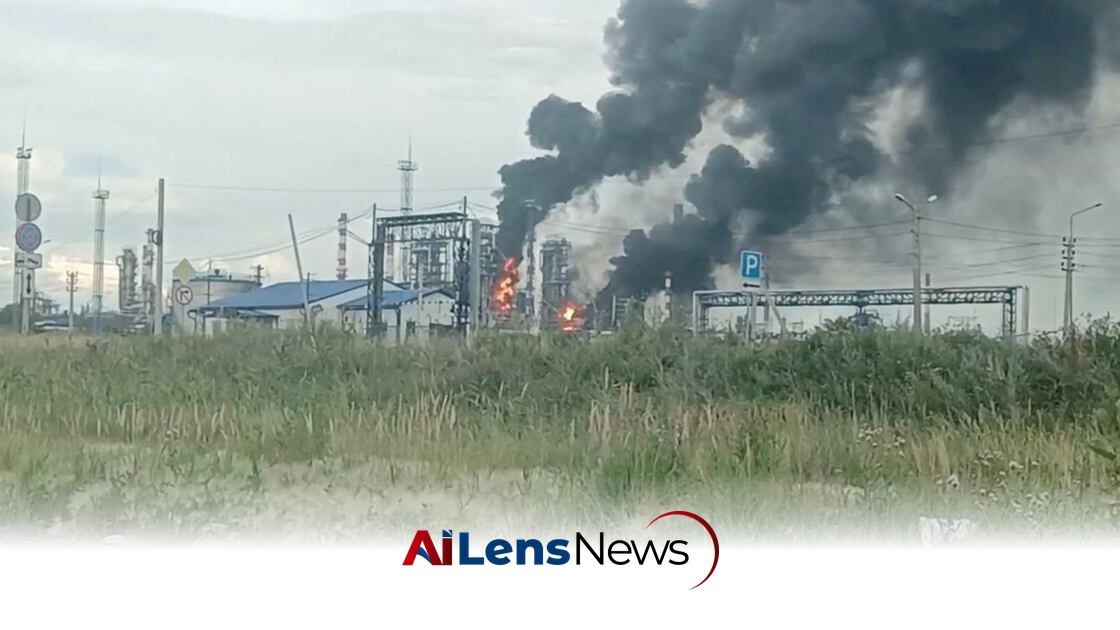


Ukrainian drones are intensifying attacks on Russian oil refineries, aiming to disrupt fuel supplies and weaken the Kremlin's military capabilities.
Abu Dhabi, United Arab Emirates Jul 13, 2026 ALN: The ongoing conflict between Ukraine and Russia has evolved significantly since its inception, with both sides adapting their strategies in response to the changing dynamics of warfare. The recent drone strikes targeting the oil refineries in Omsk, southern Siberia, mark a notable escalation in Ukraine's efforts to undermine Russia's war capabilities. The Omsk refinery is recognized as the largest in Russia, and its targeting signifies a strategic shift in Ukraine’s military operations aimed at crippling the Kremlin's ability to sustain its military endeavors.
Historically, the conflict has seen a variety of tactics employed by both Ukrainian forces and Russian military operations. Ukraine's recent drone strikes represent a calculated approach designed to disrupt the supply of fuel essential for military operations. The strikes on the Omsk facility are part of a broader strategy that encompasses three main prongs: targeting oil refineries, attacking vessels transporting fuel, and disrupting the transportation networks that facilitate the movement of fuel to the front lines.
In the earlier phases of this campaign, Ukrainian forces focused on striking fuel storage tanks and the central distillation columns of refineries. While these targets resulted in visually significant explosions, they were often easily replaceable and did not deliver a lasting impact on Russia's refining capabilities. Furthermore, Russia had maintained a surplus of refining capacity, which allowed them to quickly recover from such strikes. However, the current approach has shifted towards more sophisticated components of the refineries, such as hydrocrackers, reformers, and fluid catalytic crackers. These units are integral to producing high-quality fuels, including petrol, diesel, and jet fuel, and their destruction can significantly hinder Russia's fuel production capabilities.
The technological advancements in Ukraine's drone capabilities have also played a critical role in this new strategy. The introduction of longer-range drones equipped with artificial intelligence targeting systems and the new Flamingo cruise missile, which boasts a larger warhead, has enhanced Ukraine's ability to penetrate Russian air defenses. The tactical use of drones to saturate air defenses allows the Flamingo missiles to bypass some of the protective measures in place, enabling strikes on critical infrastructure far beyond the immediate conflict zones.
Geographically, the implications of these strikes are profound. With approximately 90 percent of Russia’s prewar refining capacity now within reach of Ukrainian forces, the potential for further disruption is significant. The remote refineries located in eastern Siberia and the Russian Far East are not well-positioned to supply the country's major urban centers, which could lead to increased fuel shortages in densely populated areas. The Omsk plant, which has previously suffered an explosion in 2024, is now facing the repercussions of this strategic targeting, marking the first clear drone strike on it, further complicating Russia's ability to maintain its fuel supply.
As of July 2023, the refining output in Russia has plummeted to over 40 percent below prewar levels, with petrol shortages reaching approximately 35 percent of demand. This situation has forced motorists to rely on mobile applications to locate gas stations that still have fuel available, highlighting the growing desperation among the Russian populace. The shortages are not limited to rural areas; they have spread to major urban centers, including Moscow and St. Petersburg, which are politically sensitive regions for the Kremlin. The implications of fuel shortages extend beyond civilian inconvenience; they threaten to impact military logistics significantly.
In addition to targeting refineries, Ukraine has also focused on disrupting maritime logistics through a campaign of strikes on vessels in the Sea of Azov. Reports indicate that Ukrainian forces have claimed responsibility for 48 hits on various vessels this month alone. Many of these ships are smaller vessels used for domestic fuel distribution or storage, which further complicates Russia's logistical capabilities as the harvest season approaches. The attack on larger tankers at the end of the previous week underscores the broad scope of Ukraine's maritime offensive.
The third prong of Ukraine's strategy is aimed at disrupting Russian logistics more broadly, with two primary objectives: cutting off supplies to the front lines in southeastern Ukraine and isolating Crimea. The latter has been under Russian occupation since 2014, and the ongoing conflict has further entrenched the strategic significance of this region. By targeting supply routes and logistical networks, Ukraine aims to diminish Russia's operational capabilities in these critical areas.
The implications of these strategies are far-reaching. As Ukraine continues to successfully target Russian oil infrastructure and maritime logistics, the Kremlin faces increasing challenges in maintaining its military operations. The combination of strikes on refineries, export terminals, and shipping routes not only hampers Russia's fuel supply but also raises questions about the sustainability of its military efforts in Ukraine.
Moreover, the international community is closely monitoring these developments. The ongoing conflict has already led to severe sanctions imposed on Russia, impacting its ability to source parts and materials necessary for military and industrial operations. The continued targeting of critical infrastructure may prompt further international responses and complicate diplomatic efforts aimed at resolving the conflict.
In summary, Ukraine's recent drone strikes on Russian oil refineries, particularly in Omsk, represent a significant escalation in its military strategy. By focusing on critical components of the oil production process, disrupting maritime logistics, and targeting supply routes, Ukraine aims to undermine Russia's military capabilities while simultaneously addressing the challenges posed by the ongoing conflict. The implications of these actions are profound, affecting not only the immediate operational capabilities of both sides but also the broader geopolitical landscape as the war continues to unfold.
To learn more about the latest developments in World News & International Affairs, stay updated with our exclusive reports and analyses on AiLensNews.

