

Prime Minister Modi defends his government's response to India's exam paper leak crisis, pledging tougher actions as protests escalate across the nation.
Abu Dhabi, United Arab Emirates Jul 21, 2026 ALN: New Delhi: Prime Minister Narendra Modi has defended his government’s handling of India’s examination paper leak crisis, stating that swift action had been taken against those responsible while urging tougher punishment for offenders as student protests and opposition attacks intensified. This situation has brought to the forefront long-standing concerns regarding the integrity of the examination system in India, which is crucial for millions of students aspiring for higher education and professional courses.
Speaking at a meeting of National Democratic Alliance (NDA) leaders on Tuesday, Modi emphasized that paper leaks were “not limited” to any one state or the central government but represented a national challenge that necessitates a united response across political parties. His comments reflect a recognition of the widespread nature of the issue, which has been a growing concern for students and parents alike.
According to Parliamentary Affairs Minister Kiren Rijiju, the prime minister noted that authorities acted immediately after reports of irregularities in the National Eligibility cum Entrance Test (NEET), leading to the arrest of 13 individuals. This swift response is part of the government's efforts to restore faith in the examination process, which has been marred by allegations of corruption and malpractice. “As soon as reports of the paper leaks emerged, the government took immediate action. Thirteen people were arrested and sent to jail,” Rijiju quoted Modi as saying.
Furthermore, Modi highlighted that conducting the NEET re-examination without delaying results had been the government’s priority to ensure that students' futures were not disrupted. The NEET examination is particularly significant as it serves as the gateway for students seeking admission to medical colleges across the country, and any disruption can have lasting impacts on their academic and professional trajectories.
Modi also made an appeal to the legal fraternity to assist in ensuring “the strictest possible punishment” for those involved in paper leak rackets, aiming to create a deterrent effect for future offenses. This call for stricter legal repercussions underscores the government's commitment to addressing the examination crisis head-on and restoring public trust in the system.
“The issue of paper leaks is not confined to any single state or the Central government but is a matter of concern for the entire nation,” Rijiju said, quoting the prime minister. “This is not a matter of partisan politics, but an issue concerning the future of the country and its youth.” This statement reflects a broader understanding that the integrity of educational assessments is critical for the development of the nation, as it directly affects the quality of professionals entering various fields.
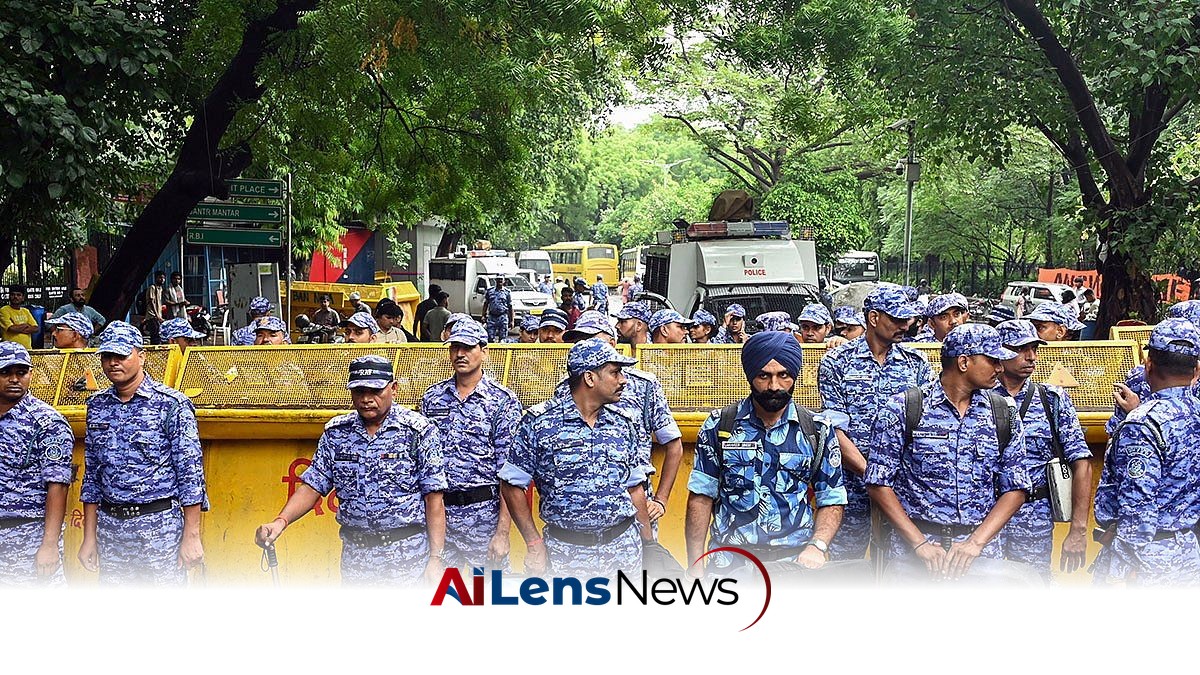
The remarks from the prime minister came a day after one of the largest student demonstrations in New Delhi in years, when thousands of protesters demanding the resignation of Education Minister Dharmendra Pradhan clashed with police near Parliament. The protests were organized by the “Cockroach Janta Party” (CJP), an online movement that has rapidly built a following on social media since its emergence in May. The group has effectively mobilized students and youth, who feel their futures are jeopardized by the ongoing examination crises.
Although the crowds were smaller on Tuesday, hundreds of demonstrators remained at Delhi’s Jantar Mantar protest site, vowing to continue their campaign. The determination of the protesters highlights the urgency with which students view the situation, as they demand accountability from the government. “We won’t stop. Pradhan has to be sacked,” CJP spokesperson Ashutosh Ranka declared, reinforcing the group's resolve.
The group’s founder, Abhijeet Dipke, urged supporters to remain determined and resilient in the face of adversity. “They want to break our spirit,” he told protesters. “Do not let them silence you.” This sentiment resonates with many young people in India who feel marginalized and unheard in the political discourse surrounding education and employment opportunities.
The protests escalated into violence, with police using tear gas and batons on Monday to halt protesters marching towards Parliament. Delhi Police reported that 178 people were injured in the violence, including 118 police personnel. This use of force has drawn criticism from various quarters, with authorities accusing the protesters of “unruly, aggressive and violent behaviour.” Protest organizers, on the other hand, alleged that police used excessive force against students demonstrating over the integrity of the country’s examination system.
“It’s a shameful day in the history of Indian democracy that people, honest students, who had come for a genuine issue were brutally beaten by the Delhi police,” Ranka told reporters. The violent clashes have sparked broader discussions about the right to protest and the treatment of students by law enforcement. One protester, Chandra Pratap Sishwi, expressed that the police action had only strengthened the resolve of the movement. “We have become even more fearless now,” he said. “When I saw people being beaten up by the police like that, my blood boiled.” This reaction illustrates the deep emotional and psychological impact that such confrontations have on young activists.
The protests have triggered a fresh confrontation in Parliament, with opposition parties demanding a debate on both the examination scandal and the police response. Congress leader Rahul Gandhi accused the government of suppressing students who were raising legitimate concerns about their future. “People are being beaten and thrashed; this is completely unacceptable,” Gandhi told reporters outside Parliament. His comments reflect a growing frustration among opposition leaders regarding the government's handling of the situation.
“Why is the Prime Minister silent? He should speak up. He should apologise and stop this nonsense,” Gandhi added, highlighting the expectation that leadership should respond to the grievances of the youth. In a post on social media after meeting Lok Sabha Speaker Om Birla, Gandhi called for Parliament to hold “a detailed discussion on the brutality unleashed on students yesterday and on the government’s complete lack of accountability for the examination crisis.” This call for accountability is indicative of the larger political implications of the crisis, as it has become a rallying point for opposition parties seeking to challenge the ruling government.
Repeated disruptions over the paper leak controversy and other issues have already affected proceedings during the ongoing Monsoon Session, showcasing the political ramifications of the examination crisis. The ongoing protests and the government's response will likely continue to shape the political landscape in the coming months.
The protests follow a series of examination controversies that have shaken public confidence in India’s testing system. More than 2.2 million aspiring medical students were forced to sit for a fresh NEET examination under tight security after the original test was scrapped due to a question paper leak. This incident has raised serious questions about the processes in place to ensure the integrity of examinations that determine the futures of millions of students. The controversy followed another dispute over the online marking system used in examinations taken by nearly two million high school students, further compounding the public's distrust.
Addressing NDA leaders, Modi also highlighted the achievements of India’s youth, including the recent launch of the Vikram-1 rocket by Skyroot Aerospace. This mention of advancements in technology and space exploration serves to remind the populace of the potential and capabilities of the younger generation, despite the challenges they currently face. Modi stressed that the government's focus should remain on creating opportunities for young people, indicating a commitment to fostering an environment conducive to growth and innovation.
Rijiju stated that the prime minister had called for a “foolproof system” to prevent future examination irregularities while assuring students that safeguarding the integrity of competitive examinations remained a priority. The implications of these statements are significant, as they suggest that the government recognizes the need for systemic reforms to restore confidence among students and their families. Failure to adequately address these issues may lead to further unrest and dissatisfaction among the youth, who are increasingly vocal about their rights and aspirations.
To learn more about the latest developments in Crime & Law, stay updated with our exclusive reports and analyses on AiLensNews.

