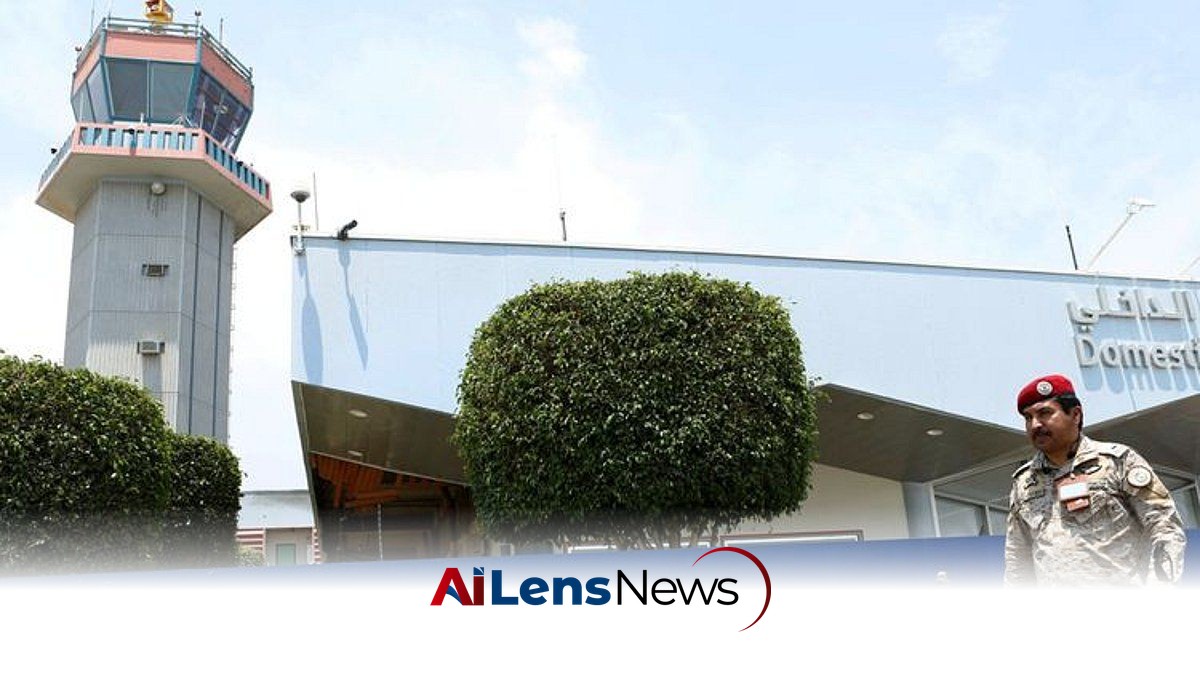


Flights from Saudi Arabia's Abha airport to Dubai and Sharjah have been cancelled for the fourth consecutive day due to missile threats and escalating tensions.
Abu Dhabi, United Arab Emirates Jul 17, 2026 ALN:
On Friday, a significant number of flights were cancelled at Abha International Airport, impacting both arriving and departing services. The cancellations encompassed multiple flights from key Saudi cities, including Riyadh and Jeddah, as well as services from Dubai and Sharjah. Specifically, the cancelled arriving flights included several Saudia services, denoted by their flight numbers SV1644, SV1663, SV1669, SV1646, and SV1650, which were scheduled to arrive from Jeddah and Riyadh. Additionally, flydubai flights FZ815 and FZ811 from Dubai were also affected, alongside Air Arabia flight G9195 from Sharjah and flyadeal flight F3337 from Jeddah.
On the departure side, the situation was similarly grim, with numerous flights being cancelled. These included flydubai services FZ816 and FZ812 to Dubai, Air Arabia flight G9196 to Sharjah, as well as several Saudia flights, namely SV1647, SV1664, SV1670, and SV1649, which were intended for Jeddah and Riyadh. Furthermore, flyadeal flight F3334 to Jeddah and Egypt's Nile Air flight NP144 to Cairo were also among those cancelled. In addition to these disruptions, a planned evening service to Medina operated by flynas was also called off, reflecting a broader trend of operational challenges at the airport.
The recent flight cancellations can be traced back to escalating military tensions in the region, particularly involving the Houthi movement in Yemen and the Saudi Arabian government. The situation intensified when Saudi warplanes conducted airstrikes on Sanaa International Airport in Yemen on Sunday. This military action prompted a swift response from the Houthis, who retaliated by launching missiles and drones targeting Abha International Airport on the following day. While authorities reported no casualties resulting from this exchange, the incident marked a significant escalation in hostilities, representing the most serious confrontation between the two parties since a truce was agreed upon in 2022.
This renewed wave of violence has not only disrupted air travel but has also raised concerns about the safety and security of airports in the region. The targeting of Abha International Airport underscores the vulnerability of civilian infrastructure in conflict zones, highlighting the potential for further disruptions to air travel and other essential services. As tensions continue to simmer, the international community is closely monitoring the situation, with implications that could extend beyond just immediate flight cancellations.
In light of the recent developments, several countries have issued or updated travel advisories for their citizens regarding travel to Saudi Arabia, particularly in areas close to the Saudi-Yemen border. Canada, the United Kingdom, and the United States have all maintained travel warnings that caution against non-essential travel to certain regions within Saudi Arabia. Canada has specifically updated its advisory to recommend that travelers avoid non-essential travel to Abha International Airport due to the heightened risk of missile and drone attacks.
The UK government continues to advise against travel near the Yemen border, emphasizing that attacks could occur with little to no warning, thereby posing a significant risk to travelers. Similarly, the United States has issued a Level 3 advisory, urging citizens to reconsider travel to Saudi Arabia, with some areas classified under a Level 4 warning that explicitly advises against travel. This advisory highlights the potential risks to airports, energy facilities, and transport infrastructure across the kingdom, reflecting a broader concern for the safety of American citizens in the region.
These travel advisories serve as critical tools for governments to ensure the safety of their citizens abroad, particularly in regions experiencing conflict or instability. They also reflect the ongoing geopolitical dynamics in the Middle East, where tensions can flare up rapidly, impacting not only local populations but also international travelers. As the situation evolves, it remains to be seen how these advisories may change and what further implications they may have for travel and tourism in Saudi Arabia.
The recent escalation of military actions between the Houthis and Saudi Arabia has broader implications for regional stability in the Middle East. The conflict in Yemen, which has been ongoing since 2014, has already resulted in a humanitarian crisis, with millions of people displaced and in need of assistance. The renewed hostilities threaten to undermine any progress made towards peace and reconciliation in the region, further complicating diplomatic efforts to resolve the conflict.
Furthermore, the involvement of external powers and the strategic interests of various nations in the region add layers of complexity to the situation. The United States and other Western nations have historically supported Saudi Arabia in its conflict with the Houthis, while Iran has been accused of providing support to the Houthi movement. This geopolitical rivalry exacerbates tensions and makes it difficult to achieve a lasting resolution to the conflict.
As the situation develops, it is crucial for international stakeholders to engage in dialogue and diplomatic efforts to de-escalate tensions. The potential for further military actions and retaliatory strikes poses risks not only to civilians in Yemen and Saudi Arabia but also to regional stability as a whole. The international community must remain vigilant and proactive in addressing the underlying issues fueling the conflict, focusing on humanitarian assistance and long-term solutions that prioritize peace and security for all parties involved.
In conclusion, the recent flight cancellations from Abha International Airport serve as a stark reminder of the impact that geopolitical tensions can have on civilian life and travel. As the situation continues to unfold, it is essential for travelers to stay informed and for governments to prioritize the safety and security of their citizens abroad.
To learn more about the latest developments in Local & Regional, stay updated with our exclusive reports and analyses on AiLensNews.

